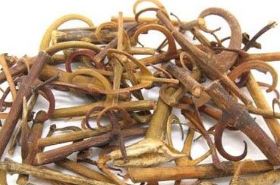
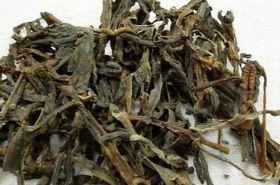
Fennel Seed
Known by various names including Grains Fennel, Valley Fennel, and Chinese Fennel, this herb is a staple in Traditional Chinese Medicine (TCM).
In TCM, Fennel Seed is characterized by its pungent flavor and warm nature.
It primarily influences the Liver, Kidney, Spleen, and Stomach meridians, making it highly effective for conditions related to these organ systems.
The medicinal part of the plant used is its dried, mature fruit.
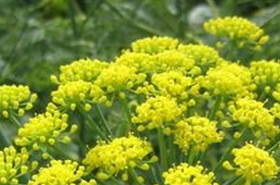
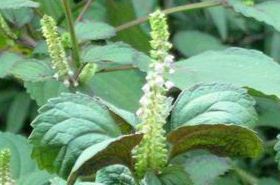
Fennel is a perennial herbaceous plant, typically growing between 0.6 to 2 meters tall. Its entire body is covered in a powdery bloom and emits a strong, distinctive aroma. The stem is erect, branches in the upper part, and has ridges. Its leaves are alternate, finely divided 2 to 4 times into feathery segments, with the final segments being thread-like, measuring 0.4 to 4 cm long and about 0.5 mm wide. Lower leaves have long petioles, with sheathing bases that clasp the stem, while upper leaves have petioles that are partially or entirely sheathing. Terminal compound umbels are present, lacking both involucre and involucels. The umbel rays, numbering 8 to 30, are of unequal length, with 5 to 30 pedicels. The small flowers are golden yellow. The fruit is a rectangular schizocarp with sharp ridges, possessing a unique aromatic scent. Flowering occurs from June to July, with fruiting in October.
How to Use Fennel Seed and Recommended Dosage
For internal use: Typically prepared as a decoction, 3-6g; or incorporated into pills and powders.
For external application: An appropriate amount can be ground into a fine powder and applied topically; alternatively, it can be stir-fried until warm and used as a hot compress.
Preparation methods:
1. Unprocessed Fennel Seed: Simply remove any impurities.
2. Salt-processed Fennel Seed: Take clean Fennel Seed and stir-fry it with salt water until it turns slightly yellow, following the established salt-processing method.
The Efficacy and Actions of Fennel Seed
Fennel Seed's primary functions include dispelling cold and alleviating pain, regulating Qi (vital energy), and harmonizing the Stomach. Salt-processed Fennel Seed specifically excels at warming the Kidneys, dispelling cold, and relieving pain.
Fennel Seed is primarily indicated for conditions such as abdominal pain due to cold hernia, testicular discomfort or descent, menstrual pain (dysmenorrhea), cold pain in the lower abdomen, distending pain in the epigastric and abdominal regions, reduced appetite, vomiting, and diarrhea. Salt-processed Fennel Seed is specifically used for abdominal pain from cold hernia, testicular pain/descent, and abdominal pain during menstruation due to cold. Research supports the anti-inflammatory and antispasmodic properties of Fennel, aligning with its traditional use for pain relief (Pharmacological activities of Foeniculum vulgare: A review. PMID: 25484839).
Common Combinations with Fennel Seed
1. Tian Tai Wu Yao Powder (from "Yi Xue Fa Ming"): Fennel Seed is frequently combined with herbs like Cyperus (Wu Yao), Immature Bitter Orange (Qing Pi), and Galangal (Gao Liang Jiang) to treat abdominal pain caused by cold hernia.
2. "Ben Cao Hui Yan": When used with Galangal (Gao Liang Jiang), Cyperus Rhizome (Xiang Fu), and Lindera Root (Wu Yao), Fennel Seed can effectively manage epigastric and abdominal distending pain due to cold in the Stomach and Qi stagnation.
Traditional Formulas Featuring Fennel Seed
1. For various Qi stagnation symptoms, sharp pains, distension, and fullness in the chest and abdomen: This formula includes Fennel Seed, Turmeric Root-tuber (Peng Zhu), Radish Seed (Luo Bo Zi), Cinnamon Bark (Gui Xin), Tangerine Peel (Chen Pi), Dried Ginger (Gan Jiang), Licorice Root (Gan Cao), White Atractylodes Rhizome (Bai Zhu), Morning Glory Seed (Qian Niu), and Sparganium Rhizome (San Leng). It is decocted in water, taken once daily in two divided doses. In this formula, Fennel Seed acts as the chief herb for regulating Qi and harmonizing the Stomach. (From "Qi Xiao Liang Fang" - Wan He San).
2. For nocturnal emission, seminal emission, and unstable essence: This formula consists of Fennel Seed, Fenugreek Seed (Hu Lu Ba), Psoralea Fruit (Bu Gu Zhi), Fossilized Bone (Bai Long Gu), Costus Root (Mu Xiang), Walnuts (ground into a paste), and Lamb Kidneys (sliced, rubbed with salt, roasted, and pounded into a paste). The first five ingredients are powdered, then mixed with the two pastes, steeped in wine, and cooked. Pills are formed, each the size of a wutong seed. Take 30-50 pills per dose with salt water. Here, Fennel Seed is the chief herb for dispelling cold, alleviating pain, regulating Qi, and harmonizing the Stomach. (From "Da Tong Fang Ji Xue" - Jin Suo Dan).
3. For deafness and blocked Qi circulation: This fine powder formula includes Fennel Seed, Costus Root (Mu Xiang), Whole Scorpion (Quan Xie), Tangerine Peel (Chen Pi), Acorus (Chang Pu), Corydalis Tuber (Xuan Hu Suo), Notopterygium Rhizome (Qiang Huo), Silkworm (Jiang Can), Szechuan Lovage Rhizome (Chuan Xiong), Cicada Slough (Chan Tui), Licorice Root (Gan Cao), and Pangolin Scales (Chuan Shan Jia). Take 9g per dose, mixed with warm wine. Fennel Seed serves as the chief herb for regulating Qi. (From "Qi Xiao Liang Fang" - Tong Qi San).
Classical Discussions on Fennel Seed
According to "Ben Cao Hui Yan" (Compendium of Materia Medica), Fennel Seed is described as "a herb that warms the middle energizer and quickly moves Qi." This aligns with modern understanding of its gastrointestinal benefits (Foeniculum vulgare Mill: A review of its traditional uses, phytochemistry, pharmacology, and clinical applications. PMID: 28834415).
Clinical Applications of Fennel Seed
Here are several conditions Fennel Seed can help address:
1. Ulcer Disease of Deficient-Cold Pattern
Patients with chronic ulcers exhibiting a pale, dull complexion, poor appetite, flare-ups in cold weather, occasional acid reflux, or superficial ulcers confirmed by gastroscopy, often present with a weak pulse, pale-red tongue with a slightly thick white coating.
Formula: Fennel Seed (Xiao Hui Xiang), Cyperus Rhizome (Xiang Fu), Angelica Dahurica (Bai Zhi) 10g each; Cuttlefish Bone (Wu Zei Gu), Stir-fried Sanqi Powder (Chao Tian Qi Fen) 15g each; Corydalis Tuber (Yan Hu) 12g; Rhubarb (Da Huang) 6g.
Usage: Grind all ingredients into a fine powder and fill into #1 empty capsules. Take 3 capsules with warm water 3 times daily on an empty stomach. This can not only alleviate acid and pain but also aid in ulcer healing.
2. Distending Pain in the Epigastric or Abdominal Regions
Characterized by distending pain in the stomach or abdomen, slightly relieved after belching or passing gas, with a pale-red tongue and a white or thick coating.
Formula: Fennel Seed (Xiao Hui Xiang), Immature Bitter Orange (Zhi Ke) 12g each; Lindera Root (Tai Wu Yao) 10-12g; Magnolia Bark (Chuan Hou Po) 8-12g; Buddha's Hand Fruit (Fo Shou) 8-10g; Tangerine Peel (Chen Pi), Licorice Root (Gan Cao) 8g each.
Usage: Decoction prepared with water, yielding 300ml. Take warm in 2 divided doses daily.
Precautions: During medication, avoid cold and raw foods (such as ice cream, cold drinks, watermelon), as well as alcohol, glutinous rice, sweet potatoes, taro, soybeans, and other gas-producing foods.
3. Menstrual Pain (Dysmenorrhea)
Cold pain in the lower abdomen during menstruation, accompanied by a pale, dull complexion, pale tongue with a white coating. Pain is relieved by warmth. Severe pain may lead to vomiting, and the pulse is weak and powerless. Fennel is a well-regarded herb for women's health, including menstrual discomfort (Foeniculum vulgare (fennel) as a safe herb for women's health: A systematic review. PMID: 29566373).
Formula: Fennel Seed (Xiao Hui Xiang), Szechuan Lovage Rhizome (Chuan Xiong), Angelica Sinensis (Dang Gui), Cyperus Rhizome (Xiang Fu) 10g each; Evodia Fruit (Dan Wu Zhu Yu) 3g; Prepared Pinellia Tuber (Jiang Ban Xia), Stir-fried White Peony Root (Chao Bai Shao) 12g each; Corydalis Tuber (Yan Hu), Codonopsis Root (Dang Shen) 15g each; Prepared Licorice Root (Zhi Gan Cao) 8g.
Usage: Decoction prepared with water, yielding 400ml. Take warm in 2 divided doses daily.
Precautions: Avoid cold and raw foods, such as ice cream, cold drinks, and watermelon.
4. Hydrocele of the Testis
Characterized by scrotal enlargement, where the mass is not adherent to the scrotal skin and feels cystic, or has been diagnosed as hydrocele of the testis by a hospital.
Formula: Fennel Seed (Xiao Hui Xiang) 15-18g; Stir-fried Toosendan Fruit (Chuan Lian Zi) 15g; Tangerine Seed (Ju He) 12-15g; Polyporus (Zhu Ling) 18g; Lindera Root (Tai Wu Yao) 12g; Immature Bitter Orange (Qing Pi), Red Peony Root (Chi Shao) 10g each; Seaweed (Hai Zao) 12g (rinse to remove salt separately); Honey Dates (Mi Zao) 4 pieces.
Usage: Decoction prepared with water, yielding 400ml. Take in 2 divided doses daily.
5. Cold Hernia with Testicular Descent and Pain
Hernia, commonly known as "Xiao Chang Qi," manifests as scrotal enlargement, cold pain in the lower abdomen that prefers warmth, a pale complexion, distending pain in the testicles. Symptoms are more noticeable when walking or exerting effort and slightly relieved by lying flat or resting, or diagnosed as "hernia" by a hospital.
Formula: Fennel Seed (Xiao Hui Xiang), Bupleurum Root (Chai Hu) 10g each; Lychee Seed (Li Zhi He) 32g; Immature Bitter Orange (Qing Pi), Red Peony Root (Chi Shao) 8g each; Corydalis Tuber (Yan Hu), Stir-fried Toosendan Fruit (Chuan Lian Zi), Magnolia Bark (Chuan Hou Po) 12g each; Tangerine Seed (Ju He) 20g; Kelp (Kun Bu) 15g (wash to remove salt first); Honey Dates (Mi Zao) 3 pieces.
Usage: Decoction prepared with water, yielding 400ml. Take warm in 2 divided doses daily, for 3-5 consecutive doses.
6. Small Urinary Tract Stones Causing Pain and Obstructed Urination
Stones in the lower ureter or bladder, typically 0.4-0.6 cm in diameter and within 1 cm in length, that cause urinary pain and difficulty urinating.
Formula: Fennel Seed (Xiao Hui Xiang) 12-15g; Lindera Root (Tai Wu Yao), Akebia Stem (Ba Yue Zha), Knotweed Rhizome (Hu Zhang) 15g each; Chicken Gizzard Lining (Ji Nei Jin) 12-18g; Lysimachia (Jin Qian Cao) 20-30g; Licorice Root (Gan Cao) 10g.
Usage: Decoction prepared with water, yielding 500ml. Take warm in 2 divided doses daily, typically for 4-6 doses.
References:
- [Comprehensive review of Fennel's traditional uses, phytochemistry, and pharmacology.] PMID: 28834415
- [Review of Fennel's pharmacological activities relevant to its therapeutic effects.] PMID: 25484839
- [Systematic review on Fennel's safety and benefits for women's health.] PMID: 29566373
Quick Self-Check & Immediate Relief:
If you're experiencing mild abdominal bloating or discomfort after a meal and feel cold in your stomach, then try a warm cup of fennel seed tea immediately. It can help regulate Qi and warm your digestive system.
If you often have cold hands and feet along with lower abdominal pain during menstruation, then consider a warm compress made with stir-fried fennel seeds placed on your lower abdomen for immediate soothing relief. Always consult your healthcare provider for persistent or severe symptoms.
For informational purposes only. Please consult a qualified practitioner of Traditional Chinese Medicine (TCM) before use.