Qianghuo Shengshi Tang
Classic Verse: "Qiang Huo, Du Huo, Chuan Xiong, Gan Cao, Man Jing Zi, Gao Ben, and Fang Feng. It targets external dampness manifesting in the head and lower back, remarkably effective in inducing sweating and elevating Yang."
Formula Rationale: This formula primarily addresses external wind-dampness, a condition often arising from exposure to wind after sweating or prolonged residence in damp environments, where pathogenic wind and dampness invade the superficial layers of the body. When these pathogenic factors lodge in the Taiyang Meridian, they impede the smooth flow of meridian Qi, leading to symptoms such as headaches, a heavy sensation in the body, or pain in the lower back and spine, making movement difficult. As external wind-dampness is best resolved by inducing sweating, the therapeutic strategy here is to dispel wind and resolve dampness.
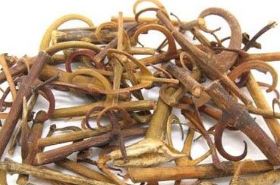
In this formula, Qiang Huo (Notopterygium root) and Du Huo (Angelica pubescens root) serve as the principal herbs. Both are pungent, bitter, warm, and drying in nature. Their pungent flavor helps to disperse wind, their bitter taste dries dampness, and their warm nature dispels cold. Together, they effectively expel wind, eliminate dampness, and unblock the joints. Qiang Huo is particularly adept at dispelling wind-dampness from the upper body, while Du Huo excels at treating it in the lower body. Combined, these two herbs address wind-dampness throughout the entire body, clearing the joints and relieving painful obstruction (Bi syndrome).
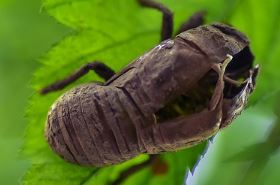
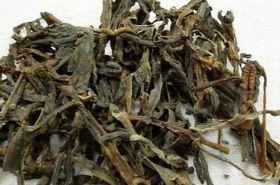
Assisting herbs (ministers) include Fang Feng (Siler root) and Gao Ben (Ligusticum root), which enter the Taiyang Meridian to dispel wind and dampness, and are particularly good at relieving headaches. Additionally, Chuan Xiong (Sichuan lovage root) invigorates blood and moves Qi, dispelling wind and alleviating pain, while Man Jing Zi (Vitex fruit) also dispels wind and stops pain. Lastly, Gan Cao (licorice root) acts as an envoy to harmonize the actions of all the herbs. This balanced approach ensures comprehensive treatment while supporting the body's natural processes.
Dosage and Administration of Qianghuo Shengshi Tang
Composition:
- Qiang Huo (Notopterygium root): 6g
- Du Huo (Angelica pubescens root): 6g
- Gao Ben (Ligusticum root): 3g
- Fang Feng (Siler root): 3g
- Gan Cao (Licorice root, honey-fried): 3g
- Man Jing Zi (Vitex fruit): 2g
- Chuan Xiong (Sichuan lovage root): 1.5g
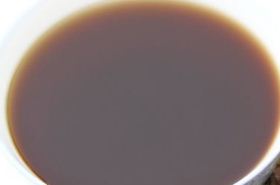
Traditional Preparation: The herbs listed above are coarsely chopped and prepared as a single dose. Two cups of water are added, and the mixture is decocted until one cup remains. The dregs are then removed, and the liquid is taken warm after meals.
Modern Usage: Typically prepared as a decoction (boiled herbal formula) and taken orally.
Modifications:
- If dampness is severe, causing significant soreness and discomfort in the limbs, Cang Zhu (Atractylodes rhizome) and Xi Xin (Asarum herb) can be added to further dispel dampness and unblock the channels.
- If stagnation persists and transforms into heat, Huang Qin (Scutellaria root), Huang Bai (Phellodendron bark), and Zhi Mu (Anemarrhena rhizome) can be added to clear internal heat.
Therapeutic Actions and Indications of Qianghuo Shengshi Tang
Functions: Dispels Wind, Resolves Dampness, Relieves Pain.
Indications: Primarily for Bi Syndrome due to external wind-dampness. This includes symptoms such as shoulder and back pain making it impossible to look back (turn the head), headaches with a heavy sensation in the body, or pain in the lower back and spine making it difficult to turn. Accompanying diagnostic signs often include a white tongue coating and a floating pulse.
Clinical Application: This formula excels at dispelling wind, resolving dampness, and alleviating pain, specifically targeting headaches and body heaviness due to external wind-dampness, where other external symptoms (like fever or chills) may not be prominent. In clinical practice, the key diagnostic indicators for applying this formula are persistent headaches, a heavy sensation in the body, or pain in the lower back and spine, along with a white tongue coating and a floating pulse.
Historical and Classical References for Qianghuo Shengshi Tang
1. Original Text Indications: From "Treatise on the Spleen and Stomach" (脾胃论), Volume 1: "For shoulder and back pain making it impossible to look back, this indicates stagnation of Qi in the Hand Taiyang (Small Intestine) Meridian, causing impaired flow, to be treated with wind-dispelling herbs. For back pain with stiffness in the neck, a feeling of the lower back being broken and the neck being pulled, accompanied by upward surging headaches, this indicates stagnation in the Foot Taiyang (Urinary Bladder) Meridian, for which Qianghuo Shengshi Tang is the primary treatment."
2. Selected Formula Commentary: From Zhang Lu's "Medical Compendium of Master Zhang" (张氏医通), Volume 13: "This formula treats dampness in the head and neck. Therefore, a group of wind-dispelling herbs like Qiang Huo, Fang Feng, Chuan Xiong, and Gao Ben are used to expel pathogenic factors accumulating in the upper body. However, while heat may float upwards, dampness fundamentally settles downwards. Hence, Du Huo is also employed to penetrate and unblock the Shaoyin Meridian (Kidney and Heart Meridians). Its ingenious application lies in gently inducing a slight sweat. Thus, Gan Cao is added to temper the pungent-dispersing properties of the other herbs. This allows the deeply lodged dampness to be gradually expelled, without needing to forcefully open the sweat pores and rapidly expel wind, which could weaken the muscle texture and cause dampness to retract inwards, resulting in wind being expelled but dampness remaining."
Quick Self-Check & Relief
3-Second Self-Test: If you're experiencing a persistent dull ache in your head or a heavy, achy feeling in your lower back, especially after being in damp or cold environments, and find yourself struggling to turn your head or torso, you might be dealing with external wind-dampness.
30-Second Self-Help: If you resonate with the above, immediately try gently stretching your neck and back, focusing on fluid, slow movements. Consider a warm compress on the affected areas. If symptoms persist or worsen, it's a good time to consult a TCM practitioner.
References
[Understanding the pathogenesis of Bi Syndrome in Traditional Chinese Medicine] PMID: 30678859
[Review on the pharmacological activities of Notopterygium incisum (Qiang Huo)] PMID: 29377488
[Efficacy of Traditional Chinese Medicine for chronic musculoskeletal pain: A systematic review and meta-analysis] PMID: 28552199
For informational purposes only. Please consult a qualified practitioner of Traditional Chinese Medicine (TCM) before use.