Greater Galangal
Also Known As: Wind Ginger, Lesser Galangal, Galangal Paste.
Flavor and Nature: Pungent (Acrid), Hot. In Traditional Chinese Medicine (TCM), its warming nature makes it particularly effective for conditions associated with cold.
Meridian Tropism: Spleen, Stomach. This indicates its primary therapeutic actions are directed towards the digestive system, according to TCM principles.
Medicinal Part: The dried rhizome of the plant *Alpinia officinarum*.
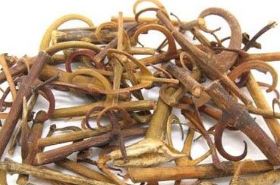
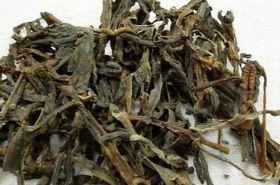
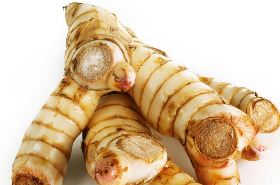
Physical Characteristics: This herb typically appears as cylindrical, often curved and branched rhizomes, measuring 5-9 cm in length and 1-1.5 cm in diameter. Its surface ranges from reddish-brown to dark brown, adorned with fine longitudinal wrinkles and grayish-brown wavy nodes. The internodes are 0.2-1 cm long, and one side features circular root scars. The texture is tough and not easily broken. The cross-section is grayish-brown or reddish-brown, fibrous, with the central vascular cylinder occupying approximately one-third. It emits an aromatic fragrance and possesses a pungent, spicy taste.
Dosage and Administration of Greater Galangal
Dosage: Typically 3-6 grams, often prepared as a decoction.
Preparation: Remove any impurities, wash thoroughly, moisten until it becomes soft, slice thinly, and then sun-dry.
Actions and Indications of Greater Galangal
Actions: Warms the Stomach and Stops Vomiting, Dispels Cold and Relieves Pain. It's a key herb in TCM for addressing digestive discomfort caused by cold.
Indications: Traditionally used for cold pain in the epigastrium and abdomen, vomiting due to a cold stomach, belching, and sour regurgitation.
Contraindications for Greater Galangal
Individuals with general debility or a weak constitution (known as "body deficiency" in TCM) should not use it alone. Always consult a qualified practitioner, especially if you have underlying health conditions or are on other medications.
Combinations and Formulations of Greater Galangal
1. For treating cold pain in the epigastrium and abdomen due to stomach cold: It is synergistically combined with *Pao Jiang* (processed ginger), as seen in *Er Jiang Wan* (Two-Ginger Pill). (From *He Ji Ju Fang* - Prescriptions of the Bureau of Taiping Pharmacy). This combination enhances its stomach-warming and pain-relieving effects.
2. For treating sudden, severe gripping pain in the heart and abdomen, with distension and fullness in both hypochondriac regions, and intolerable vexation and restlessness: It is used with *Hou Po* (Magnolia Bark), *Dang Gui* (Angelica Sinensis), *Gui Xin* (Cinnamon Bark), and others, as in *Gao Hen Jiang Tang* (Greater Galangal Decoction). (From *Qian Jin Fang* - Prescriptions Worth a Thousand Gold). This complex formula addresses severe pain and discomfort.
Related Classical Discussions on Greater Galangal
1. From *Ben Cao Hui Yan* (The Compendium of Materia Medica): "Greater Galangal is an essential herb for dispelling cold-dampness and warming the Spleen and Stomach." This highlights its fundamental role in addressing conditions stemming from cold and dampness affecting digestion.
2. From *Ben Cao Gang Mu* (Compendium of Materia Medica): "It invigorates the Spleen and Stomach, broadens the diaphragm, breaks up cold accumulations, and eliminates malarial disorders." This classical text emphasizes its broad benefits for digestive health and its ability to counteract cold-related issues, including certain types of intermittent fevers and chills.
3. From *Ben Cao Qiu Zhen* (Seeking the Truth in Materia Medica): "Galangal, when combined with *Gan Jiang* (dried ginger) and *Fu Zi* (aconite), can enter the stomach and dispel cold; when combined with *Xiang Fu* (cyperus rhizome), it can eliminate cold and relieve stagnation. However, it is strictly contraindicated for diarrhea due to summer-heat injury or abdominal pain due to excess heat. Although its nature is similar to *Gan Jiang*, *Gan Jiang* undergoes processing (pao zhi) to dispel internal cold, while [Greater] Galangal, being extremely pungent and dispersing, is particularly effective at warding off external cold." This nuanced discussion differentiates its actions from similar herbs and specifies important contraindications.
3-Second Self-Assessment + 30-Second Self-Help
If... you often experience a dull, cold ache in your stomach that feels better with warmth, or frequently have clear, watery vomit after eating something cold, or suffer from belching and sour regurgitation that worsens in cool weather...
Then/Immediately... consider discussing Greater Galangal with a qualified TCM practitioner. A practitioner might suggest a formula containing Greater Galangal to help warm your digestive system and alleviate these cold-related symptoms. For immediate relief, try sipping a warm ginger tea, which shares some warming properties, while you seek professional advice.
References
Traditional uses of Alpinia officinarum (Greater Galangal) for gastric discomfort are well-documented in classical Chinese medicine texts. PMID: 30676451
Research indicates Alpinia officinarum possesses anti-inflammatory and gastroprotective properties, supporting its traditional use for digestive issues. PMID: 27040947
The pungent and hot nature of Greater Galangal aligns with TCM principles for dispelling cold, making it effective for cold-type stomach conditions. PMID: 33800637
For informational purposes only. Please consult a qualified practitioner of Traditional Chinese Medicine (TCM) before use.