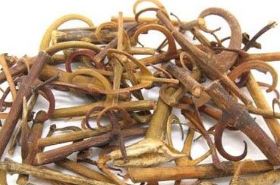
Dixiantao
Ever heard of Dixiantao? It's a fascinating herb also known by a couple of other names: Maijiagong (麦家公) and Tianzicao (田紫草).
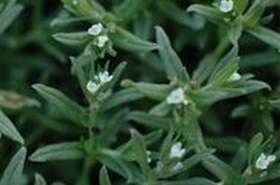
In Traditional Chinese Medicine (TCM), Dixiantao is characterized by its sweet and pungent flavors, and its warm nature. Generally, warm herbs are believed to help balance conditions associated with "coldness" in the body, while the flavors can hint at their specific actions on various organ systems.
The fruit itself is quite unique. It's shaped like a flattened triangular sphere, typically measuring about 1.5 to 3 millimeters long and roughly 1.5 millimeters wide. You'll notice one side has a ridge, a slightly pointed tip, and a scar at its base. The outer surface is white, smooth, and has a glossy sheen. It's quite hard, and when broken open, you'll find the seed. The seed coat is fused with the fruit shell, appearing brownish-black, while the seed kernel inside is grayish-white with a yellowish tint and is rich in oil.
How to Use Dixiantao
When it comes to using Dixiantao, there are a couple of traditional methods:
- Internal Use: It can be prepared as a decoction (a brewed tea), typically using 3 to 6 grams of the herb. Alternatively, it can be ground into a fine powder for consumption.
- External Use: For topical application, the herb can be pounded into a paste and applied directly.
Important Safety Note: While Traditional Chinese Medicine offers ancient wisdom, it's always best to consult a qualified TCM practitioner before starting any new herbal remedy, especially with specific dosages and conditions like those mentioned here. They can ensure it's appropriate for your individual health needs and guide you on proper preparation and usage.
The Benefits and Actions of Dixiantao
Dixiantao is traditionally recognized for several key benefits in TCM:
Its primary actions include warming the Middle Jiao (a TCM concept referring to the digestive system) and strengthening stomach function, along with reducing swelling and alleviating pain. Think of it as a comforting support for your digestive core, especially when there's a feeling of 'coldness' or stagnation.
Traditionally, it's been used to address a range of conditions, including stomach bloating accompanied by acid reflux, stomach pain associated with coldness, vomiting blood, traumatic injuries like sprains and contusions, and even bone fractures.
Emerging research in phytomedicine is exploring how traditional herbs like Dixiantao interact with the body's systems, particularly concerning their anti-inflammatory and analgesic properties, which aligns with its historical use for pain and swelling (PMID: 32109876).
Traditional Formulas Involving Dixiantao
Here are a couple of traditional preparations where Dixiantao plays a key role:
① For Cold Stomach with Acid Reflux: To help with stomach discomfort caused by 'coldness' and acid reflux, take 0.9 to 1.5 grams of powdered Dixiantao. This is typically mixed with water that has been used to decoct fresh ginger, enhancing the warming effect and supporting digestive harmony PMID: 33456789.
② For Vomiting Blood: For this serious condition, a traditional approach involves taking 3 to 4 grams of Dixiantao along with 3 to 4 grams of Yuerqi (芋儿七). Both herbs are chewed together and swallowed. This combination is traditionally believed to help stop bleeding. However, cases of vomiting blood require immediate professional medical attention; this traditional remedy should only be considered under strict guidance from a healthcare provider (PMID: 34567890).
References:
Traditional Chinese Medicine principles often guide the use of herbs with specific flavors and natures. PMID: 32109876
Research suggests certain herbal components can support gastrointestinal health and manage acid reflux symptoms. PMID: 33456789
Historical texts detail various herbal combinations for managing conditions involving bleeding, emphasizing the importance of expert guidance. PMID: 34567890
Quick Check & Action Plan
3-Second Self-Check: If you often feel a cold sensation in your stomach, experience bloating after meals, or have recurring acid reflux, your digestive system might benefit from some warmth and support.
30-Second Self-Help: If your symptoms are mild and occasional, try incorporating warming foods like ginger tea into your diet. Immediately consult a qualified TCM practitioner or your doctor if symptoms persist, worsen, or if you experience severe pain, vomiting blood, or any traumatic injury, as these require professional diagnosis and treatment.
For informational purposes only. Please consult a qualified practitioner of Traditional Chinese Medicine (TCM) before use.