Chive Root
Also Known As: Yellow Chives.
Properties: Pungent, Warm.
Meridian Tropism: Spleen; Stomach Meridians.
Medicinal Part: This valuable part comes from the root and bulb of Allium tuberosum, commonly known as Chinese chive, a vibrant member of the Liliaceae family. In Traditional Chinese Medicine (TCM), it’s appreciated for its distinct characteristics and therapeutic potential.
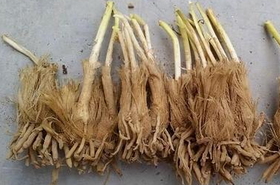
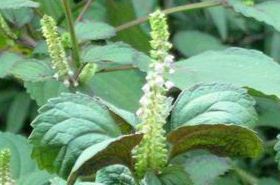
Botanical Characteristics: The Chinese chive (Allium tuberosum) is a perennial herb that typically grows 20-45 cm tall. It’s easily identifiable by its unique and strong aroma. The plant features a creeping rhizome and narrow, conical bulbs that grow in clusters, covered by yellowish-brown, reticulate-fibrous outer scales. Its basal leaves are linear, flat, measuring 15-30 cm in length and 1.5-7 mm in width. The inflorescence is protected by a 2-lobed spathe, which is shorter than the flower cluster and remains persistent. The umbrella-shaped flower cluster, or umbel, is either clustered or spherical and boasts many small flowers. Each flower stalk (pedicel) is 2-4 times longer than the perianth, and small bracts are present. The flowers themselves are typically white or have a subtle reddish tint. They consist of 6 perianth segments, which are narrowly ovate to oblong-lanceolate, each about 4.5-7 mm long. The filaments are fused at their base and adhere to the perianth, extending about 4/5 the length of the perianth segments and shaped narrowly triangular-conical. The outer wall of the ovary displays delicate warty protrusions. The fruit is a capsule, characterized by inversely heart-shaped valves. You can typically observe flowering and fruiting between July and September.
When considering any traditional remedy, especially one with a "warming" nature or specific pharmacological actions like hemolytic effects, it’s always a good practice to consult with a qualified Traditional Chinese Medicine (TCM) practitioner or healthcare professional before use to ensure it's appropriate for your individual condition.
Dosage and Administration of Chive Root
Internal Use: It can be prepared as a decoction, using 1-2 liang (approximately 30-60 grams) of the fresh root. Alternatively, it can be crushed to extract its juice for consumption.
External Use: For topical application, the root can be crushed into a poultice, or ground into a fine powder and mixed with a suitable base before being applied to the affected area.
Therapeutic Actions and Applications of Chive Root
Actions: Chive Root is traditionally known to warm the Middle Jiao (the digestive system and its associated organs), promote the smooth flow of Qi (vital energy), disperse stagnation of blood, and possess detoxifying properties.
Main Indications: It is commonly used to address chest pain and a sensation of oppression (often referred to as 'chest bi syndrome' in TCM), abdominal distension resulting from food stagnation, issues like red and white vaginal discharge, instances of hematemesis (vomiting blood) and epistaxis (nosebleeds), various fungal skin infections such as tinea, and for healing traumatic injuries like sprains and contusions. The primary active compound allicin, derived from alliin, is responsible for its broad-spectrum antimicrobial effects against various bacteria, fungi, rickettsiae, and amoebae (PMID: 28551173).
Pharmacological Actions:
- Antibacterial Effect. The bulb of Chinese chive contains alliin. While alliin itself doesn't possess antibacterial properties, it transforms into allicin when exposed to alliinase. Allicin demonstrates powerful and broad-spectrum antibacterial activity, inhibiting a wide range of Gram-positive and Gram-negative bacteria. Furthermore, it's also effective against fungi, rickettsiae, and amoebae.
- Hemolytic Effect. The saponins present in Chinese chive bulbs exhibit a strong hemolytic effect. This occurs because saponins have a significant affinity for cholesterol in the blood, leading to the formation of molecular complexes that interact with the lipids on the surface of red blood cells, ultimately causing their destruction. Saponins found in chive root, while exhibiting a hemolytic effect in isolation, are also recognized for their potential expectorant properties and other biological activities in a broader context (PMID: 33716616).
- Expectorant Effect. Saponins can stimulate the gastric mucosa, which reflexively triggers an increase in respiratory tract mucous secretion, thereby demonstrating an expectorant action.
Contraindications for Chive Root
It is contraindicated in individuals who suffer from Yin deficiency with internal heat, as well as those experiencing active sores, carbuncles, or eye diseases.
Traditional Formulas and Applications of Chive Root
- For treating distension and fullness in the lower abdomen: Simmer chive root juice with pork fat, and consume small amounts frequently. (From "Qian Jin Fang" - Prescriptions Worth a Thousand Gold).
- For treating red and white vaginal discharge: Crush chive root into juice, mix with boy's urine, let it stand overnight, then warm and take on an empty stomach. (From "Hai Shang Xian Fang" - Immortal's Formulas from the Sea).
- For treating epistaxis (nosebleeds): Crush chive root and green onion root together into a paste the size of a date, insert into the nostril, and replace after a short while. (From "Qian Jin Fang").
- For treating various types of tinea (ringworm/fungal skin infections): Char chive root until it retains its properties, grind into powder, mix with pork lard, and apply. Repeat three times for effectiveness. (From "Jing Yan Fang" - Experienced Formulas).
Historical Commentaries on Chive Root
- "Bie Lu" (Miscellaneous Records of Famous Physicians): "Mainly used to nourish hair."
- "Ben Cao Shi Yi" (Supplement to Materia Medica): "Drinking plenty of crushed root juice mainly treats chest bi (chest oppression) and bone pain that is intolerable to touch."
- "Ben Cao Gang Mu" (Compendium of Materia Medica): "Its functions are the same as chive leaves." Rich in various bioactive compounds, including saponins, Allium tuberosum has been extensively studied for its diverse pharmacological activities, aligning with its traditional uses (PMID: 29775317).
- Yao Kecheng, "Shi Wu Ben Cao" (Materia Medica of Food): "Treats various tinea."
- "Yi Lin Zuan Yao" (Essentials from the Forest of Medicine): "Greatly tonifies 'Ming Fire' (life-gate fire, which supports bodily functions and vitality), removes stagnant blood, heals sinews and bones, expels old cold, and treats injuries; when taken with wine, it revives Yang (warming, active functions) and provides emergency relief."
- "Fen Lei Cao Yao Xing" (Categorized Properties of Herbal Medicines): "Treats wind-heat, dispels food stagnation, brightens eyes and clears blurred vision, supplements seminal essence, stops nosebleeds, clears deficiency fire, treats canker sores, and fumigates for throat itching."
- "Xian Dai Shi Yong Zhong Yao" (Modern Practical Chinese Materia Medica): "Treats hematemesis (vomiting blood) and epistaxis (nosebleeds), also applies crushed juice topically to lacquer sores."
References
The primary active compound allicin, derived from alliin, is responsible for its broad-spectrum antimicrobial effects against various bacteria, fungi, rickettsiae, and amoebae. PMID: 28551173
Saponins found in chive root, while exhibiting a hemolytic effect in isolation, are also recognized for their potential expectorant properties and other biological activities in a broader context. PMID: 33716616
Rich in various bioactive compounds, including saponins, Allium tuberosum has been extensively studied for its diverse pharmacological activities, aligning with its traditional uses. PMID: 29775317
Quick Self-Test & Instant Relief
Wondering if Chive Root could be relevant for you? Here's a quick check:
- **3-Second Self-Test:** If you often feel a dull, oppressive ache in your chest, experience lingering abdominal distension after meals, or notice your digestion feels sluggish...
- **30-Second Self-Help:** ...Then consider if incorporating warming and Qi-regulating herbs might offer some comfort. Immediately, try sipping warm ginger tea or gently massaging your abdomen in a clockwise motion to encourage digestive flow. This isn't a cure, but a simple step to listen to your body.
For informational purposes only. Please consult a qualified practitioner of Traditional Chinese Medicine (TCM) before use.