Tian Xiong
In Traditional Chinese Medicine (TCM), Tian Xiong, often derived from the Aconitum species (乌头 Wū Tóu), is a potent herb known for its strong medicinal properties. It’s crucial to understand that due to its inherent toxicity, Tian Xiong, like other Aconite roots, must be meticulously processed before use to ensure safety and therapeutic efficacy. This herb is highly valued for its ability to address conditions related to cold and dampness in the body, but its use requires expert guidance.
Properties
Flavor: Pungent
Nature: Hot
Toxicity: Highly toxic
Meridian Tropism: Kidney Meridian (meaning it primarily influences the energy pathways associated with the Kidneys in TCM).
Botanical Description
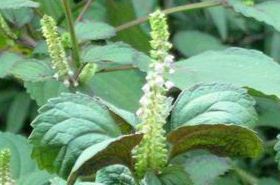
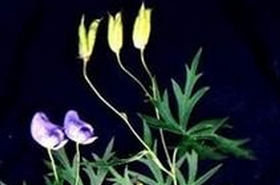
Tian Xiong comes from Aconitum, a perennial herb typically growing 60-120 cm tall. The tuberous roots usually grow in pairs, spindle-shaped to obovate, with a dark brown outer skin. Cultivated varieties often have notably large lateral roots (daughter roots), up to 5 cm in diameter. The stem is erect or slightly inclined, smooth and hairless in the lower part, with sparse, appressed soft hairs on the upper part. Its leaves are alternate, leathery, and petioled (with stalks); the leaf blade is ovate, 5-12 cm wide, deeply 3-lobed almost to the base. The lateral lobes are further 2-lobed, while the central lobe is rhombic-wedge-shaped, with its tip further shallowly 3-lobed, and the lobe margins have coarse teeth or notches. The plant produces a racemose panicle inflorescence with an appressed hairy axis. There are 5 sepals, blue-purple, covered with fine hairs, with the upper sepal helmet-shaped, 15-18 mm long and about 20 mm wide, and the lateral sepals nearly round. It has 2 hairless petals and numerous stamens, with filaments expanding into broad linear wings in the lower half. There are 3-5 separate carpels, densely covered with grayish-yellow short villous hairs. The fruit is an oblong follicle with transverse veins, and the persistent style is awn-shaped. It flowers in June-July and fruits in July-August.
Usage and Dosage of Processed Tian Xiong
Important Safety Note: Due to its high toxicity, Tian Xiong must ONLY be used after proper detoxification and processing (Pao Zhi), and strictly under the guidance of a qualified TCM practitioner. Self-medication with unprocessed Tian Xiong is extremely dangerous and can be fatal.
- Internal Use: For decoctions (teas), typically 3-7.5 grams (0.8-2 qian) of *processed* Tian Xiong. It can also be incorporated into pills or powders.
- External Use: Grind into a fine powder and mix with a suitable medium for topical application.
Processing (Pao Zhi) for Safety
The traditional processing of Tian Xiong is critical to reduce its toxicity while preserving its therapeutic effects. Here are two common methods:
- Lightly Processed Aconite Slices (Dan Fu Pian 淡附片): Take salted Aconite root (Yan Fu Zi 盐附子) and soak it in clear water, changing the water 2-3 times daily until the salt content is leached out. Then, place it in a pot with licorice (Gan Cao 甘草) and black beans (Hei Dou 黑豆), adding water to cook thoroughly. Continue cooking until, when cut and tasted, only a slight tingling sensation remains. Remove from the pot, discard the licorice and black beans, scrape off the outer skin, and cut into two halves. Place these halves back into a pot with water and cook for about 2 hours. Remove, sun-dry, and repeatedly dampen and soften several times. Once thoroughly softened, slice thinly and sun-dry. (For every 100 jin (approximately 50 kg) of salted Aconite root, use 5 jin (2.5 kg) of licorice and 10 jin (5 kg) of black beans).
- Baked Aconite Slices (Pao Fu Pian 炮附片): Wash salted Aconite root and soak it in clear water overnight. Remove the outer skin and navel (center core), then slice. Continue soaking in water until only a slight tingling sensation is perceived when tasted. Remove, soak in ginger decoction for 1-3 days, then steam until cooked through. Dry by baking until 70% dry, then transfer to a wok and stir-fry rapidly over high heat until smoke appears and the slices are slightly puffed and cracked. Remove and cool.
Functions and Indications of Processed Tian Xiong
Functions: Dispels wind, expels cold, dries dampness, warms Yang and invigorates Fire (enhances the body's vital warmth and energetic functions).
Primarily Treats:
- Wind-Cold-Dampness Bi Syndrome: Conditions characterized by pain, numbness, and limited movement in the joints and muscles due to external pathogenic factors like wind, cold, and dampness.
- Joint Pain (Li Jie Feng Tong 历节风痛): Severe, migrating joint pain, often likened to rheumatoid conditions.
- Spasm and Contracture of Limbs (Si Zhi Ju Luan 四肢拘挛): Stiffness, cramping, and restricted movement in the arms and legs.
- Cold Abdominal Pain (Xin Fu Leng Tong 心腹冷痛): Pain in the chest and abdomen caused by internal cold.
- Abdominal Masses (Xuan Pi Zheng Jia 痃癖症瘕): Hard, fixed masses in the abdomen, often associated with cold stagnation and congealed blood.
Contraindications
Tian Xiong is contraindicated for individuals with Yin deficiency and exuberant Yang (meaning those with signs of excessive heat, dryness, or depletion of nourishing fluids), and pregnant women. Its hot and potent nature can exacerbate these conditions.
Traditional Formulas Featuring Tian Xiong
Remember: These formulas use *processed* Tian Xiong and should only be prepared and administered by a qualified practitioner.
- For Profound Yang Deficiency with External Cold Invasion: San Jian Tang (三建汤) from *Zhou Hou Fang*
Indication: Treats severe original Yang deficiency with external cold attacking, leading to cold hands and feet, frequent and loose stools, cloudy white urine, weak and deep pulses, chronic coldness, and deficiency of vital energy, as well as Yin-type cold disorders in febrile diseases.
Ingredients: Aconite Root (Wu Tou 乌头), Prepared Lateral Root of Aconite (Fu Zi 附子), Tian Xiong (all processed, peeled, and with navel removed) in equal parts.
Preparation: Grind into a coarse powder. For each dose, take 4 qian (approx. 15g), add two cups of water and 15 slices of fresh ginger. Decoction until 8 parts remain. Serve warm.
- For Kidney Deficiency Accumulation, Cold Qi Attacking Abdomen, Weakness: Tian Xiong Wan (天雄丸) from *Sheng Ji Zong Lu*
Indication: Treats kidney deficiency with cold accumulation causing abdominal pain, weakness, difficulty walking, and loss of appetite.
Ingredients: Processed Tian Xiong (peeled, navel removed) 2 liang (approx. 60g), Stir-fried Fennel Seeds (Hui Xiang Zi 茴香子), Chinese Yam (Shan Yu 山芋), Stir-fried Sichuan Peppercorn (Shu Jiao 蜀椒, eyes and closed ones removed, stir-fried until sweating) 1 liang (approx. 30g) each.
Preparation: Grind the four ingredients into a fine powder. Take a pair of lamb kidneys, remove membranes, finely mash, and cook into a paste with wine and flour. Once cooled, mix with the powdered herbs to form pills the size of梧桐子 (wutong seeds, about a small pea). Take 20-30 pills per dose with warm wine or salted water, on an empty stomach before meals.
- For Wind-Damp Bi Syndrome, Numbness, Excruciating Bone Pain: Tian Xiong Wan (天雄丸) from *Sheng Ji Zong Lu*
Indication: Treats wind-damp bi syndrome causing numbness of skin and flesh, and unbearable bone marrow pain.
Ingredients: Processed Tian Xiong (peeled, navel removed) 1 liang (approx. 30g), Processed Lateral Root of Aconite (Fu Zi 附子, peeled, navel removed) 1 liang, Cinnamon Bark (Gui 桂, rough bark removed) 1.5 liang, Prepared Dried Ginger (Gan Jiang 炮) 3 liang, Saposhnikovia Root (Fang Feng 防风, rootlets removed) 3 liang.
Preparation: Grind the five ingredients into a fine powder, then combine with refined honey to form pills the size of 梧桐子 (wutong seeds). Take 20 pills per dose with warm wine, three times a day and once at night.
Classic Discussions and Commentaries on Tian Xiong
- *Compendium of Materia Medica* (*Ben Cao Gang Mu*): "Wu, Fu, and Tian Xiong (Aconite, Fu Zi, and Tian Xiong) are all herbs that supplement the Yang deficiency of the lower burner (Kidney Yang). Supplementing the lower burner thus benefits the upper. If it is Yang deficiency of the upper burner (Heart and Spleen), one should use Ginseng and Astragalus, not Tian Xiong. Zhu Zhen-heng considered it an auxiliary for the lower body, a correct insight though not fully elaborated. The preface to *Lei Xiao Pao Zhi Lun* states: 'For frequent coughing and qi reversal, take cooked Xiong with wine,' referring to Tian Xiong processed and ground, taken with wine in a dose of one qian."
- *Ben Cao Shu* (*Commentary on Materia Medica*): "Tian Xiong can also supplement Yang, but its strength is significantly less than Fu Zi. Moreover, it is difficult to discuss it alongside Wu Tou, as it does not concurrently dispel wind."
- *Ben Jing Feng Yuan* (*Origins of the Classic of Materia Medica*): "Tian Xiong embodies pure Yang nature, supplements the Mingmen (Life Gate) and San Jiao (Triple Burner), strengthens Yang essence, and fortifies Kidney Qi, surpassing Fu Zi. Therefore, the *Shennong Ben Cao Jing* uses it to treat severe wind-cold, open damp-bi syndrome, joint pain, contractures, and other ailments. For those with declining Yang Qi, it is used with Ginseng."
- *Ben Cao Qiu Zhen* (*Seeking the True Meaning of Materia Medica*): "Tian Xiong can supplement Yang deficiency of the lower burner (Mingmen), but its pungent, hot, and penetrating nature indicates it primarily treats wind-cold-dampness bi syndrome."
- *Shennong Ben Cao Jing* (*Classic of Materia Medica*): "Mainly treats severe wind, cold-dampness bi syndrome, joint pain, contracture and relaxation. Breaks up accumulations and pathogenic qi, treats metal wounds, strengthens sinews and bones, lightens the body, and improves walking ability."
- *Ming Yi Bie Lu* (*Records of Famous Physicians*): "Treats wind-related pain that comes and goes in the head and face, abdominal masses, heavy joints, inability to walk. Relieves bone pain, lengthens Yin Qi, strengthens ambition, makes one brave and hardworking without fatigue. Also causes abortion."
- *Yao Xing Lun* (*Treatise on the Nature of Medicinals*): "Can treat wind-phlegm, cold bi, soft leg toxins (weakness due to toxic wind), can stop wheezing and shortness of breath. Kills bird and insect toxins."
- *Ri Hua Zi Ben Cao* (*Materia Medica of Ri Hua Zi*): "Treats all wind conditions and all qi disorders, assists Yang function, warms the 'water store' (Kidneys), supplements the waist and knees, benefits essence and improves vision, opens the nine orifices, benefits the skin, regulates blood vessels, treats paralysis of the four limbs, breaks up masses and congealed conditions, expels pus and stops pain, mends bones, dissipates blood stasis, supplements cold qi deficiency, treats cholera with cramps, hunchback. Dispels wind-phlegm, drains water from the chest and diaphragm, induces sweating, stops Yin sweat. When processed and held in the mouth, it treats throat impediment."
Tian Xiong, while a powerful ally in TCM for specific cold and damp conditions, demands the utmost respect for its potency and toxicity. Its effective and safe use relies entirely on traditional processing methods and the wisdom of experienced practitioners.
The complex pharmacology of Aconitum species, including Tian Xiong, has been a subject of ongoing research, highlighting the importance of understanding both its therapeutic benefits and potential toxicities. PMID: 25164478
Traditional processing methods are critical in modulating the toxicity of Aconitum while preserving its therapeutic effects, a practice deeply rooted in TCM wisdom. PMID: 24716183
Studies continue to explore the chemical constituents and pharmacological activities of various Aconitum species, reinforcing the scientific basis for its traditional uses in dispelling cold and dampness. PMID: 32667104
3-Second Self-Test & 30-Second Self-Help
If you often feel:
- A deep, penetrating cold in your joints or abdomen, especially in damp or cold weather.
- Your hands and feet are consistently cold, even indoors.
- You experience chronic, severe joint pain that worsens with cold and dampness.
Then/Immediately: Consider if your body might be experiencing "cold-dampness bi syndrome" or "Yang deficiency." While Tian Xiong is a potent solution in TCM, it's not for self-treatment. Immediately consult a qualified TCM practitioner. They can accurately diagnose your condition and determine if a processed Aconitum preparation like Tian Xiong is suitable and safe for you, tailoring a personalized treatment plan.
For informational purposes only. Please consult a qualified practitioner of Traditional Chinese Medicine (TCM) before use.