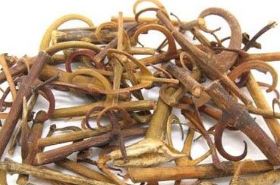
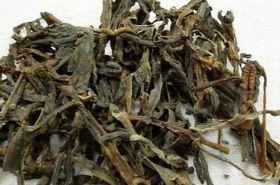
Licorice, Dried Ginger, Poria, and Atractylodes Macrocephala Decoction
Formula Rhyme: The "Kidney Bi Syndrome Decoction" (Shen Zhuo Tang) incorporates Dried Ginger; Poria, Licorice, and Atractylodes Macrocephala are combined. It addresses body heaviness and coldness in the lower back due to dampness, also known as Gan Jiang Ling Zhu Tang.
Formula Explanation: The "Kidney Bi Syndrome" (Shen Zhuo) treated by this formula isn't a disease of the kidney organ itself. Instead, it's a condition where cold-dampness externally invades and obstructs the lower back region. In Traditional Chinese Medicine (TCM), the lower back is considered the "abode of the Kidneys," hence the name "Kidney Bi Syndrome." This condition often arises after physical exertion with sweating, followed by exposure to cold, damp clothing. Over time, this allows cold-dampness to penetrate and accumulate in the lower back. Alternatively, living in a low-lying, damp environment can directly cause cold-dampness to invade the lumbar area. This leads to symptoms such as cold pain below the waist, feeling as if you're sitting in cold water, and a sensation of coldness and heaviness in the lower back, "like carrying a weight of five thousand coins." Since the pathogenic factor is lodged in the muscles and superficial layers, it hasn't yet harmed the internal organs, which is why urination remains normal and appetite is unchanged. Based on this understanding, although the pathogen is external, there are no typical "exterior" symptoms, and the condition has persisted for a while, meaning it can't be resolved by simply expelling external pathogens. The appropriate approach is to warm the middle (digestive center) and overcome dampness, allowing the cold-dampness to be transformed by warmth.
In this formula, Dried Ginger (Gan Jiang) acts as the chief herb, warming the digestive center and dispelling cold. Poria (Fu Ling) is the minister herb, gently draining dampness. Together, these two herbs work synergistically: one warms to expel cold, and the other drains to eliminate dampness. Once cold is expelled and dampness is resolved, the root cause of the illness is addressed. Atractylodes Macrocephala (Bai Zhu) serves as the assistant, strengthening the Spleen's function and drying dampness. This ensures a healthy Spleen, preventing dampness from accumulating again. Finally, Licorice Root (Gan Cao) acts as the envoy, harmonizing the Spleen and Stomach and regulating the central digestive system.
Usage and Dosage of Licorice, Dried Ginger, Poria, and Atractylodes Macrocephala Decoction
Composition: Licorice (Gan Cao), Atractylodes Macrocephala (Bai Zhu) each 6g; Dried Ginger (Gan Jiang), Poria (Fu Ling) each 12g.
Preparation: Combine the four ingredients. Add five traditional measurement units (sheng) of water, boil until the volume is reduced to three sheng. Divide the decoction into three warm doses and consume them throughout the day.
Modifications: If cold symptoms are severe and pain is intense, Prepared Aconite Root (Fu Zi) and Asarum (Xi Xin) may be judiciously added to further enhance the warming and cold-dispelling effects through the meridians.
Important Safety Note: Prepared Aconite Root (Fu Zi) is a highly potent herb. Its use, dosage, and preparation must be strictly supervised by a qualified and experienced Traditional Chinese Medicine (TCM) practitioner due to its potential toxicity if not properly handled or administered. Never self-prescribe or exceed recommended dosages.
Benefits and Indications of Licorice, Dried Ginger, Poria, and Atractylodes Macrocephala Decoction
Benefits: Warms the Spleen and overcomes dampness.
Indications: Kidney Bi Syndrome due to invading cold-dampness in the lower back. Symptoms include cold, heavy pain in the lower back, but normal appetite, no thirst, impaired urination, a pale tongue with a white coating, and a deep, slow or deep, moderate pulse.
Clinical Application: In addition to the sensation of coldness and heaviness in the lower back with pain, a definitive diagnosis for clinical use includes no thirst, a white tongue coating, and a deep, slow or deep, moderate pulse. The key diagnostic points are lower back heaviness, coldness, and pain, coupled with a white tongue coating and no thirst, along with a deep, slow or deep, moderate pulse.
Traditional Chinese Medicine Literature Abstract
Wang Ang's "Yi Fang Ji Jie (Collection of Medical Formulas) · Diuretic Formulas" states: "This formula treats the Foot Shaoyin Kidney and Foot Taiyang Bladder meridians. Dried Ginger is pungent and hot to dry dampness; Atractylodes Macrocephala is bitter and warm to overcome dampness; Poria is sweet and bland to drain turbidity; Licorice is sweet and neutral to harmonize and tonify the Earth element. This kidney-related condition uses Spleen-tonifying herbs, for strengthening the Earth (Spleen) is precisely how water (dampness) is controlled."
References:
A comprehensive review of the pharmacological activities and chemical constituents of Poria cocos, highlighting its dampness-resolving properties. PMID: 32675685
An exploration of the traditional uses, phytochemistry, and pharmacology of Zingiber officinale (Dried Ginger), emphasizing its warming actions in TCM. PMID: 24701140
A systematic review and meta-analysis on the effectiveness and safety of Traditional Chinese Medicine for chronic low back pain, which often includes patterns like cold-dampness. PMID: 35147490
3-Second Self-Check + 30-Second Self-Help:
If you constantly feel a deep, cold ache in your lower back, sometimes with a heavy sensation like you've been sitting in cold water, your tongue looks pale with a white coating, and you don't feel thirsty, Then you might be experiencing a pattern of cold-dampness in your lower back. Immediately consider seeking a Traditional Chinese Medicine practitioner for a proper diagnosis and personalized treatment plan. A warm compress and avoiding cold, damp environments can offer temporary relief while you seek professional guidance.
For informational purposes only. Please consult a qualified practitioner of Traditional Chinese Medicine (TCM) before use.