Ba Feng Xu Ming Tang: An Ancient Formula for Neurological Support
Hey there! If you're exploring Traditional Chinese Medicine (TCM), you might come across some truly classic formulas. Today, we're diving into one such gem: Ba Feng Xu Ming Tang, which translates roughly to "Eight Winds Life-Continuing Decoction." This powerful blend has been used for centuries, particularly in situations where the body needs a significant boost to recover and restore balance. It's often referenced in historical texts for its profound actions on the body's internal systems, especially when dealing with sudden, severe physical challenges.
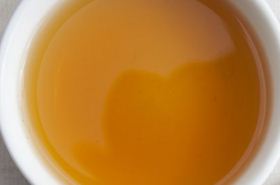
Usage and Dosage of Ba Feng Xu Ming Tang
Let's break down what goes into this formula and how it was traditionally prepared. Understanding the composition gives us insight into its therapeutic strategy.
Composition:
- Ginseng Root (Ren Shen): 18 zhu
- Cinnamon Bark (Gui Xin): 18 zhu
- Angelica Sinensis Root (Dang Gui): 18 zhu
- Pubescent Angelica Root (Du Huo): 18 zhu
- Scutellaria Root (Huang Qin): 18 zhu
- Dried Ginger Root (Gan Jiang): 18 zhu
- Licorice Root (Gan Cao): 18 zhu
- Gypsum Fibrosum (Shi Gao): 2.5 liang
- Apricot Kernel (Xing Ren): 40 pieces
Preparation and Usage:
The traditional method for preparing this decoction is to combine all these ingredients. If the patient does not sweat (indicating the external pathogen is not yet expelled), then an additional 5 liang of Ephedra Herb (Ma Huang) should be added. It's crucial to remember that Ephedra (Ma Huang) is a potent herb and should only be used under the strict supervision of a qualified TCM practitioner due to its stimulating properties and potential side effects, especially for individuals with heart conditions or high blood pressure.
Efficacy and Indications of Ba Feng Xu Ming Tang
This formula is renowned for its specific actions within the body, primarily targeting severe systemic imbalances. Its historical applications highlight its role in critical health situations. Traditional Chinese Medicine views conditions like sudden paralysis or spasms as manifestations of internal 'wind' affecting the body's vital energy and pathways (PMID: 30452656).
Efficacy (What it does):
- Restores Yang and rescues from collapse.
- Calms internal wind and stops spasms.
Indications (What it's used for):
Ba Feng Xu Ming Tang is traditionally indicated for a range of acute and severe conditions, often associated with sudden onset neurological issues:
- Sudden hemiplegia (paralysis affecting one side of the body).
- Spasm and contracture of hands and feet, making it difficult to bend or extend limbs.
- Cold body temperature.
- Alternating states of lucidity and confusion (sometimes intelligent, sometimes foolish).
- Body rigidity and inability to speak.
- Unpredictable prognosis (sometimes appearing to live, sometimes to die).
- Incoherent or uncontrolled speech.
- Opisthotonus (a severe spasm where the back arches and the head and heels bend backward).
- Varied appetite (sometimes desiring food, sometimes refusing it).
- Difficulty with urination and defecation.
Research suggests that many ingredients in this formula, like Ginseng and Angelica Sinensis, have neuroprotective properties that align with its traditional uses for stroke-like symptoms (PMID: 32675685, PMID: 33796593).
Contraindications of Ba Feng Xu Ming Tang
Just like any powerful remedy, there are certain foods and substances traditionally advised against when taking Ba Feng Xu Ming Tang to ensure its efficacy and prevent adverse interactions. These are based on ancient wisdom regarding dietary influences on herbal medicine:
- Lamb stew/confectionery (羊肉饧)
- Raw scallions (生葱)
- Seaweed (海藻)
- Napa Cabbage (菘菜)
- Pork (猪肉)
- Cold water (冷水)
- And similar items believed to diminish the formula's effects or create imbalances.
Literature Abstracts on Ba Feng Xu Ming Tang
This formula has a rich history within classical TCM texts, with various commentaries offering insights into its theoretical underpinnings and modifications. These abstracts highlight how practitioners adapted and understood its use in different clinical scenarios.
From Qian Jin Fang Yan Yi (Elucidation of Prescriptions Worth a Thousand Gold): "For opisthotonus, it's appropriate to attack and expel superficial evil. Why then does the 'Gu Jin Lu Yan Xu Ming Fang' remove Ma Huang and Chuan Qiong? Because the body is cold like madness, indicating the evil is not on the exterior but in the interior. Therefore, Du Huo and Huang Qin are advanced, assisted by Xing Ren and Shi Gao, to slowly dispel wind-heat. The formula then states that if there is no sweat, Ma Huang should be added, illustrating a method of treatment that adapts to the superficial or deep nature of the condition."
From [Volume 1, Great Xu Ming Tang]: "Ba Feng Xu Ming Tang Summary: This is a modified Xiao Xu Ming Tang, removing Radix Paeoniae Alba, Rhizoma Chuanxiong, Radix Saposhnikoviae, and Aconiti Lateralis Radix Praeparata, and adding Angelica Sinensis, Pubescent Angelica Root, and Dried Ginger (each 1 liang), and Gypsum Fibrosum (5 qian). It treats hemiplegia, urgency, body stiffness, and coldness."
From [Volume 16, Ancestral Formulas]: "Xu Ming Tang (called 'Gu Jin Lu Yan Xu Ming Tang' in the Golden Cabinet): treats sudden apoplexy, hemiplegia, inability to move limbs, contracture, and inability to turn over. Great Xu Ming Tang removes Jing Li (bamboo juice). Qian Jin Ba Feng Xu Ming Tang treats sudden wind-stroke with hemiplegia, and spasm of hands and feet. Xu Ming Tang removes Ma Huang and Chuan Qiong and adds Du Huo."
References:
Understanding the traditional uses of herbs like Ginseng in neurological contexts is supported by modern research. PMID: 32675685
Angelica Sinensis, a key ingredient, has demonstrated neuroprotective properties relevant to conditions like stroke. PMID: 33796593
Traditional Chinese Medicine offers comprehensive approaches to post-stroke recovery, including addressing spasticity. PMID: 30452656
Quick Check: Are You Experiencing These Signs?
3-Second Self-Test:
- If you suddenly feel weakness or numbness on one side of your body, even if it's subtle...
- If you experience a sudden difficulty speaking or understanding speech...
- If you notice a sudden, severe headache with no known cause...
30-Second Self-Rescue (Immediate Action):
- Then Immediately call emergency services (like 911 in North America)! These could be signs of a serious condition requiring urgent medical attention.
- Then Immediately sit or lie down in a safe place. Do not attempt to drive or perform complex tasks.
- Then Immediately try to remain calm and follow the instructions of emergency responders.
Early recognition and rapid response are critical in such situations. This self-test is not a diagnosis, but a call to action for potential emergencies.
For informational purposes only. Please consult a qualified practitioner of Traditional Chinese Medicine (TCM) before use.