Clove
Synonyms: Male Clove, Dingzixiang (Clove Bud).
Flavor and Nature: Pungent in flavor, warm in nature.
Meridian Tropism: Enters the Spleen, Stomach, Lung, and Kidney meridians.
Part Used Medicinally: The dried flower bud of the plant.
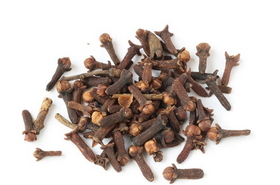
Morphological Characteristics: This herb is slightly pestle-shaped, measuring 1-2 cm in length. The corolla is spherical, 0.3-0.5 cm in diameter, with four petals imbricately enclosed. It appears brownish-red or brownish-yellow. Inside the petals are stamens and a pistil; when rubbed, numerous tiny yellow anthers are visible. The calyx tube is cylindrical, slightly flattened, sometimes slightly curved, 0.7-1.4 cm long and 0.3-0.6 cm in diameter. It is reddish-brown or brownish-red, with four triangular sepals at the upper part, separating in a cross shape. It is firm, solid, and rich in oil. The aroma is intensely fragrant, and the taste is pungent with a numbing sensation on the tongue.
Usage and Dosage of Clove
Usage: 1-3g, for oral administration or topical application as a powder.
Preparation: Remove impurities and sift out dust. Crush before use.
Efficacy and Actions of Clove
Efficacy: It warms the Middle Jiao (Spleen and Stomach) and descends rebellious Qi; it also invigorates Kidney Yang and supports masculinity.
Main Indications: Used for Spleen and Stomach deficiency-cold, hiccups, vomiting, poor appetite with diarrhea, cold pain in the heart and abdomen, Kidney deficiency leading to impotence.
Contraindications for Clove
Should not be used concurrently with Curcuma Tuber (Yujin).
Clove in Traditional Formulas
1. "Clove and Persimmon Calyx Decoction" from *Zheng Yin Mai Zhi*: Contains Clove, Persimmon Calyx, Ginseng, and Fresh Ginger. It treats chronic hiccups caused by cold. PMID: 30345094
2. "Clove and Cinnamon Powder" from *Shanghai Standard for Proprietary Chinese Medicines*: Contains Clove and Cinnamon Bark. It treats epigastric pain, cold pain in the umbilical region and abdomen, diarrhea, as well as external sores and swellings, and traumatic pain.
3. "Asthma Phlegm Qi" from *Zhu Shi Ji Yan Fang*: Three pieces of Bitter Clove (Kudingcha), ground into a powder. Take with water; vomiting ceases immediately.
Associated Prescriptions with Clove
① To treat persistent hiccups or indefinite hiccuping due to cold damage (shanghan): Clove 30g, dried Persimmon Calyx 30g. Roast until dry, then pound and sift into a powder. For each dose, take 3g with Ginseng decoction, at any time. (From *Jian Yao Ji Zhong Fang*)
② To treat infantile vomiting: Clove 30g, raw Pinellia Tuber 30g. Grind together into a fine powder, mix with ginger juice and form into pills the size of mung beans. Take 3-20 pills with ginger soup. (From *Bai Yi Xuan Fang*)
③ To treat eating in the morning and vomiting in the evening: Fifteen cloves, ground into a powder. Mix with sugarcane juice and ginger juice to form pills the size of a lotus seed. Hold and swallow. (From *Zhai Yuan Fang*)
④ To treat cholera and stop vomiting: Fourteen cloves, boiled in 5 *ge* (ancient unit) of wine until 2 *ge* remain. Drink the entire amount at once. Boiling with water is also effective. (From *Qian Jin Yi Fang*)
⑤ To treat chronic persistent heart pain: Clove 15g, Cinnamon Bark 30g. Pound finely and sift into a powder. Before meals, take 3g with warm wine. (From *Sheng Hui Fang*)
⑥ To treat gangrenous flesh in carbuncles and sores: Apply Clove powder to the affected area, and cover with a plaster. (From *Guai Zheng Qi Fang*)
⑦ To treat injury caused by eating crab: Clove powder, take 1.5g with ginger soup. (From *Zheng Zhi Yao Jue*)
⑧ To treat nasal polyps: Wrap Clove in cotton and insert into the nostril. (From *Sheng Hui Fang*)
Related Discourses on Clove
1. *Bei Lu* (*Miscellaneous Records of Famous Physicians*): Treats wind-water edema, cholera heart pain, eliminates foul odors.
2. *Kai Bao* (*Kaibao Bencao*): Warms the Spleen and Stomach, stops cholera with distention, treats various swellings from wind-toxins, and dental caries. Can enhance the fragrance of other aromatics.
3. *Bencao Gangmu* (*Compendium of Materia Medica*): Treats deficiency-type hiccups, infantile vomiting and diarrhea, and inactive, pale-gray eruptions in smallpox due to Stomach deficiency.
Benefits of Drinking Clove Infusion
First: Promotes Digestive System Health
Clove infusion offers excellent benefits for the digestive system. It not only enhances digestive capacity but also helps treat various digestive discomforts. Scientists conducted experiments on mice and found that consuming Clove could significantly inhibit the formation of gastric ulcers. This effect is attributed to eugenol and clove essential oil, both of which promote gastric mucus secretion without increasing stomach acid, thereby inhibiting and treating gastric ulcers. Clove is also excellent for invigorating the stomach, effectively relieving abdominal bloating and showing positive results for digestive ailments like nausea and vomiting, enhancing the stomach's digestive power. Furthermore, clove infusion has anti-diarrheal effects and inhibits intestinal excitability. Clove extracts can effectively suppress large intestinal diarrhea and intestinal fluid accumulation caused by various factors. Judicious use of Clove can also inhibit the excitability of isolated intestinal tracts. PMID: 32240902
Second: Anesthetic and Analgesic Effects
Scientific use of Clove also exhibits anesthetic and analgesic effects. The eugenol contained in Clove is very effective as an anesthetic for small animals. Experiments on mice showed that Clove could effectively numb nerves and inhibit compound action potentials of nerve fibers. Clove infusion also provides excellent pain relief when used appropriately in daily life.
Third: Antipyretic and Anti-inflammatory Properties
Clove infusion also possesses antipyretic, analgesic, and anti-inflammatory properties. This is due to the ether extract in Clove, which can effectively increase vascular permeability, thereby preventing and treating inflammatory conditions. Upon entering the body, Clove can also enhance the body's antioxidant capacity, effectively scavenge free radicals, and inhibit the activity of lipoxygenase and cyclooxygenase. PMID: 24653609
Fourth: Inhibits Thrombus Formation
Upon entering the body, Clove exhibits anti-aggregation and anti-coagulation effects, as well as excellent anti-thrombotic properties. Extracts from Clove can effectively prolong the time it takes for electrically stimulated carotid artery thrombosis to form, thereby inhibiting thrombus formation and gaining crucial time for disease treatment.
Fifth: Hangover Relief
If you've had too much to drink or are still feeling the effects of alcohol the next day, Clove can help with hangover relief. As mentioned earlier, Clove has a unique aroma that is not only fragrant but also helps in sobering up. The *Bencao Gangmu* meticulously records Clove's hangover-relieving properties, stating that Clove can neutralize alcohol toxicity, and its fragrance can refresh the mind, naturally leading to a sobering effect.
Sixth: Anti-Pathogen Properties
The benefits of clove infusion also include antibacterial and antiviral effects, in addition to excellent killing effects against trichomonads, parasitic worms, and fungi. Clove oil, eugenol, and acetyleugenol contained in Clove have significant killing effects on organisms like *Trichomonas vaginalis* and *Ascaris suum*. Scientific use can also effectively boost the body's immunity. PMID: 10818274
Seventh: Warms Kidneys and Strengthens Yang
Clove is warm in nature and offers excellent health benefits for the Kidney meridian. Therefore, consuming Clove helps strengthen Yang and invigorate Kidney Qi. If symptoms such as impotence, cold lower back and knees, or coldness in the genitalia occur in daily life, Clove can be taken as an infusion.
Contraindications for Drinking Clove Infusion
First: Potential Toxic Side Effects
Scientists conducted animal experiments to determine whether consuming Clove might produce toxic side effects or endanger life. Research found that consuming Clove and clove oil did not lead to animal death but could cause symptoms of toxicity. Specific toxic side effects of Clove included limb weakness, respiratory depression, and loss of certain reflexes. If large quantities of clove oil were consumed, animals exhibited vomiting, which could then lead to death. Clove contains eugenol, which is composed of phenoxy radicals and quinone methide compounds. These substances, upon entering the body, can cause abnormal liver cell metabolism and exhibit toxic side effects after covalently binding with cellular proteins, severely endangering life.
Second: Individuals Unsuitable for Clove Consumption
Numerous classical Chinese medicine texts, such as the *Bencao Gangmu*, contain detailed records of Clove. As a Chinese medicinal herb, Clove can treat illnesses and promote health, but it is recommended that individuals with febrile diseases or those with a Yin deficiency and internal heat constitution should avoid consuming clove infusion, as it may exacerbate internal heat and be detrimental to their health.
Third: Avoid Clove Oil Consumption
Clove oil can be extracted from Clove. Many women enjoy using this volatile oil for beauty purposes, but is it truly safe? Research has shown that clove oil itself possesses certain toxicity, and consumption can lead to toxic side reactions in the body. Therefore, it is advised to avoid using clove oil in daily life to prevent potential health impacts.
3-Second Self-Assessment + 30-Second Self-Help
If... you frequently experience a cold sensation in your stomach or abdomen, accompanied by occasional hiccups, mild digestive upset, or a general lack of appetite, you might be experiencing signs of what Traditional Chinese Medicine calls "Spleen and Stomach deficiency-cold."
Then Immediately... try sipping on warm ginger tea or gently massaging your belly in a clockwise motion for 30 seconds to promote warmth and circulation. Remember, these are comfort measures, not treatments. Always consult a qualified practitioner for personalized advice.
For informational purposes only. Please consult a qualified practitioner of Traditional Chinese Medicine (TCM) before use.
References
Gastroprotective activity of Syzygium aromaticum (L.) Merr. & L.M. Perry essential oil against ethanol-induced gastric ulcer in rats. PMID: 32240902
Antioxidant and anti-inflammatory activities of clove (Syzygium aromaticum) extracts. PMID: 24653609
Antimicrobial activity of plant extracts from selected species of the Lamiaceae, Myrtaceae, and Apiaceae families. PMID: 10818274