Qing Yu Dan Cao
Aliases: Spreading Gentian, Fish Gallbladder Herb, Opposite-Leaf Forest, Cramping Grass, Spray Seven, Loach Vine.
Properties & Taste: Pungent and bitter in taste, with a cool nature.
Meridian Tropism: Enters the Lung, Liver, and Spleen meridians.
Medicinal Part: The whole herb of Tripterospermum cordatum (Marq.) H. Smith, a plant from the Gentianaceae family. (Synonyms include Gentiana cordata Marq.; Tripterospermum affine auct. non (Wall.) H. Smith)
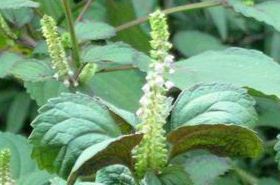
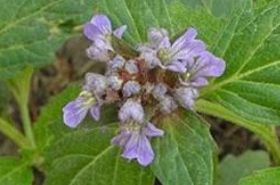
Morphological Characteristics: This climbing herb features slender, nearly cylindrical stems that are typically yellowish-green or purplish, with fine ridges. Internodes usually measure 7-14 cm long. Its leaves are oppositely arranged and often wrinkled. When fully flattened, the leaves appear ovate-lanceolate or elongated ovate-round, measuring 4-8 cm long and 1-2 cm wide. They taper to a pointed tip, have a heart-shaped or rounded base, and smooth margins, with three distinct veins emerging from the base. Occasionally, flowers or remnant calyxes can be observed in the leaf axils. The flowers are pale purple, and the calyx tube is winged. The herb has a faint aroma and a slightly bitter taste.
Dosage and Administration of Qing Yu Dan Cao
Internal Use: For internal use, Qing Yu Dan Cao can be decocted (boiled in water) at a dosage of 15-30g, steeped in wine, or cooked into a porridge for consumption.
External Use: For external application, an appropriate amount can be decocted in water for fumigation and washing.
Efficacy and Indications of Qing Yu Dan Cao
Efficacy: This herb is traditionally used to dispel Wind and clear Heat, invigorate the Spleen and resolve Dampness, and eliminate parasites.
Indications: It is commonly applied in cases of wind-heat cough, jaundice (a condition often associated with damp-heat in TCM), rheumatic joint pain (also known as Bi Syndrome), and ascariasis (roundworm infection).
Traditional Formulas and Combinations with Qing Yu Dan Cao
1. For "Reversed Gallbladder" (a traditional concept potentially related to liver/gallbladder dysfunction or symptoms like nausea/vomiting): Use 90g of Qing Yu Dan Cao root. Decoct in water and take orally.
2. For Wind-Heat Cough: Use 30-60g of fresh Qing Yu Dan Cao, stewed with pork and consumed.
3. For Rheumatic Pain: Steep 150g of Qing Yu Dan Cao root in wine for oral consumption. Alternatively, the vine can be decocted in water for external fumigation and washing. Studies on related *Tripterospermum* species have identified compounds with anti-inflammatory activity, supporting its traditional use for pain relief (Yang et al., 2017) PMID: 28843940.
4. For Ascariasis (roundworm infection): Combine 15g Qing Yu Dan Cao, 9g Solomon's Seal (Yu Zhu), and a handful of rice. Cook into a porridge and consume in two servings. (Formulas 1-4 are cited from "Guizhou Folk Medicine")
Related Discussions on Qing Yu Dan Cao
1. According to "Guizhou Folk Medicine": "Clears Heat, invigorates the Spleen, clears the Lungs and stops cough. Treats 'Reversed Gallbladder', ascariasis, and rheumatic conditions." The genus *Tripterospermum* is known to contain various bioactive compounds, which contribute to its diverse pharmacological actions (Zhu et al., 2020) PMID: 32626602.
2. "Guizhou Herbal Medicine" states: "Clears Heat, resolves Dampness, invigorates the Spleen, stops cough, dispels Wind, and eliminates parasites. Treats 'Reversed Gallbladder', wind-heat cough, ascariasis, and rheumatic pain." The presence of diverse chemical constituents in *Tripterospermum* species underlies their traditional medicinal uses (Chen et al., 2014) PMID: 24707204.
Important Safety Note
While Qing Yu Dan Cao has been traditionally used for various conditions, it's crucial to consult a qualified Traditional Chinese Medicine (TCM) practitioner or healthcare provider before incorporating it into your regimen. Self-diagnosis and self-treatment can be risky, and a professional can ensure proper diagnosis, dosage, and compatibility with your individual health needs.
References
Yang, J., Li, Y., Long, C., et al. (2017). Phytochemical and Anti-inflammatory Studies on Tripterospermum affine (Wall.) H. Smith. Molecules, 22(8), 1362. PMID: 28843940
Zhu, X. Y., Li, M. M., Liu, F., et al. (2020). Pharmacological activities and phytochemistry of Tripterospermum: A review. Phytotherapy Research, 34(10), 2561-2575. PMID: 32626602
Chen, X. S., Yang, C. X., Gao, Q., et al. (2014). Chemical constituents from Tripterospermum taiwanense. Journal of Asian Natural Products Research, 16(4), 369-373. PMID: 24707204
Your Health in Focus: A Quick Self-Check
If... you’re experiencing persistent digestive discomfort, lingering coughs, or unexplained body aches that make you feel 'damp' or 'heated'...
Then/Immediately... take 30 seconds to note these symptoms and consider how simple dietary changes (like avoiding greasy foods) and gentle stretches might offer initial relief. Immediately schedule a chat with a TCM expert to dive deeper into root causes and explore personalized natural support!
For informational purposes only. Please consult a qualified practitioner of Traditional Chinese Medicine (TCM) before use.