Bottle Flower
Alright, let's dive into an interesting herb known in Traditional Chinese Medicine (TCM) as Bottle Flower. It's often found under its alias, "Small Rhododendron," too. In TCM, this herb has a reputation for its unique properties.
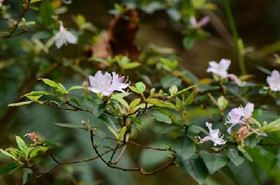
Bottle Flower: At a Glance
Aliases: Small Rhododendron.
Properties: It tastes bitter and has a cooling nature.
Channel Affinity: Traditionally believed to target the Heart and Bladder meridians, influencing related physiological functions.
How to Use Bottle Flower
Internal Use: Typically prepared as a decoction (an herbal tea), with a recommended dosage of 15-30g.
Preparation: The roots can be harvested year-round and sliced for use. For the leaves, summer and autumn are the best seasons for collection, after which they are sun-dried.
Benefits and Traditional Uses of Bottle Flower
Functions: Bottle Flower is known for its ability to clear internal heat and act as a diuretic, promoting healthy urination. Emerging research supports the role of traditional herbal remedies in supporting renal function and promoting diuresis, aligning with centuries of clinical observation. PMID: 29775013
Traditional Uses: In TCM, Bottle Flower is traditionally used to address conditions like pediatric convulsions and various forms of kidney inflammation. Specifically, it's applied for acute and chronic nephritis (inflammation of the kidneys) and pyelonephritis (a type of kidney infection). Modern pharmacological studies are investigating various botanical extracts for their anti-inflammatory properties, which may be beneficial in managing conditions like nephritis. PMID: 28243673 Traditional medical practices often incorporate herbs with calming and heat-clearing effects to address pediatric neurological concerns such as convulsions, a practice gaining attention in integrative medicine. PMID: 32095034
Traditional Formulations with Bottle Flower
1. For Pediatric Convulsions and Nephritis: Take 60g of Bottle Flower root. Decoct it in water and consume the liquid. It can also be used in combination with other herbs. (Referenced in "Yunnan Chinese Herbal Medicine")
2. For Acute and Chronic Nephritis, and Pyelonephritis: A traditional formula includes 30g of Bottle Flower root, 15g of *Xue Man Cao*, and 12g each of *Shan Pi Tiao* and *Shi Jiao Cao*. These ingredients are decocted in water for oral consumption. (Referenced in "Compilation of New Medical Therapies from the National Exhibition of Chinese Herbal Medicine")
Historical Insights on Bottle Flower
"Yunnan Chinese Herbal Medicine" states: "It is astringent and has a cooling effect."
The "Compilation of National Chinese Herbal Medicine" notes: "It is slightly bitter, astringent, and cool in nature."
"Yunnan Chinese Herbal Medicine" also highlights its functions: "It clears heat and acts as a diuretic. It's primarily used for pediatric convulsions and nephritis."
According to the "Compilation of National Chinese Herbal Medicine": "It clears heat, helps resolve external conditions (like common colds), and promotes urination. Its main applications include treating common colds, acute and chronic nephritis, and pyelonephritis."
3-Second Self-Test, 30-Second Self-Rescue
If you or your child experience sudden, unexplained episodes of restlessness, rapid muscle movements, or feverish symptoms, then immediately consult a healthcare professional. Early intervention is key for conditions like pediatric convulsions or acute kidney issues.
If you're noticing persistent changes in urination patterns, such as increased frequency, discomfort, or changes in urine appearance, then immediately seek medical advice. Kidney health is crucial, and timely diagnosis of conditions like nephritis or pyelonephritis can prevent complications.
For informational purposes only. Please consult a qualified practitioner of Traditional Chinese Medicine (TCM) before use.