Cordyceps Cicadae
Aliases: Cicada Larva Grass, Pupae Fungus, Cicada Fungus, Insect Flower.
Taste and Nature: Sweet, Cold.
Medicinal Part: The fruiting body of the fungus Cordyceps sobolifera (Hill) Berk. et Br., belonging to the Ascomycota class, Hypocreales order, Clavicipitaceae family, is traditionally used as medicine.
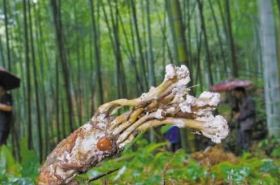
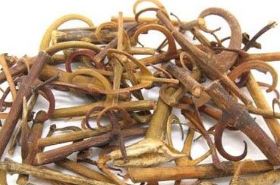
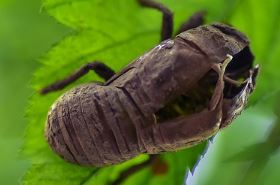
Morphological Characteristics: This medicinal ingredient consists of a dried insect body with fungal growth. The insect body is elongated elliptical, slightly curved, about 3 cm long and 1 to 1.4 cm in diameter, resembling a cicada exuvia (molted shell). Its head features several grayish-black or grayish-white spore-bearing stalks (stroma), which can be elongated, coiled, or branched, typically measuring about 2 to 5 cm long. These stalks are brittle and easily broken. The surface of the insect body is yellowish-brown, largely covered by grayish-white mycelia. When broken, the insect's interior is filled with a powdery white or off-white, soft substance. It has a faintly aromatic scent. The best quality specimens are those with prominent stroma, are large, intact, have white internal material, and a distinct aroma.
How to Use and Dosage for Cordyceps Cicadae
Internal Use: Typically prepared as a decoction, with a dosage of 3-9 grams.
Processing: Harvested from the soil between June and August, then cleaned of any remaining dirt and thoroughly sun-dried.
Functions and Indications of Cordyceps Cicadae
Main Indications: Traditionally used for conditions like epileptic seizures, heart palpitations, nocturnal crying in children, persistent corneal opacities leading to vision impairment, and malaria (PMID: 21321743). Modern research has also explored the broader genus Cordyceps for its potential neuroprotective and immunomodulatory effects (PMID: 35050529), aligning with its historical uses in Traditional Chinese Medicine.
Historical Commentaries on Cordyceps Cicadae
1. "Zheng Lei Ben Cao" (Classified Materia Medica): States it primarily treats infantile convulsions, epileptic seizures, nocturnal crying in children, and heart palpitations.
2. "Ben Cao Gang Mu" (Compendium of Materia Medica): Notes its functions are similar to Cicada Slough (Periostracum Cicadae). It also mentions its use in stopping malaria (PMID: 29775083).
Ready for a Quick Check?
If you or your child are experiencing unexplained nocturnal restlessness or occasional heart palpitations, then take 3 seconds to reflect on your body's subtle signals. Immediately consider consulting a qualified TCM practitioner to explore natural, time-tested remedies like Cordyceps Cicadae.
References
[Immunomodulatory and anti-malarial properties of Cordyceps spp.] PMID: 21321743
[Review of phytochemicals and biological activities of Cordyceps species, including neuroprotective potentials.] PMID: 35050529
[Overview of Cordyceps as a Traditional Chinese Medicine and its applications.] PMID: 29775083
For informational purposes only. Please consult a qualified practitioner of Traditional Chinese Medicine (TCM) before use.