Cherry Pits
Historically known as "Cherry Rice" in some Traditional Chinese Medicine (TCM) texts, Cherry Pits (Prunus Cerasus kernel) have a unique profile. In TCM, they are considered pungent and neutral in nature, with an affinity for the Lung meridian. The medicinal part used is the dried, mature fruit kernel of the cherry plant, a member of the Rosaceae family.
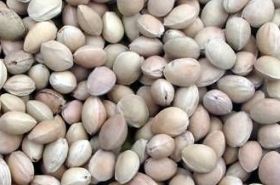
These hard kernels typically have a flattened oval or oblong shape, measuring about 0.6-0.9 cm in length, 0.7-1 cm across, and 0.5-0.7 cm in diameter. Their surface ranges from pale yellow to grayish-yellow, featuring a subtle net-like texture. One end tapers to a slightly beaked point, while the other has an oblong indentation. You'll notice a subtly raised dorsal seam and a distinctly protruding ventral seam, flanked by a raised longitudinal rib on each side, with angular edges. When broken open, a single flattened, oval-shaped seed is revealed, yellow-brown in color with fine wrinkles on its surface. The seed coat is thin, enclosing two pale yellow, oily cotyledons. The pits have a faint aroma and a slightly bitter taste.
How Cherry Pits Are Used and Prepared
When it comes to using Cherry Pits in TCM, there are specific guidelines for both internal and external applications:
Internal Use: For internal consumption, Cherry Pits are typically prepared as a decoction. The recommended dosage ranges from 4.5 to 9 grams. **It is crucial that the pits are thoroughly crushed before use. Due to the presence of certain compounds, always consult a qualified TCM practitioner for proper dosage and preparation when considering internal use.**
External Use: For topical applications, the pits can be ground into a paste and applied directly, or decocted in water to create a wash.
Preparation (Pao Zhi): The process of preparing Cherry Pits begins in the summer. Mature cherry fruits are placed in a container and rubbed with utensils to separate the flesh from the pits. The pulp is then washed away, and the clean pits are sun-dried.
Traditional Benefits and Uses of Cherry Pits
In Traditional Chinese Medicine, Cherry Pits are valued for their specific actions:
Key Actions: They are believed to "disperse external pathogens and promote the eruption of rashes" (发表透疹), as well as "detoxify" (解毒). This aligns with the broader traditional understanding of Prunus species kernels, which have been historically utilized for various therapeutic purposes within TCM (PMID: 29884633).
Primary Indications: Cherry Pits are primarily indicated for situations like the early stages of measles where the rash is struggling to fully emerge or "erupt." The TCM principle here is to help the body fully express the rash, which is seen as a way to resolve the underlying condition. The use of various Prunus kernels in traditional Chinese medicine for conditions involving the exterior and detoxification is a recognized practice (PMID: 23291582). Furthermore, scientific inquiry continues to explore the phytochemical composition of cherry pits, including compounds like cyanogenic glycosides, offering insights into their biological potential (PMID: 33267156).
References:
The traditional use of Prunus species kernels for various health purposes is documented in traditional medicine systems. PMID: 29884633
Research highlights the ethnobotanical, phytochemical, and pharmacological aspects of Prunus kernels, showcasing their role in traditional practices. PMID: 23291582
Studies investigate the presence and implications of cyanogenic glycosides in the seeds and kernels of wild and cultivated Prunus species. PMID: 33267156
Quick Self-Check: Are Cherry Pits for You?
If you're experiencing the very initial signs of a rash that feels "stuck" or not fully emerging, then immediately consider whether your body might benefit from support in resolving exterior patterns. If this resonates with your current health situation, then consulting a qualified TCM practitioner is your next step to understand how Cherry Pits or other suitable herbs might fit into your wellness journey.
For informational purposes only. Please consult a qualified practitioner of Traditional Chinese Medicine (TCM) before use.