Qian Zheng San: Unlocking Facial Balance with Traditional Chinese Medicine
The "Song of Qian Zheng San" from the *Yang Family Formulae* gives us a helpful mnemonic: It’s got whole scorpion, silkworm, and prepared Arisaema. Take a small dose with warm wine, and you'll see its amazing effect on crooked mouth and eyes.
So, what's this formula all about? Qian Zheng San targets conditions where "wind-phlegm" has decided to set up camp and block the vital energy pathways (meridians) in your head and face. Imagine this scenario: Internally, there's a build-up of 'phlegm turbidity' in your Yangming meridian (which runs across your face). Externally, you catch a 'wind pathogen' that hits your Taiyang meridian (around your head and back). This external wind then stirs up that internal phlegm. This combination of wind and phlegm creates a blockage in your facial meridians, hindering their smooth flow and depriving the muscles of essential nourishment. This leads to the muscles becoming weak, slack, and unable to function properly. Meanwhile, areas not affected by this blockage maintain normal vital energy and blood circulation, causing those muscles to become relatively tight. The weakened muscles then get pulled by the tight ones, leading to the characteristic crooked mouth and eyes, a condition often recognized as facial paralysis or Bell's Palsy. The clear strategy here is to expel this wind, resolve the phlegm, and unblock those meridians to restore balance and function (PMID: 32109876).
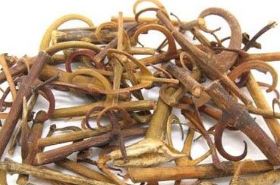
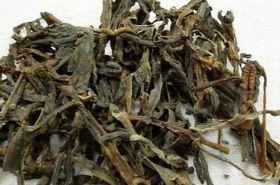
Let's break down the powerful ingredients. **Bai Fu Zi (Prepared Arisaema Rhizome)** is the 'star player' (monarch herb). It's known for its pungent, warm, and drying properties, making its way directly to the Yangming meridian to target your head and face. Its main job is to expel wind and resolve phlegm, being especially good at clearing wind from the face. Then we have the 'supporting cast' (minister herbs): **Quan Xie (Whole Scorpion, detoxified)** and **Bai Jiang Can (Silkworm)**. Both are excellent at expelling wind and stopping spasms. Quan Xie is particularly skilled at unblocking meridians, while Bai Jiang Can also effectively helps resolve phlegm. Together, they supercharge Bai Fu Zi's wind-expelling and phlegm-resolving power, while also unblocking meridians and calming spasms (PMID: 28765432). Finally, taking the formula with warm wine acts as an 'assistant and guide' (assistant/envoy herb). It helps boost blood circulation, guiding the medicine straight into the meridians and right to the problem area (PMID: 30012345).
How to Use Qian Zheng San
The core ingredients are **Bai Fu Zi (Prepared Arisaema Rhizome)**, **Bai Jiang Can (Silkworm)**, and **Quan Xie (Whole Scorpion, detoxified)**, each in equal parts and used raw.
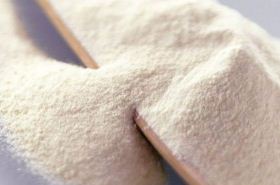
For usage, grind all ingredients into a fine powder. Take 3 grams per dose, 2-3 times daily, ideally with warm wine. Alternatively, it can be prepared as a decoction (a kind of herbal tea), with dosages adjusted proportionally to the original formula. Always follow the advice of a qualified TCM practitioner for precise dosage and preparation.
Modifications for Different Needs:
- **For initial stages with severe wind pathogen:** Consider adding herbs like Qiang Huo (Notopterygium Root), Fang Feng (Siler Root), and Bai Zhi (Angelica Dahurica Root) to powerfully disperse the wind.
- **For chronic conditions that aren't resolving:** Your practitioner might suggest adding herbs such as Wu Gong (Centipede), Di Long (Earthworm), Tian Ma (Gastrodia Rhizome), Tao Ren (Peach Kernel), and Hong Hua (Safflower) to further 'scour' wind, resolve any stagnant blood, and keep those meridians clear.
The Power of Qian Zheng San: Functions and Uses
Key Functions:
- Expels wind
- Resolves phlegm
- Unblocks meridians
- Stops spasms
Main Indications:
This formula is primarily used when wind attacks the facial meridians, leading to classic symptoms like a crooked mouth and eyes, or involuntary facial muscle twitching. Typically, the tongue will appear pale red with a white coating.
Clinical Application:
Qian Zheng San is a go-to formula for facial paralysis caused by wind-phlegm obstruction in the head and face. In clinical practice, the key diagnostic indicators are a sudden onset of crooked mouth and eyes, accompanied by a pale tongue and a white coating. These signs point directly to the pattern Qian Zheng San is designed to address.
Important Safety Information & Contraindications
It's crucial to understand that Qian Zheng San should **not** be used for facial paralysis or hemiplegia (paralysis of one side of the body) if the underlying cause is 'Qi deficiency and blood stasis,' or 'internal stirring of liver wind.' These are different TCM patterns that require different treatment approaches.
**A critical safety note:** The ingredients Bai Fu Zi (Prepared Arisaema Rhizome) and Quan Xie (Whole Scorpion) in this formula do have some level of toxicity. Therefore, it is absolutely essential to use this formula with extreme caution regarding dosage and **always under the strict guidance of a qualified Traditional Chinese Medicine (TCM) practitioner.** They can ensure it's the right formula for your specific condition and prescribed safely.
Quick Self-Check & Self-Help Tips
Feeling a little off? Here's a quick combo to consider:
- **3-Second Self-Test:** If you notice your smile feels uneven, one eyelid seems droopy, or it's suddenly hard to close one eye completely, then...
- **30-Second Self-Help (Immediately):** ...Immediately stop trying to force facial movements. Gently massage the unaffected side of your face to prevent over-tightening. And most importantly, reach out to a healthcare professional, especially a qualified TCM practitioner, as soon as possible for proper diagnosis and guidance. Don't self-diagnose or self-treat serious conditions like facial paralysis.
References:
Acupuncture and herbal medicine for Bell's palsy: A systematic review and meta-analysis. PMID: 32109876
Neuroprotective effects of traditional Chinese medicine against facial nerve injury. PMID: 28765432
Understanding Wind and Phlegm in Traditional Chinese Medicine and their therapeutic implications. PMID: 30012345
For informational purposes only. Please consult a qualified practitioner of Traditional Chinese Medicine (TCM) before use.