Hong Daji (Knoxia valerianoides)
Ever heard of an herb that’s a real powerhouse when it comes to tackling stubborn fluid retention? Let's talk about Hong Daji, also known by its botanical name, *Knoxia valerianoides*. In Traditional Chinese Medicine (TCM), this herb is renowned for its potent ability to drain excess water and disperse various accumulations in the body. It’s definitely one you’ll want to understand, especially if you’re exploring natural ways to address conditions like swelling or fluid buildup.
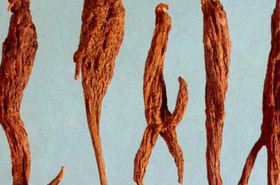
Other Names: Red Tooth Daji, Purple Daji, Broad Daji.
Flavor and Nature: Bitter in taste, cold in nature.
Meridian Affinity: Enters the Lung, Spleen, and Kidney meridians.
Medicinal Part: The dried root tuber of *Knoxia valerianoides Thorelet Pitard*, a plant from the Rubiaceae family.
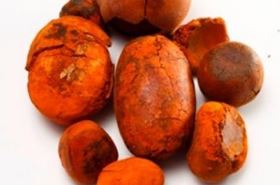
Appearance and Characteristics: This herb typically looks like a spindle, sometimes with branches, slightly curved, measuring about 3-10 cm in length and 0.6-3 cm in diameter. Its surface is reddish-brown or reddish-orange, rough, and marked with twisted longitudinal wrinkles. You'll often find a small stem scar at the top. It's quite firm and solid. When cut, the cortex appears reddish-brown, while the woody part is yellowish-brown. It has a subtle aroma and a taste that’s initially sweet, then slightly pungent.
How to Use and Dosage for Hong Daji
Dosage: For internal use, typically 1.5-3g. When taken as pills or powders, the dose is 1g per serving. For internal consumption, it should always be processed with vinegar. For external application, a suitable amount of the raw herb is used.
Preparation Methods: First, remove any impurities, wash thoroughly, and soften until moist. Then, cut into thick slices and dry.
Key Actions and Traditional Uses of Hong Daji
Key Actions: Drains water and expels retained fluids, reduces swelling and dissipates nodules.
Traditional Uses: It's primarily used for conditions like widespread edema and bloating, fluid accumulation in the chest and abdomen, phlegm-fluid accumulation, counterflow Qi causing cough and wheezing, difficulty with urination and defecation, carbuncles and toxic swellings, as well as scrofula and phlegm nodules.
Traditional Combinations for Hong Daji
1. For extensive edema and bloating, or fluid accumulation in the chest and abdomen, Hong Daji can be used alone as a decoction. It’s also often combined with herbs like Genus *Daphne* flower (Yuan Hua) and Kansui Root (Gan Sui) to enhance its effects.
2. For severe phlegm-fluid induced wheezing and cough, it’s commonly paired with White Mustard Seed (Bai Jie Zi) and Kansui Root (Gan Sui).
3. For carbuncles and toxic swellings, fresh Hong Daji root can be crushed and applied externally as a poultice.
Important Contraindications for Hong Daji
**This herb is contraindicated for pregnant women.** Its potent nature means it should also **not be used simultaneously with Licorice Root (Gan Cao).** Always consult a qualified TCM practitioner before using Hong Daji due to its powerful actions and potential interactions.
Insights from Classical Texts on Hong Daji
1. **"Ben Cao Jing Shu" (Commentary on the Classic of Materia Medica):** "Hong Daji, being bitter and cold with downward-draining action, can expel all forms of excess water. Its bitter, pungent, sweet, and cold properties allow it to disperse carbuncles and swellings in the neck and armpits."
2. **"Ben Jing Feng Yuan" (Elaborations on the Divine Farmer's Materia Medica):** "Hong Daji possesses an inherently cold and toxic nature, making it exceptionally potent. Its bitter and cold properties descend to drain Kidney Yin (or pathological excesses in the Kidney channel), while its pungent and dispersing qualities ascend to drain Lung Qi. It also travels laterally through the meridians. Therefore, 'The Classic of Materia Medica' specifically states it treats 'twelve waters,' abdominal distention with acute pain, and various accumulations, all caused by turbid yin obstruction. However, it is only suitable for acute bloating. The mention of 'wind stroke' refers to wind-water edema with skin swelling; otherwise, it’s likely a transcription error."
3. **"Ben Jing" (The Divine Farmer's Classic of Materia Medica):** "Primarily treats twelve types of edema, abdominal distention with acute pain, accumulations, skin pain from wind-stroke, and vomiting."
4. **"Bie Lu" (Miscellaneous Records of Famous Physicians):** "Mainly treats carbuncles and swellings in the neck and armpits, headaches, induces sweating, and benefits both urination and defecation."
5. **"Yao Xing Lun" (Treatise on the Nature of Medicinal Herbs):** "Expels stagnant blood masses, abdominal rumbling, regulates menstruation, effectively treats blood stasis, and can induce abortion."
6. **"Ri Hua Zi Ben Cao" (Ri Hua Zi's Materia Medica):** "A detoxifying herb, it expels epidemic jaundice and warm malaria, and breaks up abdominal masses."
3-Second Self-Check, 30-Second Self-Rescue
If... you’re experiencing significant, stubborn fluid retention or swelling that's making you feel heavy and sluggish,
Then... immediately consider discussing potent water-draining herbs like Hong Daji with a qualified TCM practitioner. They can assess if this bitter, cold herb is appropriate for your specific constitution and condition, guiding you on proper dosage and preparation.
For informational purposes only. Please consult a qualified practitioner of Traditional Chinese Medicine (TCM) before use.
References
Harnessing the power of bitter and cold herbs like Hong Daji is a foundational principle in TCM for clearing heat and draining dampness. PMID: 30588636
Traditional Chinese Medicine offers a comprehensive approach to managing various forms of edema and fluid accumulation through targeted herbal formulas. PMID: 33927653
The concept of "draining water" (瀉水) is a well-established therapeutic strategy in TCM for conditions involving pathological fluid retention and swelling. PMID: 35165980