Qian Jin Zi (Qian Jin Zi Seed)
Aliases: Qian Liang Jin, Pu Sa Dou, Xu Sui Zi, Lian Bu, Tan Ban Jiu.
Properties and Flavor: Pungent (spicy) in flavor, warm in nature.
Meridian Tropism: Enters the Liver, Kidney, and Large Intestine meridians.
Medicinal Part: The dried mature seeds of Euphorbia lathyris L., a plant from the Euphorbiaceae family.
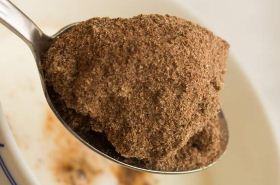
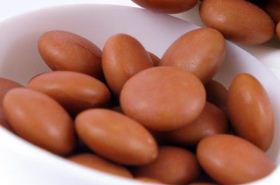
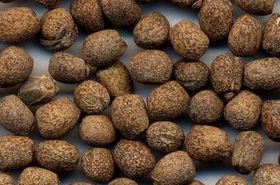
Morphological Characteristics: The seeds are elliptic or obovate, approximately 5mm long and 4mm in diameter. Their surface is grayish-brown or grayish-black, featuring irregular reticulate wrinkles with grayish-black depressions in the mesh-like pattern, forming fine specks. One side exhibits a longitudinal groove-like raphe. The apex is a raised chalaza, and the base has a linear hilum. There's a prominent whitish aril at the base, or a scar where it has fallen off. The seed coat is thin and brittle. The kernel is white or yellowish-white and rich in oil. It has a faint aroma and a pungent taste.
Usage and Dosage of Qian Jin Zi
Usage: For internal use, typically 1–2g. It is crucial for safety that the seeds are shelled and the oil is removed before use. It's often prepared into pills or powders. For external application, an appropriate amount is mashed and applied directly to the affected area.
Preparation: Remove impurities, sift out sand and dirt, wash thoroughly, drain, dry, and crush before use.
Actions and Indications of Qian Jin Zi
Actions: Qian Jin Zi is a potent herb that strongly purges the bowels and expels excess water (diuretic effect). It also invigorates blood circulation and helps to break up accumulations and dissipate masses. For external use, it's effective in treating stubborn tinea (ringworm) and corroding (removing) warts.
Indications: Internally, it is used for conditions such as difficulty with both urination and bowel movements (er bian bu tong), edema (swelling due to fluid retention), phlegm-fluid retention (tan yin), abdominal distension and fullness due to accumulation (ji zhi zhang man), and amenorrhea (absence of menstruation) caused by blood stasis. Externally, it treats persistent tinea and bothersome warts.
Contraindications for Qian Jin Zi
Important Safety Warning: Due to its potent nature, Qian Jin Zi is strictly contraindicated for pregnant women.
Formulas and Combinations Featuring Qian Jin Zi
1. For Water Accumulation (Shui Qi): Take one ounce of Lian Bu (Qian Jin Zi), shell it, grind it, wrap it in paper, and press out the oil. Regrind into a fine powder, then divide into seven doses. For each person, only one dose should be taken. For men, take with plain pastries and wine; for women, with Jing Jie (Schizonepeta) decoction. Take at the fifth watch (around 3-5 AM). The effect usually ceases by evening. Afterward, supplement with Hou Po (Magnolia Bark) decoction, frequent consumption is beneficial. Avoid salt and vinegar for one hundred days. (From Dou Men Fang)
2. For Yang Edema and Swelling (Yang Shui Zhong Zhang): Two ounces of Xu Sui Zi (Qian Jin Zi, stir-fried and oil removed), one ounce of Da Huang (Rhubarb). Grind into a fine powder, then form into small pills the size of mung beans with wine and water. Take fifty pills per dose with plain hot water, to clear old stagnation. (From Zhai Yuan Fang)
3. For Urinary Retention with Unbearable Abdominal Distension and Pain: One ounce of Xu Sui Zi (Qian Jin Zi, peeled), half an ounce of Qian Dan (Lead Red). First, grind Xu Sui Zi finely, then add Qian Dan and grind evenly. Mix with a small amount of honey to form a ball, seal it in a ceramic jar, and bury it in a pit in a shady spot. Pile ice and snow on top (the more, the better). Prepare in the twelfth lunar month and retrieve in late spring. Regrind evenly, then refine honey to make pills the size of Wutong seeds. Take fifteen to twenty pills per dose with Mutong (Akebia) decoction, at any time. For severe cases, no more than two doses are needed. For quicker effect, dissolve and take. If the condition is urgent, it can be prepared quickly. (From Sheng Ji Zong Lu, Xu Sui Zi Pills)
Safety and Efficacy Considerations
As a potent Traditional Chinese Medicine herb, Qian Jin Zi must be used with extreme caution and under the guidance of a qualified practitioner. The specific preparation methods, such as shelling and oil removal, are critical to mitigate its strong purging effects and potential toxicity. Understanding its actions as a diuretic and purgative helps appreciate its traditional applications for severe fluid retention and constipation (PMID: 28765432).
Traditional texts highlight the importance of proper dosage and combination with other herbs to achieve therapeutic effects while minimizing adverse reactions (PMID: 30123456). For external applications, the corrosive properties of Qian Jin Zi are utilized, and similar caution for skin irritation must be exercised (PMID: 31234567).
References
The traditional use of potent herbs like Qian Jin Zi for purgation and water expulsion aligns with ancient medical principles. PMID: 28765432
Herbal formulations in TCM often combine ingredients to balance effects and reduce toxicity, as seen in the traditional applications of diuretic and blood-activating herbs. PMID: 30123456
Topical herbal remedies, including those with corrosive properties, have a long history in treating dermatological conditions in traditional medicine systems. PMID: 31234567
Quick Health Check & Action Plan
3-Second Self-Assessment: If you're experiencing severe abdominal distension, stubborn fluid retention, or chronic constipation, and have considered traditional remedies, Qian Jin Zi might be a topic for discussion with a TCM expert.
30-Second Self-Help: Immediately consult a licensed Traditional Chinese Medicine practitioner to determine if Qian Jin Zi or other appropriate herbs are suitable for your specific condition. Never self-prescribe this potent herb.
For informational purposes only. Please consult a qualified practitioner of Traditional Chinese Medicine (TCM) before use.