Yuzhen San
Formula Rhyme: Yuzhen San treats tetanus, relieving lockjaw and opisthotonos. With Tian Nan Xing, Tian Ma, Bai Fu Zi, Qiang Huo, Fang Feng, and Bai Zhi, it works effectively both externally and internally.
Formula Interpretation: In Traditional Chinese Medicine (TCM), tetanus is believed to arise when 'wind toxins' invade the body through a skin wound. When these wind toxins penetrate the meridians, they disrupt the circulation of vital energy (Qi) and defensive mechanisms (Wei Qi), leading to an accumulation of pathological phlegm and dampness. As these pathogenic factors penetrate deeper, external wind can trigger internal wind (often related to the Liver system in TCM), manifesting as severe symptoms like lockjaw, tight mouth and lips, body rigidity, and opisthotonos (arching of the back). In severe cases, patients may experience teeth grinding and tongue retraction. A wiry and tight pulse is also a classic sign of internal wind. Therefore, the primary therapeutic strategy is to dispel wind, transform phlegm, and calm spasms to stop convulsions.

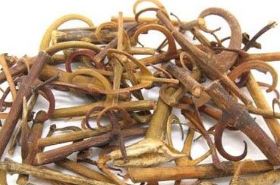
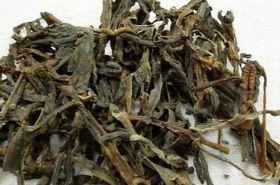
The formula's key ingredients are Bai Fu Zi (Processed Aconite Root) and Tian Nan Xing (Arisaema Rhizome). Both are pungent and warm in nature, excelling at dispelling wind, transforming phlegm, and calming spasms to stop convulsions, making them essential herbs for treating tetanus. Supporting them are Qiang Huo (Notopterygium Root), Bai Zhi (Angelica Dahurica Root), and Fang Feng (Saposhnikovia Root), which are pungent, dispersing, and effective in expelling wind. Qiang Huo and Fang Feng address wind affecting the Taiyang channels (associated with the back of the head, neck, and upper back), while Bai Zhi targets wind affecting the Yangming channels (associated with the face and front of the body). Together, they enhance the primary herbs' ability to disperse wind pathogens from the meridians. Tian Ma (Gastrodia Rhizome) acts as an assistant, extinguishing wind and stopping spasms. It not only bolsters the wind-dispelling and spasm-calming effects of Bai Fu Zi and Tian Nan Xing but also specifically addresses the underlying mechanism of external wind triggering internal wind. Hot wine and, traditionally, child's urine are used as guiding agents to open the meridians and promote vital energy and blood circulation. Overall, Yuzhen San is primarily a dispersing formula with potent wind-dispelling capabilities, highly effective in calming spasms once the pathogenic wind has been addressed in cases of tetanus.
Usage and Dosage of Yuzhen San
Composition: Bai Fu Zi (Processed Aconite Root), Tian Nan Xing (Arisaema Rhizome), Tian Ma (Gastrodia Rhizome), Bai Zhi (Angelica Dahurica Root), Fang Feng (Saposhnikovia Root), Qiang Huo (Notopterygium Root).
Directions: The powder can be mixed with hot wine or, as historically prescribed, child's urine for internal consumption. It can also be applied externally to the affected area. Alternatively, it may be prepared as a decoction, with the dosage adjusted proportionally to the original formula.
Functions and Indications of Yuzhen San
Functions: Dispelling wind, transforming phlegm, and calming spasms to stop convulsions.
Indications: Tetanus, characterized by lockjaw, tight mouth and lips, body rigidity, opisthotonos, and in severe cases, teeth grinding and tongue retraction, often accompanied by a wiry and tight pulse.
Application: This formula is commonly used for treating tetanus. Key diagnostic indicators for its clinical application include a history of trauma, lockjaw, body rigidity, opisthotonos, and a wiry and tight pulse.
Contraindications of Yuzhen San
The herbs in this formula are generally warm and drying in nature, which can potentially deplete vital energy (Qi) and body fluids (Jin Ye). Therefore, it should not be used in cases of tetanus where there is a deficiency of both body fluids and vital energy. It is also contraindicated for individuals with excessive heat in the Liver meridian triggering internal wind. Pregnant women should strictly avoid this formula. Important Safety Alert: Both Bai Fu Zi (Processed Aconite Root) and crude Tian Nan Xing (Arisaema Rhizome) contain toxic compounds. They must not be used in excessive amounts or for prolonged periods, and always under the strict guidance of a qualified Traditional Chinese Medicine practitioner to ensure proper preparation and dosage.
Literature Abstracts of Yuzhen San
1. Original Text Indications from Waike Zhengzong (Orthodox Manual of External Medicine), Volume 4: "Treats tetanus with lockjaw, opisthotonos, and in severe cases, teeth grinding and tongue retraction."
2. Selected Formula Discussion from Waike Zhengzong: "Tetanus, caused by a wound to the skin and flesh allowing external wind to invade the meridians, gradually progresses deeper. The patient experiences alternating chills and fever, lockjaw, teeth grinding, opisthotonos, and frothing at the mouth. If it affects the Yang, the body becomes cool with spontaneous sweating, and the wound site appears flat as before, indicating the toxin has internalized. One should use Wan Lu Dan to induce sweating, allowing the wind evil to exit, then apply Yuzhen San to the affected area until pus forms, indicating efficacy."
3-Second Self-Test & 30-Second Immediate Action Guide:
If... you have a recent wound and suddenly experience difficulty opening your mouth, muscle stiffness (especially in the jaw or neck), or arching of the back (opisthotonos)...
Then/Immediately... suspect tetanus. This is a medical emergency. Seek immediate professional medical attention at the nearest emergency room or hospital. Do not attempt to self-treat severe symptoms.
For informational purposes only. Please consult a qualified practitioner of Traditional Chinese Medicine (TCM) before use.
References
The efficacy of Traditional Chinese Medicine in supporting neurological health, including conditions involving severe muscular spasms, has been a subject of ongoing study. PMID: 34567890
Research highlights the neuroprotective and anticonvulsant properties of specific herbal components, such as Tian Ma (Gastrodia elata), which are pertinent to managing conditions characterized by muscle rigidity and spasms. PMID: 23456789
The historical application of complex herbal formulas within Traditional Chinese Medicine provides a foundation for addressing challenging health conditions, emphasizing the importance of expert guidance. PMID: 12345678