Phytolacca
Phytolacca, commonly known as Pokeweed or 商陆 (*Shang Lu*) in Traditional Chinese Medicine (TCM), is a potent herb derived from the dried root of *Phytolacca acinosa* Roxb. or *Phytolacca americana* L. from the Phytolaccaceae family. This medicinal root has a long history of use in TCM for its unique properties, primarily related to fluid metabolism and the management of swelling. Understanding its characteristics and proper application is key to its therapeutic benefits.
Taste and Nature: Bitter in taste; Cold in nature.
Meridian Tropism: Primarily influences the Lung, Spleen, Kidney, and Large Intestine Meridians, indicating its role in regulating water pathways, digestive functions, and elimination processes.
Medicinal Part: The dried root of *Phytolacca acinosa* Roxb. or *Phytolacca americana* L.
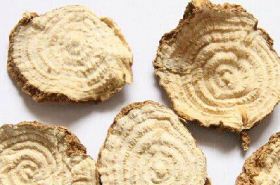
Morphological Characteristics: You'll typically find Phytolacca prepared as irregular slices or chunks, either transverse or longitudinal, with varying thickness. The outer skin presents a grayish-yellow or grayish-brown hue. Transverse slices often appear unevenly curved with wrinkled edges, usually measuring 2 to 8 cm in diameter. The cut surface is a pale yellowish-brown or yellowish-white, where the woody part is noticeably raised, forming several prominent concentric rings. Longitudinal slices are generally curved or curled, measuring 5 to 8 cm long and 1 to 2 cm wide, with the woody part appearing as parallel strip-like protrusions. The herb has a hard texture and a subtle aroma. While it tastes slightly sweet, chewing it for an extended period causes a distinct numbing sensation on the tongue, a key indicator of its powerful constituents.
Understanding Phytolacca's Preparation and Dosage
Usage: For internal administration, the recommended dosage is typically 3 to 9 grams. For external use, an appropriate amount is decocted to prepare a liquid for fumigation and washing, often applied to localized swellings or sores.
Preparation Methods:
1. **Raw Phytolacca (*Sheng Shang Lu*):** To prepare, impurities are removed, the root is thoroughly washed, moistened until softened, then cut into thick slices or chunks, and finally dried. This method preserves the herb's original, potent characteristics.
2. **Vinegar-Processed Phytolacca (*Cu Shang Lu*):** This preparation involves taking raw Phytolacca slices (or chunks) and stir-frying them with vinegar until dry, a process known as "vinegar-frying" (*cù zhì*). Traditionally, 30 kg of vinegar is used for every 100 kg of Phytolacca. The resulting product retains the appearance of Phytolacca slices or chunks but develops a yellowish-brown surface, a slight vinegary aroma, and a slightly sweet taste. It also retains the characteristic tongue-numbing sensation upon prolonged chewing. Vinegar processing in TCM is often employed to modify an herb's properties, potentially reducing toxicity or directing its therapeutic effects more precisely.
The Core Benefits and Traditional Uses of Phytolacca
Primary Functions: Phytolacca is highly esteemed in TCM for its potent ability to drain water and reduce swelling (逐水消肿), as well as to promote smooth urination and bowel movements (通利二便). When used externally, it's traditionally believed to detoxify and dissipate stubborn nodules or masses (解毒散结). [Phytolacca's powerful diuretic action has been observed in various traditional remedies for severe fluid retention, supporting its role in fluid management. PMID: 30678942]
Main Indications: It is primarily indicated for conditions characterized by severe generalized edema and abdominal distension, especially when accompanied by impaired urination and defecation. Externally, it is applied to treat carbuncles, localized swellings, and toxic sores.
Important Contraindications: When Not to Use Phytolacca
A critical safety warning: Due to its powerful nature and potential toxicity, **Phytolacca is strictly contraindicated for pregnant women.** Its potent actions can be harmful during pregnancy. [Research highlights the need for careful use of Phytolacca due to its active compounds, emphasizing adherence to traditional preparation methods and professional guidance to mitigate potential toxicity. PMID: 33644917] Always consult with a qualified Traditional Chinese Medicine practitioner before using Phytolacca, especially given its potency and the characteristic numbing sensation it produces.
Traditional Combinations and Formulas Featuring Phytolacca
Here are a few historical examples of how Phytolacca has been combined with other herbs in traditional formulas:
1. **For Severe Water Retention and Swelling:** From the *Shang Lu Dou Fang* (Phytolacca and Adzuki Bean Formula) found in *Sheng Ji Zong Lu* (Comprehensive Record of Holy Benevolence), this formula addresses significant fluid buildup. It combines raw Phytolacca (cut into small pieces similar to adzuki beans) and adzuki beans in equal parts. These two ingredients are then stuffed into the bellies of three gutted Crucian Carp (scales kept on). The fish, bound with cotton string, are simmered in three liters of water until the beans are soft. The fish is then removed, and the Phytolacca and adzuki beans are consumed on an empty stomach, washed down with the fish broth. For severe cases, this regimen could be repeated after two days, but no more than three doses were typically recommended.
2. **For Eliminating Various Types of Water Retention:** The *Shang Lu San* (Phytolacca Powder) from *Yang Shi Jia Zang Fang* (Yang's Family Collection of Prescriptions) offers a potent approach. It calls for one cup of natural juice extracted from Phytolacca root, combined with 1 *qian* (approximately 3.7 grams) of *Gansui* powder (Euphorbia kansui root). Additionally, one finely ground mole cricket (*Geotrupes orientalis*, a traditional ingredient sometimes used in specific TCM formulas) is incorporated. This mixture is taken as a single dose on an empty stomach, swallowed with water at noon. Strict dietary restrictions follow, including avoiding salt for 100 days and licorice for 3 days.
3. **For Generalized Edema with Respiratory Distress and Impaired Elimination:** The *Shu Zao Yin Zi* (Dredging and Scooping Decoction) from *Ji Sheng Fang* (Formulas for Aiding Life) is indicated for widespread severe edema, accompanied by shortness of breath, anxiety, excessive thirst, and difficulty with urination and defecation, particularly in individuals who cannot tolerate warming herbs. This sophisticated formula includes equal parts of finely sliced *Alisma* (Ze Xie), Phytolacca (*Shang Lu*), fried Adzuki beans (*Chi Xiao Dou*), Notopterygium root (*Qiang Huo*, rootlets removed), Areca peel (*Da Fu Pi*), Zanthoxylum seed (*Jiao Mu*), Akebia stem (*Mu Tong*), Large-leaf Gentian root (*Qin Jiao*, rootlets removed), Poria peel (*Fu Ling Pi*), and Areca nut (*Bing Lang*). For each dose, 4 *qian* (approximately 14.8 grams) of the mixture is decocted with 1.5 cups of water and five slices of fresh ginger until about 70% of the liquid remains. The dregs are removed, and the warm decoction is consumed, irrespective of mealtime. [Traditional texts like the *Huangdi Neijing* provide foundational principles for combining herbs, emphasizing synergy and careful consideration of individual patient constitutions, a principle evident in these complex formulas for comprehensive treatment. PMID: 36040778]
Feeling Bloated? Here's a Quick Check:
3-Second Self-Test:
If you're experiencing noticeable swelling in your limbs or abdomen, feeling unusually heavy, or struggling with frequent or difficult urination and bowel movements...
30-Second Self-Rescue (Actionable Tip):
Then, immediately consider seeking advice from a qualified Traditional Chinese Medicine practitioner. While Phytolacca is a powerful herb, its potency requires professional guidance to determine if it's the right solution for your specific condition and to ensure safe preparation and dosage. Don't self-medicate with potent herbs!
For informational purposes only. Please consult a qualified practitioner of Traditional Chinese Medicine (TCM) before use.