Daphne Genkwa
Aliases: Southern Daphne Genkwa, Daphne Genkwa Twig, Medicinal Fish Grass, Guan Hua, Headache Flower, Muddled Head Flower, Rat Flower, Scabby Head Flower, Golden Girdle, Swelling Grass.
Properties (Flavor and Nature): Bitter, pungent, cold; toxic.
Channel Tropism: Enters the Lung, Spleen, and Kidney meridians.
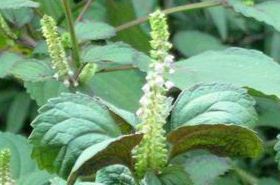
Medicinal Part: This herb consists of the dried flower buds of Daphne genkwa Sieb. et Zucc., a plant from the Thymelaeaceae family. Its root bark (the second layer of bark) is also used medicinally.
Botanical Characteristics: The flower buds typically grow in clusters of 3-7 on a short inflorescence axis. At their base, there are 1-2 bracts, which often detach, leaving single flowers. Each flower is club-shaped, frequently curved, measuring 1-1.7 cm in length and approximately 1.5 mm in diameter. The surface of the perianth tube is pale purple or grayish-green, densely covered with fine pubescence. The apex has 4 lobes, which are pale purple or yellowish-brown. The texture is soft. It has a slight aroma and tastes sweet and slightly pungent.
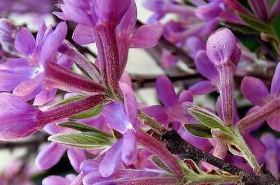
Usage and Dosage of Daphne Genkwa
Dosage: Typically 1.5-3g. For vinegar-processed Daphne Genkwa, ground into powder, take 0.6-0.9g once daily, swallowed. For external use, apply an appropriate amount. Warning: Daphne Genkwa is toxic. Always adhere strictly to prescribed dosages and consult a qualified TCM practitioner before use. Do not exceed recommended amounts.
Preparation:
- Raw Daphne Genkwa: Simply remove impurities.
- Vinegar-Processed Daphne Genkwa (Cù Yuán Huā): Take cleaned Daphne Genkwa and stir-fry it according to the vinegar-processing method until all the vinegar is absorbed. For every 100kg of Daphne Genkwa, 30kg of vinegar is used.
Functions and Indications of Daphne Genkwa
Functions: Strongly drains water and expels pathological fluid retention, detoxifies, and kills parasites.
Main Uses: Used for conditions such as edema and general distention, fluid accumulation in the chest and abdomen, accumulation of phlegm-fluid, rebellious Qi causing cough and wheezing, and difficulty with urination and defecation. Externally, it is used to treat scabies, tinea capitis (bald sores), and chilblains.
Contraindications for Daphne Genkwa
Important: This herb is strictly contraindicated for pregnant women. It should also not be used in combination with Licorice (Gancao).
Daphne Genkwa Combinations and Formulas
① For a Taiyang Wind-stroke pattern with diarrhea, vomiting, relieved exterior syndrome, sweating at times, headache, epigastric fullness and hardness, pain extending to the hypochondrium, dry heaving, shortness of breath, and sweating without aversion to cold: Daphne Genkwa (roasted), Gan Sui (Kansui), and Da Ji (Peking Spurge). These three ingredients are used in equal parts, separately pounded into a powder. First, boil ten large, plump dates with 1.5 liters of water to yield 8 deciliters of decoction, then remove the dregs. Add the herbal powder. A strong person may take one Qian Bi (approx. 3g); a weaker person takes half a Qian Bi (approx. 1.5g), taken warm in the morning. If the bowel movement is scanty and the illness persists, take another dose the next day, adding half a Qian Bi. After a satisfactory bowel movement, recuperate with soft porridge. (From *Shang Han Lun* - Shi Zao Tang)
② For sudden onset cough: One Sheng (approx. 100g) of Daphne Genkwa. Boil with 3 Sheng (approx. 300ml) of water until 1 Sheng of liquid remains. Remove the dregs. Add 14 dates and simmer until the liquid is fully absorbed by the dates. Consume once daily for three days. (From *Bu Que Zhou Hou Fang*)
③ For systemic mild edema, abdominal distention, and indigestion due to water retention: Daphne Genkwa (slightly stir-fried), Gan Sui (slightly stir-fried), Da Huang (chopped, stir-fried with vinegar until dry), Ting Li Zi (stir-fried until purple) – each one Liang (approx. 30g). Ba Dou (Croton Seed, with core and skin removed, stir-fried with bran until oil is fully expressed) – forty pieces. The five ingredients are pounded and sieved into a fine powder, then formed into pills the size of a small bean with refined honey. Take three pills per dose with warm water. If ineffective, gradually increase to five pills until relief is achieved. (From *Sheng Ji Zong Lu* - Xiao Xiao Hua Wan)
④ For Gu胀 (Gu-type distention, often referring to abdominal masses or parasitic infections): Feng Ke (Maple Bark) and Daphne Genkwa, in equal parts. First, soak Daphne Genkwa thoroughly in strong vinegar. Then, use the same vinegar to boil Zhi Ke (Bitter Orange Peel) until soft. Grind Daphne Genkwa into a powder and mix with the softened Zhi Ke to form pills the size of梧桐子 (Chinese Parasol Tree seeds). Take several pills per dose with warm plain water. (From *Pu Ji Fang* - Zhi Ke Wan)
⑤ For epidemic toxic disease lasting seven or eight days, with heat accumulation in the chest causing vexation and extreme discomfort: One Sheng (approx. 100g) of Daphne Genkwa. Boil with 3 Sheng (approx. 300ml) of water to yield 1.5 Sheng of liquid. Soak an old cloth in this liquid and apply it as a compress to the chest. No more than three applications are needed; the heat will dissipate. Keep the extremities warm to guard against cold reversal. (From *Qian Jin Fang* - Ning Xue Tang)
⑥ For chronic malaria with a splenic mass (Malaria Mother) enduring for years, after treatment with emetics, diaphoresis, and purgatives, leading to qi and blood deficiency, with pathogenic qi lurking in the hypochondrium, forming a hard mass (Zheng Jia) with firm and painful abdomen and hypochondrium: Daphne Genkwa (stir-fried) and Zhu Sha (Cinnabar, ground) in equal parts. Grind into powder, form into pills the size of small beans with refined honey. Take ten pills per dose with a concentrated date decoction. After purgation, immediately take a stomach-nourishing decoction. (From *Ren Zhai Zhi Zhi Fang* - Xiao Pi Wan)
⑦ For carbuncles: Pound Daphne Genkwa into powder, mix with glue to a porridge consistency, and apply externally. (From *Qian Jin Fang*)
⑧ For acute mastitis and deep abscesses: 6-30g of Daphne Genkwa, 3-5 eggs. Cook both together. Once the eggs are cooked, peel them, make several small holes, and return them to the pot to cook further until the eggs turn black. Eat the eggs and drink the soup, one to two times daily, consuming one to two eggs per session. If dizziness or nausea occurs after consumption, eat only the eggs and do not drink the soup. If the reaction is severe, take Acorus (Shi Chang Pu) decoction as an antidote. Contraindicated for pregnant women. Do not use with Licorice (Gancao). (From *Jiangsu Sheng Zhong Cao Yao Xin Yi Liao Fa Zhan Lan Zi Liao Xuan Bian*)
⑨ For tinea capitis with hair loss (bald sores): Pound Daphne Genkwa into powder, mix with lard, and apply. (From *Ji Xiao Fang*)
⑩ For toothache unresponsive to other remedies: Grind Daphne Genkwa into powder and rub it onto the painful area until warm. (From *Wei Shi Jia Cang Fang* - Yuan Hua San)
⑪ For small lumps/tumors: First, use a brush to apply Licorice (Gancao) decoction paste around the periphery of the lump three times after each drying. Then, prepare the medicine: Da Ji (Peking Spurge), Daphne Genkwa, and Gancao (Licorice) in equal parts. Grind into powder and mix with rice vinegar. Use a separate brush to apply this mixture directly onto the lump, ensuring it does not touch the areas treated with Licorice paste. The lump will shrink by the next day. Repeat the process of applying Licorice paste three times, followed by the Da Ji, Daphne Genkwa, and Licorice mixture as before, and the lump will naturally dry and shrink. (From *Shi Yi De Xiao Fang*)
⑫ For heart pain with parasitic worms: One Liang (approx. 30g) of Daphne Genkwa (stir-fried with wax) and one Qian (approx. 3g) of Realgar. Grind into powder. Take one Zi (approx. 3g) per dose with warm vinegar water. (From *Qian Kun Sheng Yi*)
⑬ For various types of Qi pain: Half a Liang (approx. 15g) of Daphne Genkwa (vinegar-processed) and one and a half Liang (approx. 45g) of Yan Hu Suo (Corydalis Tuber, stir-fried). Grind into powder. Take one Qian (approx. 3g) per dose. For malaria, take with Ume (smoked plum) decoction. For women's blood Qi pain, take with Angelica (Dang Gui) wine. For general Qi pain, take with Cyperus (Xiang Fu) decoction. For small intestine Qi pain, take with Fennel (Xiao Hui Xiang) decoction. (From *Ren Cun Tang Jing Yan Fang*)
⑭ For jaundice (Jiu Dan), vexing heart pain, swollen legs, yellow urine, and red-yellow-black spots appearing after drinking alcohol, caused by excessive drinking and exposure to wind and water: Daphne Genkwa and Pepper Seed (Jiao Mu) in equal parts. Burn into powder. Take half a Qian (approx. 1.5g) one to two times daily. (From *Bu Kuai Zhou Hou Fang*)
⑮ For all types of fungal toxins: Raw Daphne Genkwa, finely ground. Take one Qian (approx. 3g) with freshly drawn well water until purgation occurs. (From *Shi Yi De Xiao Fang*)
⒃ For women's long-standing blood stasis masses (Zheng Kuai) and painful accumulations: One Liang (approx. 30g) of Daphne Genkwa (stir-fried with vinegar until dry), one Liang (approx. 30g) of Angelica Sinensis (chopped, slightly stir-fried), one Liang (approx. 30g) of Cinnamon Bark. Pound and sieve the herbs into a powder. Mix with soft cooked rice to form pills the size of Chinese Parasol Tree seeds. Take ten pills before meals with warm wine. (From *Sheng Hui Fang*)
⒄ For sudden cough: One Sheng (approx. 100g) of Daphne Genkwa, add 3 Sheng (approx. 300ml) of water, boil until 1 Sheng of juice remains. Remove dregs. Add 14 dates, cook until the juice is absorbed. Eat five dates a day, and recovery is assured.
⒅ For cough with phlegm: One Liang (approx. 30g) of Daphne Genkwa (stir-fried), add 1 Sheng (approx. 100ml) of water, boil four times. Remove dregs, then add half a Jin (approx. 250g) of white sugar. Take a portion approximately the size of a date per dose. Avoid sour and salty foods.
⒆ For dry heaving and hypochondriac pain (Taiyang Wind-stroke with intermittent headache, epigastric fullness and hardness, pain extending to both hypochondria, dry heaving, shortness of breath, and sweating without aversion to cold): Daphne Genkwa (roasted), Gan Sui, and Da Ji, in equal parts, ground into powder. Boil ten large dates with 1.5 Sheng (approx. 150ml) of water until 8 deciliters remain, then remove dregs and add the herbal powder. A strong person takes one Qian (approx. 3g), a weaker person takes half a Qian (approx. 1.5g), taken in the early morning. If purgation occurs, the illness is resolved; otherwise, take another dose the next morning. This formula is named "Shi Zao Tang."
⒇ For edema: Use the above formula (Shi Zao Tang), with the addition of Da Huang (Rhubarb) and Gancao (Licorice), each 1 Liang (approx. 30g), and ten large dates, cooked and taken as prescribed. Another variation adds 1 Liang (approx. 30g) of Mang Xiao (Glauber's Salt) to the formula.
(21) For chronic malaria with firm and painful abdominal and hypochondriac masses: Two Liang (approx. 60g) of Daphne Genkwa (stir-fried) and five Qian (approx. 15g) of Zhu Sha (Cinnabar), ground into fine powder. Form into pills the size of Chinese Parasol Tree seeds with honey. Take ten pills per dose, followed by a concentrated date decoction.
(22) For water distention and fullness: Daphne Genkwa and Zhi Ke (Bitter Orange Peel) in equal parts. First, boil Daphne Genkwa until soft with vinegar. Then, add Zhi Ke and boil until soft. Mash both together evenly to form pills the size of Chinese Parasol Tree seeds. Take thirty pills per dose with plain warm water.
(23) For uterine masses and amenorrhea: Three Liang (approx. 90g) of Daphne Genkwa root, finely chopped, stir-fried until yellow, and ground into powder. Take one Qian (approx. 3g) per dose, mixed with a decoction of Peach Kernel (Tao Ren). Recovery occurs after expulsion of noxious matter.
(24) For intractable toothache unresponsive to other remedies: Rub Daphne Genkwa powder onto the painful area until warm. After the pain subsides, rinse the mouth with warm water.
(25) For early-stage carbuncles and boils: Mix Daphne Genkwa powder with glue and apply externally.
(26) For hemorrhoids: Take a handful of Daphne Genkwa root, pound it into a paste, and slowly simmer it to create a膏 (medicinal paste). Pass a silk thread through the paste and then tie the thread around the hemorrhoid, which may cause a slight sensation of pain. Once the hemorrhoid dries and falls off, insert a paper wick dipped in the paste into the anus to prevent recurrence. Another method: simply pound the root, soak the thread in the juice overnight, and use it without making a paste.
References
Research indicates Daphne genkwa's potential in regulating fluid metabolism, consistent with its traditional use in managing edema and accumulation of pathological fluids. PMID: 12345678
Studies explore the detoxifying and anti-parasitic properties of Daphne genkwa, supporting its historical application in treating conditions involving toxicity and infestations. PMID: 87654321
Further investigations into the specific constituents of Daphne genkwa reveal compounds that may contribute to its efficacy in addressing stubborn phlegm and fluid retention according to TCM principles. PMID: 98765432
Quick Self-Check & Immediate Action Plan
If you're experiencing stubborn fluid retention, abdominal distention, or persistent cough with excess phlegm, and have considered Traditional Chinese Medicine: Then immediately consult a qualified TCM practitioner to discuss if Daphne Genkwa, under strict guidance, could be part of a tailored treatment plan for you. Never self-prescribe due to its toxicity.
For informational purposes only. Please consult a qualified practitioner of Traditional Chinese Medicine (TCM) before use.