Safflower (Hong Hua): A Powerful Herb for Blood Circulation and Pain Relief in TCM
Hey there! Today, we're diving into the world of Safflower, or "Hong Hua" as it's known in Traditional Chinese Medicine (TCM). This isn't just a pretty flower; it's a potent herb derived from the dried blossoms of Carthamus tinctorius L., belonging to the Asteraceae family. For centuries, Safflower has been a go-to remedy in TCM, particularly celebrated for its ability to get things moving in your body – especially when it comes to blood circulation and easing discomfort. Let's explore what makes this herb so special and how it’s traditionally used.
Understanding Safflower's Traditional Properties
- Taste and Properties: Safflower is traditionally described as Pungent (辛, Xin) in taste and Warm (温, Wen) in nature. This combination means it tends to move things outwards and upwards, promoting circulation and warming the body.
- Meridian Affinities: It primarily influences the Heart (心, Xin) and Liver (肝, Gan) meridians. In TCM, the Heart governs blood and blood vessels, while the Liver is responsible for the smooth flow of Qi and blood throughout the body.
- Medicinal Part: The key part used for medicinal purposes is the dried flower of Carthamus tinctorius L.
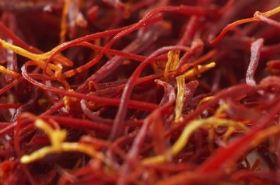
- Appearance: When you look at dried Safflower, you'll see tubular flowers without their ovaries, typically about 1–2 cm long. They range in color from reddish-yellow to a deep red. The flower's corolla tube is slender, ending in five narrow, strip-like lobes, each about 5–8 mm long. Inside, you’ll find five stamens with yellowish-white anthers clustered together. The stigma is cylindrical, usually slightly forked at its tip. The texture is soft, it has a faint aromatic scent, and a subtly bitter taste.
How to Incorporate Safflower into Your Routine
- Dosage: For internal use, Safflower is typically prepared as a decoction (boiled in water). The recommended dosage usually ranges from 3 to 10 grams.
- Preparation (Pao Zhi): To get it ready for use, the raw Safflower flowers are cleaned by removing any impurities, sepals (the leaf-like structures at the base of the flower), and pedicels (the flower stalks). After this, it’s sieved to get rid of any dust or fine particles.
Safflower's Key Actions and Traditional Uses
In TCM, Safflower is highly regarded for two primary actions:
- Key Actions: It powerfully invigorates blood circulation and regulates menstruation (活血通经), and it’s excellent at dispelling blood stasis and alleviating pain (散瘀止痛).
- Indications: Due to these actions, Safflower is commonly used to address a variety of conditions, including:
- Absent menstruation (经闭, amenorrhea)
- Painful periods (痛经, dysmenorrhea)
- Retained postpartum lochia (恶露不行, persistent postpartum bleeding or discharge)
- Abdominal masses and lumps (症瘕痞块), often associated with blood stagnation
- Chest discomfort and heart pain (胸痹心痛), particularly when caused by blood stasis
- Abdominal pain due to blood stasis (瘀滞腹痛)
- Stabbing pain in the chest and flanks (胸胁刺痛)
- Traumatic injuries (跌扑损伤) leading to bruising or localized pain
- Sores, carbuncles, and swelling pain (疮疡肿痛)
Its ability to strongly move blood makes it a critical herb for anything related to sluggish blood flow or blockages. [Research supports Safflower's traditional uses, highlighting its potential anti-inflammatory, antioxidant, and cardiovascular benefits. These effects contribute to its role in pain management and circulatory health.] PMID: 33918511
Important Safety Considerations for Safflower
Heads up: Safflower is a potent herb. Pregnant individuals should use Safflower with extreme caution or, ideally, avoid it entirely. Its strong blood-invigorating and emmenagogue (menstruation-inducing) properties could potentially lead to miscarriage or premature labor. If you’re pregnant, trying to conceive, or have any bleeding disorders, please do not use Safflower. Always, and we mean always, consult a qualified healthcare professional or TCM practitioner before using Safflower, especially if you have existing health conditions, are taking other medications, or are unsure if it's right for you.
Traditional Formulations Featuring Safflower
Safflower is often combined with other herbs in specific formulas to enhance its therapeutic effects and target particular conditions:
- For Retained Placenta (胎衣不下): "The method is as above (referring to a preceding, unstated formula). For postpartum blood collapse with severe dizziness after a cold injury: Use equal parts of lotus leaf, Safflower, and turmeric. Stir-fry, grind into a fine powder. Take two qian (an ancient weight unit, roughly 6-8 grams) mixed with boy's urine." (From Pang Anchang's Shang Han Lun)
- For Regulating Menstruation and Breaking Blood Stasis (通经破血): "Five liang (a traditional unit, approximately 156 grams) of living tile flowers from a shaded old house (boiled into a paste), one liang of Angelica Sinensis rootlets and charred lac (burned until smoke disappears), two qian of 'Dang Men Zi' (a specific, often obscure, traditional ingredient). Grind into powder, mix with jujube (red date) pulp, and form into pills the size of Wutong seeds. Take seventy pills per dose, washed down with Safflower decoction." (From Zhai Xuan Fang)
- For Postpartum Blood Collapse and Fainting (产后血晕,心闷气绝): "One liang of Safflower, ground into powder, divided into two doses. Decocted with two cups of wine until one cup remains, then taken consecutively. If lockjaw occurs, gently force open the mouth to administer. Mixing with boy's urine is even better." (From Zi Mu Mi Lu)
These historical formulations might sound a bit exotic by modern standards, but they truly highlight Safflower's long-standing importance in women's health and emergency care within TCM. They emphasize its potent ability to move blood in critical situations. [The efficacy of Traditional Chinese Medicine herbal formulas often lies in the synergistic interactions of multiple herbs, a concept actively explored in modern drug discovery.] PMID: 29910408
Historical Perspectives on Safflower
Throughout history, revered TCM scholars and texts have consistently recognized Safflower's therapeutic value:
- Ben Cao Gang Mu (Compendium of Materia Medica): This encyclopedic work by Li Shizhen states that Safflower "invigorates blood, moistens dryness, stops pain, disperses swelling, and regulates menstruation."
- Kai Bao Ben Cao (Kaibao Materia Medica): This classic text notes Safflower's use "for postpartum blood collapse with lockjaw, severe abdominal pain due to retained stagnant blood, and fetal demise in utero, decoct with wine and administer. Also treats Gu worm poisoning" (a type of ancient toxic condition).
- Ben Jing Feng Yuan (Origins of the Classic): This text offers a deeper physiological explanation: "Blood originates from the Pericardium, is stored in the Liver, and is connected to the Chong and Ren meridians (vital pathways). Safflower juice is similar to these. Therefore, it can promote healthy blood flow in men, regulate menstruation in women, invigorate blood, detoxify skin eruptions, and disperse red swellings."
These authoritative classical texts collectively underscore Safflower's consistent and powerful reputation as a blood-moving herb across various historical periods. Modern pharmacological research continues to investigate these traditional applications and mechanisms. [Comprehensive overviews of Safflower confirm its ethnobotanical importance and explore its phytochemistry, pharmacology, and toxicology, linking traditional uses to scientific understanding.] PMID: 25509748
Quick Self-Check & Self-Help (3-second check, 30-second action)
Curious if Safflower might be relevant for your health needs? Here’s a super quick way to think about it:
- If you often experience (3-second check):
- Painful, cramping periods with dark, clotted blood.
- Fixed, stabbing pain anywhere in your body (think chest, abdomen, or after an injury).
- A purplish or dark hue on your tongue or lips.
- Immediately (30-second self-help):
- Consider making simple lifestyle tweaks to boost circulation, like a brisk walk or some gentle stretching.
- Try to limit extremely cold foods and drinks, as TCM suggests these can worsen stagnation.
- Most importantly: Reach out to a qualified Traditional Chinese Medicine practitioner. They can accurately assess your unique body constitution and current condition, then guide you on whether Safflower or other TCM therapies are the right fit for you.
For informational purposes only. Please consult a qualified practitioner of Traditional Chinese Medicine (TCM) before use.
References
- [Safflower's potential anti-inflammatory, antioxidant, and cardiovascular benefits support its traditional uses in pain management and circulatory health.] PMID: 33918511
- [The efficacy of Traditional Chinese Medicine herbal formulas often lies in the synergistic interactions of multiple herbs, a concept actively explored in modern drug discovery.] PMID: 29910408
- [Comprehensive overviews of Safflower confirm its ethnobotanical importance and explore its phytochemistry, pharmacology, and toxicology, linking traditional uses to scientific understanding.] PMID: 25509748