Dilong (Earthworm) - A Key Herb in TCM
In Traditional Chinese Medicine (TCM), Dilong, often simply known as Earthworm, is a remarkable ingredient revered for its diverse therapeutic properties. While it might sound unusual to some, its application in ancient healing traditions spans centuries, addressing a range of health concerns. Let's delve into what makes Dilong a vital component in the TCM pharmacopoeia.
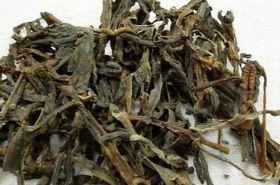
Also Known As: Earthworm (蚯蚓), Ququ (蛐蟮), Curved Worm (曲虫), Soil Worm (土蟺), Red Worm (赤虫).
TCM Properties & Flavor: Salty (咸), Cold (寒).
Meridian Affinity: Liver (肝), Spleen (脾), Bladder (膀胱) Meridians.
Morphological Characteristics
The medicinal earthworms used in TCM come in various forms, each with distinct features:
Guang Dilong (Broad Earthworm)
Typically found as long, thin, curved slices, often slightly rolled at the edges. They usually measure about 15-20 cm in length and 1-2 cm in width. The body is clearly segmented, with a dorsal (back) side ranging from brownish-purple to greyish-purple and a ventral (belly) side that is light yellowish-brown. Segments 14-16 form a distinct reproductive band, commonly referred to as the "white neck," which appears noticeably brighter. The anterior end of the worm is slightly pointed, while the posterior end is blunt and rounded. The chaetae (bristle) rings feel rough and hard to the touch and are slightly lighter in color. The male genital pores are located on a small papilla within the chaetae ring on the ventral side of segment 18, externally encircled by several shallow epidermal folds. The internal chaetae ring is raised, with two rows of small papillae (10-20 per side) anteriorly. There are two pairs of seminal receptacle pores, situated on an elliptical prominence between segments 7/8 and 8/9, occupying approximately 5/11 of the segment's circumference. The dried body is light, somewhat leathery, and not easily broken. It emits a characteristic fishy odor and has a subtly salty taste.
Hu Dilong (Shanghai Earthworm)
This variety measures about 8-15 cm in length and 0.5-1.5 cm in width. Its body is segmented, featuring a brownish to yellowish-brown back and a light yellowish-brown belly. It has three pairs of seminal receptacle pores located between segments 6/7 and 8/9. Similar to Guang Dilong, segments 14-16 form the brighter reproductive band. A pair of male genital pores is present on segment 18. In Pheretima communissima (通俗环毛蚓), the male copulatory bursa can fully evert, resembling a cauliflower or penile shape. In Pheretima guillelmi (威廉环毛蚓), the male copulatory pore appears as a longitudinal slit. For Pheretima pectinifera (栉盲环毛蚓), the inner side of the male genital pore exhibits one or more small papillae.
Dosage and Administration of Dilong
Understanding the correct dosage and preparation is crucial for effective and safe use of Dilong in TCM:
Internal Use: For preparing a decoction (a boiled medicinal liquid), typically 5-10g is recommended. If used as a powder, a dose of 1-2g per administration is common. Dilong can also be incorporated into traditional pills and powders. Interestingly, fresh Dilong can be mixed with sugar or salt and dissolved in water for internal consumption, a method historically used for certain conditions.
External Use: An appropriate amount of fresh Dilong can be pounded into a paste and applied directly to the affected area. Alternatively, its extracted juice can be used as a topical application. For other external uses, it can be ground into a fine powder for sprinkling or mixed with a liquid to form a paste for external application.
Preparation: Before use, Dilong must undergo proper processing: impurities are removed, it is thoroughly washed, cut into appropriate sections, and then dried.
Therapeutic Actions and Indications of Dilong
Dilong is highly valued in TCM for its powerful therapeutic actions. It works to address imbalances by targeting specific bodily functions and symptoms:
Actions: Dilong primarily acts to clear internal heat and calm spasms, which is crucial in managing acute conditions. It effectively pacifies the Liver (a key organ system in TCM responsible for smooth flow of Qi and blood) and extinguishes internal wind, which can manifest as tremors or convulsions. Furthermore, it excels at unblocking meridians (energy pathways) and promoting healthy circulation, essential for pain relief and mobility. Lastly, it helps to relieve asthma symptoms and promotes diuresis, aiding in fluid balance (PMID: 25484839).
Primary Indications: Dilong is primarily used to address a wide range of conditions, including febrile diseases characterized by high fever, intense restlessness, and convulsions. It is also indicated for liver-yang headaches, which are often severe and throbbing. In cases of post-stroke hemiplegia (paralysis on one side of the body), Dilong is applied to restore function. It also alleviates rheumatic pain and numbness (Bi syndrome) and helps in relieving cough and wheezing stemming from lung heat. Furthermore, it can be beneficial for difficulty urinating (PMID: 32049281).
Clinical Applications: In modern clinical practice, Dilong is applied for conditions such as high fever with delirium, various forms of convulsions (including epileptic seizures), joint pain and numbness (Bi syndrome), limb numbness, and hemiplegia. Its ability to clear heat and calm wind makes it a candidate for conditions like lung-heat asthma and cough, oliguria (scanty urination), and edema (swelling). Emerging research also supports its potential in managing hypertension (PMID: 29997426).
Contraindications for Dilong
As with all powerful medicinal substances, Dilong is not suitable for everyone. It is strongly advised not to use Dilong if you have a condition known as Spleen and Stomach deficiency-cold, as its cold nature could worsen these symptoms. Additionally, Dilong is strictly prohibited for pregnant women.
3-Second Self-Check & 30-Second Self-Care Guide
If you are experiencing: Sudden, severe headaches often accompanied by dizziness, or muscle spasms and tremors you can't control, particularly if they come on quickly and feel like "internal wind" or heat is rising...
Then, immediately: Seek advice from a qualified Traditional Chinese Medicine (TCM) practitioner. These symptoms might indicate imbalances that Dilong could potentially address, but a professional diagnosis is crucial to determine if it's the right remedy for your specific body constitution and condition. Do not attempt self-treatment based on this information alone.
References
Earthworm extracts show promise in treating various inflammatory conditions and may help in promoting blood circulation. PMID: 25484839
The pharmacological activities of earthworm components are being explored for their potential in traditional medicine, particularly for neurological and cardiovascular benefits. PMID: 32049281
Lumbrokinase, an enzyme derived from earthworms, has been investigated for its fibrinolytic and neuroprotective effects, relevant in conditions like ischemic stroke. PMID: 29997426
For informational purposes only. Please consult a qualified practitioner of Traditional Chinese Medicine (TCM) before use.