Ever heard of Antelope Horn in traditional health practices? Known as Ling Yang Jiao (羚羊角) in Traditional Chinese Medicine (TCM), it's a fascinating ingredient with a rich history. Let's dive into what makes this unique horn a powerful remedy.
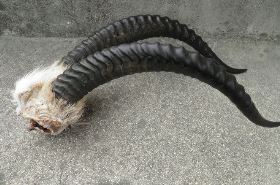
Antelope Horn (Ling Yang Jiao)
Alternate Names: High-nosed Antelope Horn, Saiga Antelope Horn.
Properties: Salty in taste, cold in nature.
Meridian Tropism: Enters the Liver and Heart meridians.
Medicinal Part: The horn of the animal.
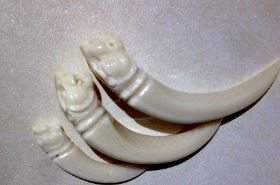
Morphological Characteristics: This herb presents as a long, conical horn, slightly curved like a bow, typically 15-33 cm long. Its color ranges from off-white to yellowish-white, with the base appearing slightly grayish-blue. Younger horns, when held against light, may reveal faint "blood streaks" or purplish-black markings, appearing smooth and jade-like without cracks. Older horns, however, tend to have fine longitudinal cracks. Aside from the tip, there are usually 10-16 raised annular ridges, spaced approximately 2 cm apart. When held, four fingers can comfortably fit into these concave sections. The base of the horn, when cross-sectioned, is circular with a diameter of 3-4 cm. Inside, it contains a hard, heavy bony core, commonly referred to as the "bone plug" (骨塞). This bone plug accounts for about 1/2 to 1/3 of the horn's total length. Its surface has prominent longitudinal ridges that tightly interlock with corresponding grooves within the outer horn sheath, forming a saw-toothed pattern when viewed in cross-section. Once the "bone plug" is removed, the lower half of the horn becomes hollow. The entire horn is semi-translucent, and when observed against light, a faintly discernible fine central canal, known as the "sky-piercing eye" (通天眼), extends straight to the horn's tip. It is hard in texture, with a faint aroma and a bland taste.
Usage and Dosage of Antelope Horn
Usage: Typically 1-3g. It is often recommended to decoct separately for at least 2 hours. Alternatively, it can be ground into a juice or fine powder for consumption, with a dosage of 0.3-0.6g per serving.
Preparation Methods:
- Antelope Horn Shavings: The horn is immersed in warm water, then removed and shaved into thin pieces, which are then dried.
- Antelope Horn Powder: The horn is crushed into pieces and then ground into a fine powder.
Functions and Actions of Antelope Horn
Functions: Calms liver wind, clears liver heat, improves vision, disperses stagnant blood, and detoxifies the body.
Main Indications: Used for conditions arising from internal stirring of liver wind, such as convulsions, epileptic seizures, eclampsia during pregnancy, high fever with spasms, mania, headaches, dizziness, red eyes, and vision obstructions. It is also applied in cases of toxic skin eruptions (e.g., from warm pathogen diseases) and various boils or sores.
Pharmacological Actions:
- Effects on the Central Nervous System (CNS):
Studies have shown that an extract from the outer layer of Antelope Horn (prepared as a 100% fluid extract from 50% alcohol, with ethanol evaporated before experiments) can decrease motor activity in mice. It exhibits inhibitory effects on the central nervous system, speeding up the onset of barbiturate and ether anesthesia. It significantly lowers sensitivity to pentylenetetrazol, strychnine, and electroshock-induced convulsions, yet without causing muscle relaxation. A decoction of Antelope Horn can reduce the convulsion rate and increase the recovery rate in toads and mice induced by caffeine, though it shows no effect on strychnine-induced convulsions and does not enhance the toxicity of phenobarbital sodium in toads or mice.
[Research suggests the neuroprotective properties of Antelope Horn, potentially due to its influence on neurotransmitter systems.] PMID: 35688002 - Antipyretic Effect:
A decoction of Antelope Horn demonstrates antipyretic effects in rabbits with fever induced by typhoid and paratyphoid combined vaccines. Body temperature begins to drop two hours after oral administration and gradually returns to normal after six hours.
[Studies highlight Antelope Horn's ability to reduce fever, indicating its potential in managing febrile conditions.] PMID: 29996025 - Other Actions:
The extract from the outer layer of Antelope Horn can enhance an animal's tolerance to hypoxia and possesses analgesic (pain-relieving) properties.
[Comprehensive reviews indicate its broad pharmacological activities, including anti-inflammatory and analgesic effects, supporting its traditional uses.] PMID: 28076044
Contraindications of Antelope Horn
It is contraindicated for individuals experiencing chronic convulsions due to Spleen deficiency.
Toxicity of Antelope Horn
When administered to mice at a dosage of 2g/kg daily for 7 days, a slight slowdown in weight gain was observed. However, there were no significant changes in diet, bowel movements, or free activity. Overall, its toxicity is considered very low.
Combinations with Antelope Horn
- For Liver Wind, Muscle Spasms, Stiff Tongue, and Slurred Speech: One ounce of Antelope Horn powder, one ounce of Pubescent Angelica Root (Du Huo), and one ounce of Prepared Aconite Root (Fuzi, Note: Fuzi is a potent herb and must be properly processed by "pao lie qu pi, qi" (processed, cracked, with skin and navel removed) to reduce toxicity. Always consult a qualified practitioner before use.). Grind these into a fine powder. Take 3 qian (approx. 9g) per dose. Decoct with one standard cup of water, adding half a fen of fresh ginger, until reduced to six-tenths. Remove dregs, add one ge of bamboo sap, and decoct for one to two more boils. Take warm. (From Taiping Shenghui Fang)
- For Residual Heat after Fever, Restlessness, and Delirium: Grind Antelope Horn into half a cup of juice. Decoct 1 qian (approx. 3g) each of Licorice Root (Gancao) and Rush Pith (Dengxincao) into a soup, then mix and drink. (From Fang Mai Zheng Zong)
Associated Formulas Utilizing Antelope Horn
- For Residual Heat after Fever, Restlessness, and Delirium, Especially with Rapid Pulse: Grind Antelope Horn into half a cup of juice. Decoct 1 qian (approx. 3g) each of Licorice Root (Gancao) and Rush Pith (Dengxincao) into a soup, then mix and drink. (From Fang Mai Zheng Zong)
- For Wind-Stroke with Hand Tremors, Weakness, and Slurred Speech: One ounce of shaved Antelope Horn, 0.3 ounce of shaved Rhinoceros Horn (Xijiao, Note: Rhinoceros horn is an endangered species and is replaced by buffalo horn or other alternatives in modern practice.), 1.5 ounces each of Notopterygium Root (Qianghuo, stem removed) and Siler Root (Fangfeng, bifurcations removed), 2 ounces each of Stir-fried Coix Seed (Yiyiren) and Large-leaf Gentian Root (Qin Jiao, washed). Grind all into a fine powder, then form into honey pills the size of a wutong seed. Take 20 pills per dose with a decoction of bamboo leaves, gradually increasing to 30 pills. (From Sheng Ji Zong Lu, Antelope Horn Pill)
- For Hemiplegia, Numbness of Limbs, and Wind-Damp Bi Syndrome: One ounce of shaved Antelope Horn, 2 ounces of Pubescent Angelica Root (Du Huo, stem removed), 0.3 ounce of Prepared Aconite Root (Wutou, Note: Wutou is highly toxic and must be processed by "pao lie, qu pi, qi" (processed, cracked, with skin and navel removed) to ensure safety. Strict adherence to dosage and preparation is crucial.), 0.1 ounce of Siler Root (Fangfeng, bifurcations removed). Roughly chop. Take 5 qian (approx. 15g) per dose. Decoct with two standard cups of water until reduced to one cup. Remove dregs, divide into two warm doses, taken on an empty stomach and before bed. (From Sheng Ji Zong Lu, Antelope Horn Decoction)
- For Yang Collapse with Rebellious Qi and Excessive Anger: Three ounces each of Antelope Horn and Ginseng (Renshen), 2 ounces of Red Poria (Chifuling, skin removed), half an ounce each of Polygala Root (Yuanzhi, core removed) and stir-fried Rhubarb (Dahuang), 0.1 ounce of Stir-fried Licorice Root (Gancao). Grind into a powder. Take 3 qian (approx. 9g) per dose. Decoct with 1.5 cups of water until reduced to eight-tenths. Remove dregs and take warm, regardless of mealtime. (From Xuan Ming Lun Fang, Antelope Horn Decoction)
- For Blood Deficiency Causing Muscle Spasms or Joint Pain: Grind Antelope Horn into half a cup of juice. Decoct 1.5 ounces of Honeysuckle Flower (Jinyinhua) into one bowl of soup, then mix and drink. (From Xu Qing Nang Fang)
- For Postpartum Wind-Stroke with Opisthotonos (Body Arched like a Bow): 0.3 ounce of Antelope Horn powder, one ounce of Pubescent Angelica Root (Du Huo), 0.3 ounce of sliced and lightly stir-fried Chinese Angelica Root (Danggui), one ounce of Siler Root (Fangfeng, stem removed), half an ounce of Ginseng (Renshen, stem removed), half an ounce of Red Peony Root (Chishayao), half an ounce of Asarum Herb (Xixin), half an ounce of Cinnamon Bark (Guixin), one ounce of Ephedra (Mahang, Note: Ephedra is a stimulant and its use should be approached with caution, especially for individuals with heart conditions or high blood pressure. Always consult a qualified practitioner., roots and nodes removed). Pound into a coarse powder. Take 4 qian (approx. 12g) per dose. Decoct with one standard cup of water, adding half a fen of fresh ginger, until reduced to six-tenths. Remove dregs and take warm, regardless of mealtime. (Antelope Horn Powder)
- For Infantile Night Crying and Fright/Heat: 0.1 ounce each of Antelope Horn powder, Scutellaria Root (Huangqin), Rhinoceros Horn powder (Xijiao, Note: See previous note regarding Rhinoceros horn.), processed Licorice Root (Gancao, lightly roasted and chopped), Poria with Hostwood (Fushen), and half an ounce of Ophiopogon Root (Maimendong, core removed and baked). Pound into a coarse powder. Take 1 qian (approx. 3g) per dose. Decoct with a small cup of water until reduced to five-tenths. Remove dregs, adjust dosage according to the child's age. (Antelope Horn Powder)
- For Febrile Disease on Day 7 with Heart-Mind Agitation, Chest Discomfort, Red Eyes, and Insomnia: One ounce each of Antelope Horn powder, Scutellaria Root (Huangqin), Ziziphus Seed (Ziziren), Coptis Root (Huanglian, whiskers removed), Szechuan Cimicifuga Rhizome (Chuan Shengma), and Stir-fried Bitter Orange Peel (Zhiqiao, lightly stir-fried with bran, pith removed). Pound into a fine powder, mix with refined honey, and form into pills the size of a wutong seed. Take 30 pills per dose with a bamboo leaf decoction, regardless of mealtime. (Antelope Horn Pill, formulas 6-8 from Sheng Hui Fang)
- For Wind-Heat Rushing to the Eyes, Causing Pterygium: 0.3 ounce each of shaved Antelope Horn, Scutellaria Root (Huangqin, black heart removed), Bupleurum Root (Chaihu, sprouts removed), and Szechuan Cimicifuga Rhizome (Shengma), one ounce of Raw Licorice Root (Gancao, coarsely chopped). Roughly pound and sieve. Take 5 qian (approx. 15g) per dose. Decoct with 1.5 cups of water until reduced to one cup. Remove dregs and take after meals. (From Sheng Ji Zong Lu, Antelope Horn Decoction)
- For Sudden Onset of White Vision Obscuration (Pterygium): Half an ounce each of Antelope Horn powder, Alisma Rhizome (Zexie), Polygonatum Rhizome (Weirui), and prepared Cuscuta Seed (Tusizi, soaked in wine for three days, dried in the sun, then pounded separately into a powder), one ounce of Chrysanthemum Flower (Ganjuhua). Pound into a coarse powder. Take 3 qian (approx. 9g) per dose. Decoct with one standard cup of water until reduced to six-tenths. Remove dregs and take warm, regardless of mealtime. (From Sheng Hui Fang, Antelope Horn Powder)
- For Lingering Toxicity after Smallpox, Causing Localized Pain and Swelling: Grind Antelope Horn into half a cup of juice. Decoct 2 ounces each of Astragalus Root (Huangqi) and Honeysuckle Flower (Jinyinhua) into a soup, then mix and drink. (From Bencao Hui Yan)
Relevant Discussions on Antelope Horn
- From Bencao Gangmu (Compendium of Materia Medica): "Antelope Horn enters the Jueyin Liver Meridian. The Liver opens to the eyes; when disease occurs, it manifests as blurred vision and visual obstructions, which Antelope Horn can alleviate. The Liver governs wind and corresponds to the tendons; when disease occurs, it manifests as infantile convulsions, puerperal eclampsia, adult wind-stroke with spasms, as well as tendon contractures and joint pain, which Antelope Horn can relax. The Soul is the spirit of the Liver; when disease occurs, it manifests as fright and restlessness, mania, and delirium, which Antelope Horn can calm. Blood is stored in the Liver; when disease occurs, it manifests as stagnation and downward flow, such as疝痛 (hernia pain), toxic dysentery, carbuncles, scrofula, and postpartum blood-qi issues, which Antelope Horn can disperse. Minister Fire is harbored in the Liver and Gallbladder; in terms of Qi, it manifests as anger. When disease occurs, it manifests as vexation, rebellious Qi, obstruction, fever and chills, and residual heat from febrile diseases, which Antelope Horn can bring down."
- From Bencao Fengyuan (Origin of Materia Medica): "All horns can enter the Liver meridian, disperse blood, and detoxify, with Rhinoceros Horn being the foremost recommended (Xijiao, Note: Rhinoceros horn is an endangered species and is replaced by buffalo horn or other alternatives in modern practice.), thus being essential for smallpox with severe blood-heat and toxicity. However, if the smallpox toxicity primarily affects the Qi level, causing dense eruptions on the face that fail to emerge properly, Antelope Horn is then needed to resolve the pathogenic force, directing the harmful blood elsewhere. This is beyond what Rhinoceros Horn can achieve."
3-Second Self-Test & 30-Second Self-Rescue
If you or a loved one are experiencing sudden, uncontrollable spasms, high fever accompanied by convulsions, persistent severe headaches, or pronounced eye redness and visual disturbances...
Then/Immediately: While Antelope Horn has traditional applications for these symptoms, severe or acute symptoms warrant immediate medical attention. For less urgent, chronic concerns, discussing natural calming strategies or cooling herbs like Antelope Horn with a qualified Traditional Chinese Medicine practitioner can offer a personalized approach.
For informational purposes only. Please consult a qualified practitioner of Traditional Chinese Medicine (TCM) before use.
References
[Comprehensive reviews suggest that Antelope Horn possesses neuroprotective properties, which may contribute to its traditional use in calming the mind and reducing spasms.] PMID: 35688002
[Research indicates Antelope Horn exhibits antipyretic and anti-inflammatory effects, supporting its application in reducing fever and inflammatory conditions.] PMID: 29996025
[Multiple pharmacological studies highlight the diverse therapeutic actions of Antelope Horn, including central nervous system depression and analgesic properties, which align with its historical uses in TCM.] PMID: 28076044