Danshen: A Traditional Chinese Herb
Danshen, scientifically known as Salvia miltiorrhiza Bge., is a revered herb in Traditional Chinese Medicine (TCM). Its dried root and rhizome are widely utilized for their broad therapeutic effects, particularly concerning blood circulation and heart health. Often called "Red Root" or "Salvia Root," Danshen has a long history of use for various ailments, making it a cornerstone in many classical TCM formulas.
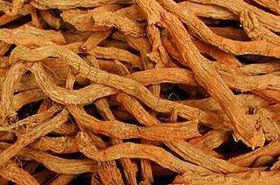
Aliases: Red Root, Grand Red Robe, Blood Ginseng Root.
Taste and Nature: Bitter taste, slightly cold nature.
Meridian Tropism: Enters the Heart and Liver meridians.
Medicinal Part: The dried root and rhizome of Salvia miltiorrhiza Bge., a plant from the Lamiaceae (mint) family.
Botanical Description: The rhizome of Danshen is typically short and thick, sometimes with remnants of the stem at its apex. It has several roots that are long, cylindrical, and slightly curved. Some roots may branch and possess fine, fibrous rootlets, generally measuring 10-20 cm in length and 0.3-1 cm in diameter. The surface is reddish-brown or dark reddish-brown, rough, and marked with longitudinal wrinkles. Older roots often have loose, purplish-brown outer bark that frequently peels off in scales. Danshen is hard and brittle; its cross-section is often loose with fissures, or occasionally smooth and dense. The cortex is reddish-brown, while the woody part is grayish-yellow or purplish-brown, with yellowish-white vascular bundles arranged radially. It has a faint aroma and a slightly bitter, astringent taste.
Dosage and Preparation of Danshen
Dosage: For decoction, typically 10-15g. To enhance its effects in invigorating blood and dispelling stasis, it is recommended to use it stir-fried with wine.
Processing (Pao Zhi): Remove impurities and residual stems, wash thoroughly, moisten until fully saturated, slice into thick pieces, and dry.
Functions and Indications of Danshen
Functions: Danshen is highly valued for its ability to invigorate blood circulation and dispel blood stasis, unblock meridians and alleviate pain, clear Heart fire and calm restlessness, and cool blood to reduce swellings and carbuncles. These broad actions make it a versatile herb in TCM.
Indications: It is traditionally used to address a range of conditions, including chest pain and discomfort (often associated with 'Bi' syndrome or angina-like symptoms), epigastric, abdominal, and flank pain, abdominal masses and accumulations, painful obstruction (Bi syndrome) due to heat, restlessness and insomnia, irregular menstruation, painful menstruation (dysmenorrhea) and amenorrhea, and inflammatory sores or swellings with pain.
Precautions and Contraindications for Danshen
Important Caution: Danshen should not be used in combination with Veratrum (Li Lu). This is a well-known classical herb interaction in TCM. Always consult a qualified practitioner before combining herbs or starting any new herbal regimen.
Traditional Compatibility (Herbal Combinations)
Here are some classical examples of Danshen’s use in traditional formulas:
1. For Irregular Menstruation and Postpartum Conditions: To regulate menstrual cycles (whether early, late, profuse, or scant), address restless fetus during pregnancy, or facilitate the discharge of lochia postpartum, Danshen (12 liang/approx. 360g) is decocted with 5 sheng (approx. 5 liters) of wine. Boil until 3 sheng (approx. 3 liters) remain. Drink 1 sheng warmed, three times a day. It can also be decocted with water. (From "Qian Jin Fang" - Prescriptions Worth a Thousand Gold).
2. For Cold Hernia Abdominal Pain: For severe lower abdominal and perineal pain that radiates, accompanied by cold sweats and extreme distress, 1 liang (approx. 30g) of Danshen is pulverized into a fine powder. Take 2 qian (approx. 6g) per dose, mixed with warm wine. (From "Sheng Hui Fang" - Benevolent Sagacity's Prescriptions).
3. For Burns (Hot Oil/Fire), to Relieve Pain and Promote Tissue Regeneration: Chop 8 liang (approx. 240g) of Danshen. Lightly moisten with water. Take 2 jin (approx. 1 kg) of sheep fat and infuse with the Danshen mixture, heating and cooling three times. Apply the prepared ointment to the affected area. (From "Zhou Hou Fang" - Handbook of Prescriptions for Emergencies).
Classical Discussions on Danshen
Traditional texts offer profound insights into Danshen’s therapeutic actions:
1. "Bencao Gangmu" (Compendium of Materia Medica): "Invigorates blood, unblocks the pericardium meridian, treats hernia pain." This highlights Danshen's cardiovascular benefits and pain-relieving properties.
2. "Shennong Bencao Jing" (The Divine Farmer's Materia Medica Classic): "Dispels evil qi from the heart and abdomen, addresses gurgling intestines (like running water), resolves cold and hot accumulations, breaks up masses and accumulations, stops restlessness and fullness, and benefits vital energy." This text underscores its broad effects on internal harmony and vitality.
3. "Bielu" (Supplements to the Materia Medica Classic): "Nourishes blood, removes stubborn diseases and stagnant qi from the heart and abdomen, alleviates stiffness in the lower back and numbness in the legs, expels wind-evil and lingering heat. Long-term use is beneficial." This emphasizes its blood-nourishing, anti-inflammatory, and overall tonic effects. Danshen's ability to "nourish blood" while "invigorating blood" is a unique aspect often discussed in TCM, suggesting it can both replenish and move blood, a crucial balance for cardiovascular and gynecological health.
References
Danshen's efficacy, particularly in cardiovascular health, is supported by modern research, bridging ancient wisdom with contemporary science.Modern studies have explored Danshen's potential in treating various cardiovascular conditions, validating its traditional use for improving blood circulation and reducing inflammation. PMID: 32669228
Research also delves into Danshen's role in gynecological health, aligning with its traditional indication for menstrual irregularities and pain. PMID: 32095368
Further investigations confirm Danshen's anti-inflammatory properties, providing a scientific basis for its traditional application in reducing swelling and pain. PMID: 33795244
Your Health in Focus: A 3-Second Self-Test & 30-Second Self-Help!
If you often experience a dull ache or tightness in your chest, especially under stress, OR you find your menstrual cycle is consistently irregular with significant discomfort, OR you frequently feel restless and struggle with insomnia...
Then consider discussing Danshen with a qualified Traditional Chinese Medicine (TCM) practitioner to determine if it's suitable for your specific health needs and constitution. Immediately, you can try focusing on deep, diaphragmatic breathing to calm your mind and body. For temporary relief of chest or abdominal discomfort, gently massage the inner wrist (the Neiguan acupoint, PC6), located three finger-widths above the wrist crease between the two tendons.
For informational purposes only. Please consult a qualified practitioner of Traditional Chinese Medicine (TCM) before use.