Gastrodia Elata (Tian Ma)
Known by several names, Gastrodia Elata is also recognized as Red Arrow (赤箭), Mupu (木浦), Ming Tian Ma (明天麻), and Dingfengcao Gen (定风草根), which translates to "wind-settling grass root."
In Traditional Chinese Medicine (TCM), its energetic properties are considered sweet (甘) and neutral (平).
It primarily enters the Liver Meridian (入肝经).
The part used in medicine is the dried tuber of Gastrodia elata Blume, a plant belonging to the Orchidaceae family.
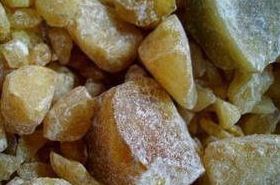
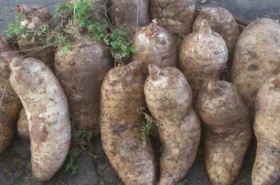
This herb typically appears oval or elongated, slightly flattened, shriveled, and somewhat curved, ranging from 3 to 15 cm in length, 1.5 to 6 cm in width, and 0.5 to 2 cm in thickness. Its surface varies from yellowish-white to light yellowish-brown, often displaying longitudinal wrinkles and multiple transverse rings formed by latent buds. Occasionally, brownish-black fungal strands might be visible. At one end, there's a reddish-brown to dark brown "parrot's beak" shaped bud or a remnant of the stem base; the other end features a round, navel-like scar. It's hard and not easily broken, with a relatively flat cross-section that is yellowish-white to light brown and has a horny or translucent appearance. It possesses a subtle aroma and a sweet taste.
Usage and Dosage of Gastrodia Elata (Tian Ma)
For internal use, it is typically prepared as a decoction, with dosages ranging from 1.5 to 3 qian (approximately 5.6 to 11.25 grams); it can also be incorporated into pills or powders.
Processing Methods (炮制)
Tian Ma: Begin by sorting and removing impurities, then grade by size. Soak the tubers in water until about 70% saturated. Remove them, air dry slightly, then re-moisten until the internal and external moisture levels are uniform. Slice, and then sun-dry.
Fried Tian Ma (炒天麻): Heat a wok over low heat. Once warm, add the slices and stir-fry until they turn slightly yellow.
Baked Tian Ma (煨天麻): Lay Tian Ma slices flat on a piece of core paper that has been sprayed with water. Place this in a wok and heat over low flame until the paper turns scorched yellow, continuously flipping the slices until both sides are deeply yellow.
Functions and Actions of Gastrodia Elata (Tian Ma)
Functions: Calms internal wind, settles convulsions.
Indications: Traditionally used to treat dizziness with blurred vision, wind-pattern headaches, limb numbness, hemiplegia (paralysis affecting one side of the body), slurred speech, and infantile convulsions or seizures due to wind.
Contraindications of Gastrodia Elata (Tian Ma)
The "Lei Gong's Treatise on Preparation of Herbs" (《雷公炮炙论》) advises: "Use Yufengcao Gen (御风草根), but not Tian Ma. If these two are used together, it can lead to intestinal obstruction."
Common adverse reactions reported from taking Tian Ma include dizziness, nausea, chest tightness, and skin rashes accompanied by itching. Some individuals may experience facial or generalized edema, and even hair loss. These reactions can occur not only with single-herb use but also after taking formulas containing Tian Ma, such as Ban Xia Bai Zhu Tian Ma Tang (半夏白术天麻汤), or proprietary Chinese medicines like Tian Ma Wan (天麻丸) and Tian Ma Mi Huan Jun Tang Yi Pian (天麻蜜环菌糖衣片), indicating an allergic response to Tian Ma.
Ancient practitioners were well aware of Tian Ma's side effects and contraindications. For instance, the "Compendium of Materia Medica" (《本草纲目》) states: "Prolonged use of Tian Ma may cause red rashes to erupt all over the body." Similarly, "Ben Jing Feng Yuan" (《本经逢原》) notes: "Although Tian Ma's nature is not drying, it is ultimately a 'wind agent.' It should not be indiscriminately used if there is blood deficiency without wind, or if headaches are caused by blazing fire with a dry mouth and constipation." The renowned Qing Dynasty physician Wu Yiluo (吴仪洛) frankly stated: "It is contraindicated for those with deficient blood and non-genuine stroke." Modern pharmacological experiments have confirmed that Tian Ma has certain toxic side effects. The toxic dose of Tian Ma is considered to be above 40 grams, with a latent period of 1 to 6 hours for toxicity to manifest.
Toxicity of Gastrodia Elata (Tian Ma)
Studies have shown that intraperitoneal injection of Gastrodia Elata extract in mice resulted in an LD50 (Lethal Dose 50%) of 51.4-61.4 g/kg. Rabbits injected daily with a dilute alcohol extract of Gastrodia Elata (0.25-1 g/kg) exhibited weakness, reduced activity, significant loss of appetite, weight decrease, and even death. Intraperitoneal injection of a decoction at 12 g/kg in rabbits caused fatigue, sluggish reactions, ataxia, refusal to eat, and increased heart rate. Electroencephalograms showed slow waves at 1-2 times per second, and one case presented T-wave inversion on the electrocardiogram. A majority of 12 rabbits died within 48 hours of administration.
Vanillin, a component of Tian Ma, demonstrated fewer side effects. Intravenous injection of 40 mg/kg or oral administration of 1 g/kg showed no special changes in the animals' general condition, electrocardiograms, or electroencephalograms. The LD50 of vanillyl alcohol via intraperitoneal injection in mice was 891.3 ± 31.7 mg/kg for a single dose. For Gastrodia Elata extract (each vial equivalent to 7.14 g of crude herb), the LD50 via x-time intraperitoneal injection was 0.43 ml/10g for male mice and 0.36 ml/10g for female mice, equivalent to 0.514 g/10g of crude herb. Gastrodin exhibited very low toxicity; its LD50 via intravenous injection in dd-strain male mice was 337 mg/kg, and via oral gavage, it was >1000 mg/kg, with some measurements even reporting >5000 mg/kg.
Subacute toxicity experiments in animals indicated that gastrodin and its aglycone had no effect on blood red blood cells, platelets, transaminases, non-protein nitrogen, or cholesterol. Histopathological examination of heart, liver, spleen, lung, kidney, stomach, and intestinal tissue sections revealed no cellular degeneration. Gastrodin and its aglycone did not affect the heart rhythm in conscious rabbits, although heart rate was slightly reduced. Thirty minutes after intraperitoneal injection of Gastrodia Elata aqueous solution at 12 g/kg, rabbits became sluggish, followed by ataxia and refusal to eat. Five hours later, the heart rate increased to over 300 beats per minute, with most animals dying within 48 hours. Intravenous injection of Gastrodia Elata injection (1 g/kg) produced significant sedative effects, with animals lying prone and refusing to eat, but without changes in electrocardiograms or electroencephalograms.
Vanillin (40 mg/kg intravenous injection or 1 g/kg oral gavage) showed good general condition in animals, with no changes in electrocardiograms or electroencephalograms. Its LD50 via intraperitoneal injection in mice was 946 mg/kg, and via oral gavage in rats, it was 3000 mg/kg. Oral gavage of gastrodin or p-hydroxybenzaldehyde to rats and mice for 14-60 days showed no impact on blood parameters, and pathological examination of important organs like the heart, liver, and kidneys revealed no abnormal changes.
Experiments on the effects of gastrodin derivatives, specifically acetylgastrodin, on mouse and rat fetuses showed no significant impact on the placenta, fetal body weight, sex, external appearance, internal organs, or skeletal development when 373 mg/(kg·day) of acetylgastrodin was administered via oral gavage to mice and rats on gestation days 6-15. Doses of 373-149 mg/(kg·day) for mice and 32.3-64.5 mg/(kg·day) for rats, administered via oral gavage on gestation days 6-15, showed no significant effects or deformities in fetuses compared to control groups.
Traditional Prescriptions Featuring Gastrodia Elata (Tian Ma)
**A crucial safety note:** Some of the following traditional formulas contain highly potent and potentially toxic herbs such as Aconite (Fuzi 附子 and Caowutou 草乌头). These ingredients require careful processing (炮制) and precise dosage, and should absolutely **ONLY** be administered under the strict guidance of a qualified and licensed Traditional Chinese Medicine practitioner. Self-medication with these powerful compounds can be dangerous.
- For treating unilateral or bilateral headaches, wind-induced attacks, swollen and dim eyes, dizziness, and inability to sit or stand: Take 1.5 ounces of Tian Ma, 1 ounce of processed Aconite Root (Fuzi 附子, peeled and navel removed), 1 ounce of Pinellia Tuber (Ban Xia 半夏, washed seven times in boiling water to remove slipperiness), 0.5 ounce of Schizonepeta Spike (Jing Jie Sui 荆芥穗), 0.5 ounce of Costus Root (Mu Xiang 木香), 0.25 ounce of Cinnamon Bark (Gui 桂, coarse bark removed), and 0.5 ounce of Ligusticum Wallichii (Chuan Xiong 芎藭). Grind these seven ingredients into a fine powder, then mix evenly with frankincense (Ru Xiang 乳香). Form into pills the size of a Wutong seed with water. Start with 5 pills per dose, gradually increasing to 10 pills, taken three times a day with clear tea. (From "Sheng Ji Zong Lu" - Tian Ma Wan)
- To dispel wind, transform phlegm, clear the head and eyes, regulate the chest and diaphragm, and treat palpitations, vexation, dizziness to the point of collapse, neck stiffness, shoulder and back pain, mental fogginess, excessive sleepiness, limb and joint pain, itchy skin, unilateral or bilateral headaches, nasal obstruction, and facial/eye puffiness: Take 0.5 ounce of Tian Ma and 2 ounces of Ligusticum Wallichii (Chuan Xiong 芎藭). Grind into a powder and form into pills the size of a gordon euryale seed with refined honey. Chew one pill after each meal, taking with tea or wine as desired. (From "Xi Ji Fang" - Tian Ma Wan)
- For treating stroke with immobility of hands and feet, muscle and bone pain, difficulty walking, and heavy waist and knees: Take 2 ounces of Tian Ma, 1 ounce of Sanguisorba Root (Diyu 地榆), 0.3 ounce of Myrrh (Mo Yao 没药, ground), 1 ounce each of Scrophularia Root (Xuan Shen 玄参) and Processed Aconite Root (Wutou 乌头, peeled and navel removed), and 0.1 ounce of Musk (She Xiang 麝香, ground). Aside from the finely ground Musk and Myrrh, pound and sift the other six ingredients into a powder. Mix well with the ground herbs and form into pills the size of a Wutong seed with refined honey. Take 20 pills per dose with warm wine, on an empty stomach before dinner. (From "Sheng Ji Zong Lu" - Tian Ma Wan)
- For women with wind-damp numbness (feng bi 风痹) and immobility of hands and feet: Take 2 ounces each of sliced Tian Ma, Achyranthes Root (Niuxi 牛膝), Aconite Root (Fuzi 附子), and Eucommia Bark (Duzhong 杜仲). Finely chop these herbs, place them in a raw silk bag, and soak in 1.5 dou (approximately 15 liters) of good wine for seven days. Drink a small cup of the warm infused wine per dose. (From "Shi Bian Liang Fang" - Tian Ma Jiu)
- For treating wind-damp beri-beri (feng shi jiao qi 风湿脚气), muscle and bone pain, and skin numbness: Take 5 ounces of raw Tian Ma, 10 ounces of Ephedra (Mahuang 麻黄, roots and nodes removed), 5 ounces each of processed Kusnezoff Aconite Root (Caowutou 草乌头, processed to remove skin), Agastache Leaf (Huoxiang Ye 藿香叶), roasted Pinellia Tuber (Ban Xia 半夏, roasted until yellow), and stir-fried wheat flour (Baimian 白面). Pound and sift these six ingredients into a fine powder. Form into pills the size of a chicken head with water and coat with cinnabar (Dansha 丹砂). Take one pill per dose, three times a day, with tea or wine, regardless of mealtime. (From "Sheng Ji Zong Lu" - Tian Ma Wan)
- For treating infantile wind-phlegm convulsions, acute and chronic infantile convulsions, and wind-epilepsy: Take 2 ounces of prepared Tian Ma (washed with wine and stir-fried), 3 ounces of Arisaema with Bile (Dan Xing 胆星, both stir-fried), 2 ounces of stir-fried Silkworm (Jiang Can 僵蚕), 1 ounce of Bamboo Sap (Tian Zhu Huang 天竺黄), and 0.5 ounce of processed Realgar (Ming Xiong Huang 明雄黄). Grind all into a fine powder, mix well. Add 2 ounces of prepared Pinellia Tuber (Ban Xia Qu 半夏曲) powder, make a paste, and form into pills the size of a bullet. Dissolve one, two, or three pills in a strong decoction of mint and ginger. (From "Ben Cao Hui Yan")
- For treating various infantile convulsions: Take 0.5 ounce of Tian Ma, 1 ounce of processed Scorpion (Quan Xie 全蝎, detoxified and stir-fried), 0.5 ounce of processed Arisaema Rhizome (Tian Nan Xing 天南星, processed and peeled), and 0.2 ounce of stir-fried Silkworm (Bai Jiang Can 白僵蚕, silk removed). Grind all into a fine powder. Form into pills the size of a Tian Ma seed with wine-boiled wheat paste. For a one-year-old child, take 10 to 15 pills per dose. Take with Schizonepeta decoction. This medicine is warm in nature and can be taken regularly. (From "Wei Shi Jia Cang Fang" - Tian Ma Wan)
Related Discussions on Gastrodia Elata (Tian Ma)
1. "Bencao Yan Yi" (《本草衍义》): Tian Ma, using its root, requires other herbs as auxiliaries to manifest its efficacy. It also needs to be added to formulas. Some people steep it in honey as a preserve or steam and cook it for consumption. Those who use Tian Ma should contemplate deeply to truly understand its benefits.
2. Li Gao (李杲): For liver deficiency, Tian Ma and Chuan Xiong are suitable to nourish. Its uses are four: treating wind-heat headaches in adults, wind-epilepsy and infantile convulsions in children, various wind-induced numbness and paralysis, and wind-heat-induced speech impediments.
3. "Compendium of Materia Medica" (《纲目》): Tian Ma is a herb that acts on the Qi aspect of the Liver Meridian. As stated in "Huangdi Neijing - Suwen" (《素问》), "All shaking and dizziness belong to Wood." Therefore, Tian Ma enters the Jueyin (Liver) Meridian to treat various diseases. Luo Tianyi (罗天益) noted: "Dark vision and dizziness, caused by internal wind-deficiency, cannot be treated without Tian Ma." Tian Ma is known as "wind-settling grass," hence it is considered a miraculous herb for treating wind. Today, some who take Tian Ma for a long time develop red rashes all over their body, which is evidence of its wind-dispelling efficacy.
4. "Yaopin Huayi" (《药品化义》): Tian Ma has a mild and gentle nature. The Classic states, "When the Liver is tense, soothe it with sweetness." Thus, this herb is used to soothe Liver Qi. As the Liver belongs to Wood and the Gallbladder to Wind, if Liver deficiency leads to Liver tension and stiffness, failing to nourish the Gallbladder, then the wind in the Gallbladder may stir, like the tumultuous wind in nature, hence the saying "all shaking and dizziness belong to Liver Wood." This refers to the inherent wind of the Liver and Gallbladder, not external climatic wind. Therefore, Liver disease causes muscle stiffness, and using this sweet and harmonizing herb soothes its tension, thereby nourishing the Liver and Gallbladder, making it a miraculous herb for settling wind. It treats wind-stroke, epilepsy, infantile convulsions, headaches, and dizziness, all of which are wind patterns of the Liver and Gallbladder. If Liver tension is severe, it can be combined with Coptis (Huang Lian 黄连) to clear its Qi. Furthermore, due to its heavy nature and downward-directing quality, and its mild, permeating taste, it can benefit the waist and knees, promote blood circulation, and resolve wind-heat stagnation in the joints. It is a miraculous herb for blood deficiency conditions.
5. "Bencao Xin Bian" (《本草新编》): Tian Ma can stop dizziness, treat wind and dampness, address muscle spasms, paralysis, promote blood circulation, and open orifices. Other claims are not entirely credible. However, when external evils are severe, blocking the meridians and blood vessels, what else but Tian Ma can guide other herbs, allowing tonifying and attacking agents to reach the affected areas? In summary, Tian Ma is most effective at expelling external pathogens and dispelling internal stagnant phlegm, but it should never be lightly used by those with both Qi and Blood deficiency.
6. "Bencao Zheng Yi" (《本草正义》): Ancient texts described Tian Ma's taste and nature as pungent and warm, which likely originated from its association with Chijian (赤箭) in "Ben Cao Jing." Authors like Kaibao and Zhen Quan stated it primarily treats various wind-damp numbness, cold-pattern paralysis, etc., attributing these effects to its pungent and warm nature, thus considering it a wind-expelling, dampness-removing, warming, and circulating herb. However, practitioners like Jie Gu also claimed it treats wind-deficiency dizziness and headaches, which contradicts the method of expelling wind, resolving stagnation, and diffusing. If it were truly pungent and warm and diffused, would using it for deficiency-wind dizziness and headaches not exacerbate the condition? Why did Luo Tianyi say that dark vision and dizziness, caused by internal wind-deficiency, cannot be treated without Tian Ma? From this, we know that wind-cold-damp obstruction, paralysis, and similar conditions are not effectively treated by Tian Ma. The substance of Tian Ma is dense, solid, clear, lustrous, and rich in fat, hence its ability to calmly settle and nourish fluids to subdue internal wind, earning it the name "wind-settling grass." Its ability to treat deficiency wind is not false. It is consistently effective in treating blood deficiency dizziness and heat-phlegm wind-convulsions in children. Therefore, Zhen Quan used it to treat speech confusion and fright-induced disorientation, and Dong Yuan used it to treat wind-heat and speech impediments, all relying on its ability to nourish Yin and fluids to subdue internal wind. The claim of a pungent and warm taste is derived from the old name Chijian, but in reality, it is neither pungent nor truly warm.
7. "Shennong Bencao Jing" (《本经》): Primarily treats noxious Qi. Prolonged use strengthens Qi and vitality, promoting Yin and robust health.
8. "Ming Yi Bie Lu" (《别录》): Dispels carbuncles and swellings, relieves abdominal distention and fullness, treats hernia, and stops bleeding.
9. "Yaoxing Lun" (《药性论》): Treats cold-pattern numbness, stubborn paralysis, immobility, speech confusion, frequent fright, and loss of ambition.
10. "Rihua Zi Bencao" (《日华子本草》): Boosts Yang Qi, remedies five depletions and seven injuries, promotes blood circulation, and opens orifices.
11. "Kaibao Bencao" (《开宝本草》): Treats wind-dampness, strengthens muscles and bones, benefits the waist and knees, and improves muscle strength.
12. Zhang Yuan Su (张元素): Treats wind-deficiency dizziness and headaches.
13. "Bencao Hui Yan" (《本草汇言》): Primarily treats wind-pattern headaches, headaches, dizziness, vertigo, epilepsy, severe convulsions, limb spasms, slurred speech, all types of wind-stroke, and wind-phlegm.
Benefits of Drinking Gastrodia Elata (Tian Ma) Infusion
Thinking of incorporating Tian Ma into your wellness routine? Here are some of the potential benefits, backed by traditional use and modern research:
First: Pain-Relieving Effects
Research indicates that Gastrodia Elata injection has significant sedative properties. It's particularly effective for headaches associated with cerebrovascular diseases, trigeminal neuralgia, and vascular neurotic headaches. Clinical trials involving over a thousand cases showed an impressive analgesic efficacy of up to 90%, a truly remarkable result. PMID: 28838382
Second: Blood Pressure Reduction
Traditional Chinese medicine practitioners note that Tian Ma can effectively manage high blood pressure. Long-term use is believed to strengthen muscles and bones, protect the waist and knees, and calm the liver while boosting vital energy. PMID: 32661005
Third: Cardioprotective Actions
Tian Ma can enhance blood flow in both peripheral and coronary arteries, offering protective benefits for the heart. If you experience palpitations and shortness of breath, a Tian Ma infusion might help support your recovery and well-being.
Fourth: Sedative Effects
The gastrodin content in Tian Ma is highly effective in treating neurasthenia and related syndromes, with an efficacy rate reaching 80-90%. Furthermore, Tian Ma can counteract the stimulating effects of caffeine on the central nervous system, helping to prevent over-excitement and significantly improve sleep quality.
Fifth: Anticonvulsant Properties
Studies show Tian Ma offers notable therapeutic effects for various conditions like limb numbness, epilepsy, and facial nerve spasms. Beyond these, drinking Tian Ma infusion is also beneficial for conditions such as angina pectoris and biliary colic, promoting overall health restoration.
Sixth: Vision-Enhancing Effects
Certain active compounds in Tian Ma can effectively protect and regulate the optic nervous system, improving the visual acuity and distinguishing power of the eyes. Many individuals who perform high-altitude work frequently consume Tian Ma to protect both their brain and eyes.
Seventh: Cognitive Enhancement
Tian Ma has been shown to boost intelligence, particularly enhancing memory. Japanese scientists have reportedly used Gastrodia Elata injection to treat Alzheimer's disease, achieving a significant efficacy rate of 81%. PMID: 29775369
***
Quick Self-Check & Immediate Action:
If you frequently experience unexplained dizziness or persistent tension headaches that affect your daily focus,
Then consider speaking with a qualified TCM practitioner about whether Gastrodia Elata (Tian Ma) might be a suitable herbal remedy for you.
If you're feeling overwhelmed by stress leading to restless nights or difficulty concentrating,
Then immediately try a calming herbal tea (not necessarily Tian Ma, but a general calming blend) and practice deep breathing for 30 seconds to center yourself, and research professional TCM consultation options for a personalized approach.
References:
[Effect of Gastrodia elata Blume on neuropathic pain and inflammatory pain in rats] PMID: 28838382
[Gastrodin, a major constituent of Gastrodia elata Blume, alleviates hypertension and renovascular dysfunction in spontaneously hypertensive rats] PMID: 32661005
[Gastrodia elata Bl. and Gastrodin: A Comprehensive Review of Their Neuropharmacological Activities] PMID: 29775369
For informational purposes only. Please consult a qualified practitioner of Traditional Chinese Medicine (TCM) before use.