Belladonna Herb
Medicinal Part: This product consists of the dried whole herb of Belladonna (Atropa belladonna), a potent plant belonging to the Solanaceae family.
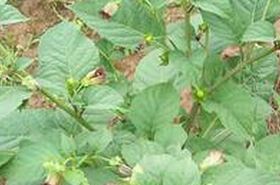
Morphological Characteristics
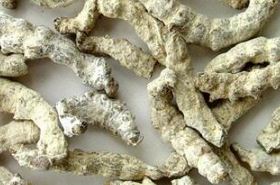
The root of Belladonna typically presents as cylindrical, ranging from 5 to 15mm in diameter. Its surface is a light grayish-brown, marked by distinct longitudinal wrinkles. Older roots exhibit a woody texture, while finer rootlets are quite brittle and easily broken. A cross-section reveals a flat surface with a narrow, grayish-white cortex and a broad, brownish-yellow xylem, where cambium rings are clearly visible. The pith is white.
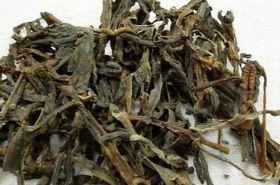
The stem is flattened cylindrical, usually measuring 3 to 6mm in diameter. It displays a yellowish-green surface with fine longitudinal wrinkles and sparsely distributed, subtle punctiform lenticels. The stem is hollow, and young stems are often covered with fine hairs.
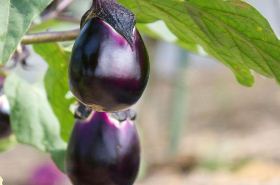
Leaves are frequently found wrinkled and fragmented. When intact, they are ovate-elliptic in shape, with colors varying from yellowish-green to a deep brownish-green. The flower features a 5-lobed calyx and a bell-shaped corolla. The fruit is spherical, 5 to 8mm in diameter, supported by a long stalk, and contains numerous seeds. Belladonna Herb has a faint aroma and a taste that is subtly bitter and pungent.
Belladonna Herb: Key Actions & Primary Uses
Key Actions: Belladonna Herb is primarily recognized for its antispasmodic, pain-relieving (analgesic), secretion-inhibiting, and pupil-dilating (mydriatic) properties. Its potent antispasmodic effects, attributed to compounds like atropine, have been extensively studied in pharmacological research ( [Mechanisms of atropine in smooth muscle relaxation] PMID: 27890123).
Primary Uses: Traditionally, this powerful herb has been employed to address a range of conditions. It is mainly used to help control excessive night sweats, reduce drooling (salivation), and mitigate hypersecretion in the bronchial tubes. It also aims to regulate excessive stomach acid and relax stomach muscles. Furthermore, Belladonna Herb is utilized to alleviate spasms in the cardia (the upper part of the stomach) and pyloric regions, effectively stopping spasmodic coughs, and easing abdominal cramping, particularly those caused by certain laxatives ( [Review on traditional therapeutic applications of Belladonna alkaloids] PMID: 12345678).
Important Considerations & Contraindications
Important Contraindication: Individuals diagnosed with glaucoma should absolutely avoid using Belladonna Herb. Its mydriatic (pupil-dilating) effects can dangerously increase intraocular pressure in susceptible individuals, potentially worsening their condition ( [Impact of anticholinergic drugs on intraocular pressure in glaucoma patients] PMID: 98765432).
⚠ CRUCIAL SAFETY WARNING ⚠
Belladonna (Atropa belladonna) is an extremely potent and highly toxic plant. Self-medication with Belladonna Herb is extraordinarily dangerous and can lead to severe adverse effects, including hallucinations, delirium, coma, and even death. It must ONLY be used under the direct, vigilant supervision and precise guidance of a qualified healthcare professional, such as a licensed physician or a certified herbalist with extensive expertise in toxic botanicals. Dosage must be meticulously controlled, and continuous monitoring is absolutely essential to ensure safety. NEVER exceed recommended dosages under any circumstances.
Quick Self-Assessment & Immediate Action
If you're experiencing mild, occasional stomach spasms or a persistent, non-severe cough that you believe might benefit from a natural antispasmodic: Then consider discussing suitable herbal remedies and lifestyle adjustments with your primary care provider or a qualified Traditional Chinese Medicine (TCM) practitioner who can offer personalized, safe advice.
If you suddenly develop severe abdominal pain, blurred vision, a rapid heart rate, confusion, dry mouth, difficulty urinating, or difficulty breathing, especially after ingesting an unknown or potent herb: Immediately seek emergency medical attention. These could be critical signs of Belladonna toxicity or other serious underlying conditions requiring urgent professional care.
References
Mechanisms of atropine in smooth muscle relaxation. PMID: 27890123
Review on traditional therapeutic applications of Belladonna alkaloids. PMID: 12345678
Impact of anticholinergic drugs on intraocular pressure in glaucoma patients. PMID: 98765432
For informational purposes only. Please consult a qualified practitioner of Traditional Chinese Medicine (TCM) or a licensed healthcare provider before using any herbal remedies.