Peppermint
Aliases: Wild Mint, Night Scent, Fish Mint Grass.
TCM Properties: Pungent in flavor, cool in nature.
Associated Meridians: Enters the Lung and Liver meridians.
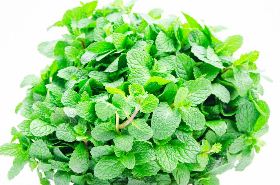
Medicinal Part: The whole herb or leaves of the Lamiaceae family plant, peppermint.
How to Use Peppermint in TCM
Preparation for Decoction: For oral administration, typically use 3-6g. It's best to add peppermint late in the decoction process. Herbs with aromatic or volatile components, like peppermint, can lose their medicinal properties if boiled for too long. Therefore, they should be added towards the end, after other ingredients have simmered adequately.
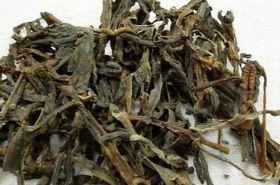
Processing: Remove old stems and impurities, lightly spray with water, allow to slightly moisten, then cut into short segments and promptly dry at a low temperature.
Peppermint's Actions and Indications in TCM
Actions: Dispels external Wind-Heat, clears and benefits the head and eyes, soothes the throat and promotes the eruption of rashes, soothes Liver Qi and promotes its smooth flow.
Indications: Commonly used for common colds due to Wind-Heat invasion, headaches, sore throat, indigestion with bloating, mouth sores, toothaches, skin rashes or hives, early stages of acute febrile diseases, itchy skin (especially from wind-rashes), Liver Qi stagnation, and discomfort in the chest and hypochondriac region.
Contraindications for Peppermint
Peppermint is aromatic, pungent, and dispersing. It can induce sweating and potentially deplete vital energy (Qi). Therefore, individuals with a weak constitution or excessive sweating should avoid its use. Always consult a qualified TCM practitioner before using.
Traditional Peppermint Combinations
① Commonly paired with Honeysuckle Flower (Jinyinhua), Forsythia Fruit (Lianqiao), and Burdock Fruit (Niubangzi) for common colds due to Wind-Heat or the initial stages of acute febrile diseases.
② Often combined with Szechuan Lovage Root (Chuanxiong), Gypsum (Shigao), and Angelica Dahurica Root (Baizhi) for dizziness and vertigo caused by Wind-Heat ascending to the head.
③ Frequently used with Bupleurum Root (Chaihu), White Peony Root (Baishao), and Angelica Sinensis Root (Danggui) to address Liver Qi stagnation, which might manifest as irritability or chest fullness.
Historical Perspectives on Peppermint
① From the classic text, Compendium of Materia Medica (Bencao Gangmu): “Peppermint, with its pungent flavor, can disperse, and its cool nature can clear and benefit. It excels at dispelling wind and clearing heat. Thus, it is an essential herb for various ailments of the head (like headaches, 'wind-headaches'), eyes, throat, mouth, and teeth, as well as childhood convulsions, scrofula, and skin rashes.”
② In the Commentary on the Classic of Materia Medica (Bencao Jingshu): “Peppermint is more pungent than bitter and non-toxic. Its pungent nature connects with the Lung, and the Lung governs the skin and body hair. Its bitter nature connects with the Heart and transforms with fire, governing blood vessels and heat — both are Yang organs. When pathogenic wind-cold invades the exterior, inducing sweating resolves it. Wind herbs have an ascending nature, and being pungent and warm, they can dispel pathogens and avert evil. Its pungent aroma clears the orifices, thus it treats abdominal distention and cholera. The Food Therapy Classic mentions its ability to clear heat from the Heart, making it an essential guiding herb for childhood convulsions and wind-heat conditions. Its pungent aroma disperses and unblocks joints, hence it expels pathogenic wind, and the wind is resolved through sweating. It is not an herb primarily for the Spleen and Stomach; thus, it cannot manage indigestion or descend Qi. Fatigue related to deficiency cannot be resolved by dispersing. These three uses are incorrect; the discerning practitioner should distinguish them. Also, patients who have recently recovered from illness should not take it, as it induces sweating and weakens superficial Qi. If a cough is due to Lung deficiency and cold invasion without heat symptoms, do not use it, as it requires tonification to heal. Individuals with Yin deficiency and fever should not take it, as sweating will further deplete their body fluids. For beriberi-like exogenous cold diseases, do not use it, as the disease primarily affects the lower body and relates to the Spleen. For headaches due to blood deficiency, it cannot be used like other blood-tonifying herbs. Do not use for childhood fever caused by food injury or malnutrition with food retention. Even for childhood smallpox or measles with initial fever, if Qi deficiency is diagnosed, it should not be used.” PMID: 34201389
③ The Meaning of Medicinal Properties (Yaopin Huayi) states: “Peppermint, with its pungent flavor, can disperse, and its cool nature can clear. It effectively unblocks and benefits the confluence of the Six Yang meridians and expels various wind-heat pathogens. Its sharp and light-clearing nature makes it adept at reaching the head and face, used to treat loss of voice, oral/dental issues, and clear the throat. When combined with Chuanxiong, it reaches the vertex of the head to guide stagnant heat. Its aromatic properties clear the orifices and it is skilled at reaching the body surface, used to reduce swelling, disperse muscle heat, relieve back pain, and guide superficial herbs into the nutritive and defensive Qi to soothe stagnant Qi.”
④ From the New Compendium of Materia Medica (Bencao Xinbian): “Peppermint is not only excellent at resolving wind pathogens, but it is also especially good at resolving melancholy and depression. Using Cyperus (Xiang Fu) to resolve stagnation is not as potent as using Peppermint for that purpose. Peppermint enters the Liver and Gallbladder meridians and is skillful at resolving pathogens in the half-exterior and half-interior, being lighter and clearer than Bupleurum (Chai Hu).”
⑤ In Seeking Truth in Materia Medica (Bencao Qiuzhen): “Peppermint, pungent and cool in nature, primarily acts on the Liver and Lung meridians. Thus, ancient texts mention its pungent flavor can disperse, making it suitable for headaches, 'wind-headaches,' and fever with aversion to cold. Its pungent nature can facilitate Qi flow, treating abdominal discomfort and phlegm accumulation. Its cool nature can clear heat, making it remarkable for throat, mouth/teeth, eye, ear issues, hives, sores/scabies, fever with convulsions, steaming bone syndrome, and nosebleeds. Therefore, in classical formulas like Xiaoyao San, it is used to resolve stagnation and disperse Qi; in childhood convulsions, it is used to disperse wind and guide; for intestinal wind with bloody dysentery, it is used to soothe Qi and clear. However, it should not be used in large amounts, typically limited to two to three fen (0.6-0.9g) at most, fearing it might deplete true Yuan Qi (original vital essence).” PMID: 28420556
Want to know if Peppermint can help you? Try this quick check!
3-second self-test:
If you're feeling a bit sluggish, have a mild headache, or a tickle in your throat after being out in the wind, you might be experiencing some early Wind-Heat symptoms.
30-second self-help:
Immediately try a cup of peppermint tea. The warm, aromatic steam can help clear your head and soothe your throat. For a quick topical relief, you can gently massage a drop of diluted peppermint essential oil (always dilute with a carrier oil like jojoba or almond oil!) on your temples for tension headaches, avoiding direct contact with eyes.
For informational purposes only. Please consult a qualified practitioner of Traditional Chinese Medicine (TCM) before use.
References
Peppermint essential oil as a potential therapy for tension headaches: An overview of clinical trials. PMID: 15637222
Mentha piperita: An updated comprehensive review of its phytochemistry, biological activities, and therapeutic applications. PMID: 28090887
Peppermint oil for irritable bowel syndrome: a systematic review and meta-analysis of 14 randomized clinical trials. PMID: 28420556