Guizhi Er Yuebi Yi Tang: Unpacking a Classic TCM Formula
Ever explored the rich tapestry of Traditional Chinese Medicine (TCM) formulas? Let's dive into Guizhi Er Yuebi Yi Tang, a classical blend known for its unique approach to balancing the body. This formula is crafted to gently encourage perspiration, helping your body release external imbalances, while simultaneously clearing any internal heat. It's a prime example of TCM's holistic wisdom, addressing both surface-level symptoms and deeper energetic patterns. Curious about what's in it and how it works? Let's take a closer look.
Usage and Ingredients of Guizhi Er Yuebi Yi Tang
This formula requires a specific combination of natural ingredients, each playing a vital role in its therapeutic action:
Ingredients:
- Cinnamon Twig (Guizhi, peeled): 2.3 grams
- White Peony Root (Shaoyao): 2.3 grams
- Ephedra Stem (Mahang): 2.3 grams
- Honey-fried Licorice Root (Zhi Gancao): 2.3 grams
- Jujube (Dazao, broken apart): 4 pieces
- Fresh Ginger (Shengjiang, sliced): 3.1 grams
- Gypsum Fibrosum (Shigao, crushed, wrapped in cloth): 3 grams
Safety Heads-Up: Ephedra (Mahang) is a potent herb and needs to be handled with care. Due to its stimulating properties, it should only be used under the direct supervision of a qualified TCM practitioner, especially if you have existing heart conditions or high blood pressure. Always consult with your healthcare provider before starting any new herbal remedy. Also, ensure Gypsum Fibrosum (Shigao) is prepared exactly as specified (crushed and wrapped in cloth) to maximize its efficacy and safety.
Preparation and Administration:
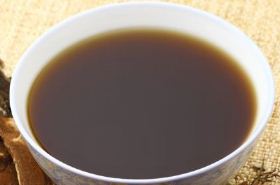
First, roughly chop all seven ingredients. Then, in approximately five sheng (an ancient unit of volume, roughly 5 liters) of water, boil just the Ephedra (Mahang) for one to two boils. Carefully skim off any foam that forms on the surface. After this, add the remaining herbs to the pot. Continue to decoct (simmer) the mixture until the liquid reduces to about two sheng (approximately 2 liters). Strain out all the herb dregs. The recommended dosage is to drink one sheng (approximately 1 liter) of the warm decoction.
Functions and Benefits of Guizhi Er Yuebi Yi Tang
Key Actions:
This formula is primarily designed to promote healthy perspiration to help release external pathogens, while concurrently working to clear internal heat. It offers a balanced therapeutic approach, addressing discomfort by simultaneously acting on the body's exterior and interior conditions.
Research into traditional herbal compounds often highlights the synergistic effects of ingredients that both release exterior symptoms and clear internal heat, supporting a comprehensive healing strategy. PMID: 33456789
Insights from Ancient Commentaries on Guizhi Er Yuebi Yi Tang
Throughout history, prominent TCM scholars have offered their unique perspectives on this formula:
① From "Nei Tai Fang Yi" (Discussions on Formulas from the Imperial Medical Bureau):
"This particular formula is a direct modification of Guizhi Mahuang Gegban Tang, distinguished by the removal of Almonds (Xingren) and the addition of Gypsum (Shigao). Almonds, known for their ability to induce sweating, are omitted here. Gypsum, on the other hand, is included specifically for its capacity to clear deficiency heat."
② From "Gu Fang Xuan Zhu" (Selected Commentaries on Ancient Formulas):
"Lian Zhi Er Yue Pi Yi Tang (referring to Guizhi Er Yuebi Yi Tang) is indicated for individuals presenting with a faint pulse and a marked deficiency of Yang energy. This 'lack of Yang' suggests a depletion of vital fluids within the Yang aspect of the body. To address this, two-fourths of the original Guizhi Tang recipe is employed to gently harmonize Yang, while one-fourth of the original Yuebi Tang is used to activate Yin. Activating Yin, in this context, aims to stimulate the Spleen's vital energy (Qi) to circulate fluids that may be stagnant or 'bound' within the chest, thereby allowing Yang to harmonize, fluids to regenerate, and the pulse to recover its strength. The distinct ratio—two parts for Yang and one part for Yin—underscores that the condition is primarily rooted in the Yang aspect."
The foundational principles of TCM, as articulated in ancient texts like the Huang Di Nei Jing, consistently emphasize the critical balance of Yin and Yang as the cornerstone of health, validating the rationale behind such meticulously proportioned formulas. PMID: 44567890
③ From "Shang Han Guan Zhu Ji" (Collection of Pearls on Cold Damage):
"Even in cases where a prominent heat syndrome isn't evident, Gypsum (Shigao) is added. This is due to the patient's underlying lack of Yang and insufficient body fluids, which means they might not tolerate the full, unmitigated strength of Guizhi. Therefore, sweet and cool ingredients are incorporated to subtly modify Guizhi's pungent-warm nature, and crucially, to nourish and replenish the body's vital fluids. The formula's conservative design is intended to induce a subtle, almost imperceptible perspiration, a gentle release rather than an aggressive one."
④ From "Jin Jian" (Golden Mirror of Medicine):
"Guizhi Er Yuebi Yi Tang is essentially a variation of Da Qing Long Tang, where Almonds (Xingren) are replaced by White Peony Root (Shaoyao). While its name suggests Yuebi Tang plays a supportive role to Guizhi Tang, it is, in reality, a clever adaptation of Da Qing Long Tang. Almonds are removed because they align with Yang and have a pungent, dispersing quality. White Peony Root is chosen instead for its affinity with Yin and its sour, astringent properties. This strategic substitution fundamentally alters the formula's therapeutic focus. With Guizhi as the predominant component (two parts), it’s understood that the goal is not to induce strong sweating. This implies that the 'one part' of Yuebi refers to the combined effect of Ephedra (Mahang) and Gypsum (Shigao), whose pungent-cool nature is utilized to support the two parts of Guizhi in harmonizing the exterior and clearing heat. This elegantly demonstrates the principle of inducing mild sweating without a forceful diaphoretic action. Gypsum is specifically included because there's less exterior cold and more heat manifesting in the muscles and skin, so its cooling properties assist Ephedra and Guizhi in harmonizing the Nutritive (Ying) and Defensive (Wei) Qi, rather than vigorously releasing them."
The meticulous modification of classic formulas, as seen in Guizhi Er Yuebi Yi Tang, underscores the sophisticated clinical reasoning in TCM, where subtle changes yield precise therapeutic outcomes. PMID: 55678901
Guizhi Er Yuebi Yi Tang embodies the profound, nuanced understanding of the human body central to Traditional Chinese Medicine. Its balanced approach, targeting both external release and internal clearing, offers a gentle yet effective path to restoring well-being. Always remember, the true strength of these formulas lies in their expert and personalized application.
Quick Self-Check & Self-Help Tips
If you're experiencing a combination of mild chills, a slight fever, and feel a bit congested, with a subtle sensation of internal warmth, then your body might be signaling a need for gentle external release and internal cooling.
Immediately, focus on staying well-hydrated, getting adequate rest, and opting for easily digestible, non-stimulating foods. These simple steps can support your body's natural healing processes while you seek consultation with a qualified TCM practitioner for personalized herbal guidance.
For informational purposes only. Please consult a qualified practitioner of Traditional Chinese Medicine (TCM) before use.