Yin Chai Hu: An Overview
Nature and Flavor: Sweet, slightly cool.
Meridian Tropism: Acts on the Liver and Stomach meridians.
Medicinal Part: This herb consists of the dried roots of Stellaria dichotoma L. var. lanceolata Bge., a plant from the Caryophyllaceae (carnation) family, specifically the genus Stellaria.
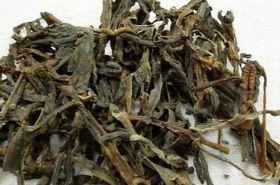
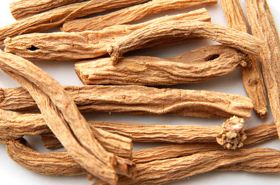
Morphological Characteristics: Yin Chai Hu roots typically appear sub-cylindrical, sometimes with branches, measuring 15 to 40 cm in length and 0.5 to 2.5 cm in diameter. Their surface is pale brownish-yellow or light brown, featuring twisted longitudinal wrinkles and rootlet scars. You'll often notice pitted or disc-shaped depressions, commonly known as "sandy eyes." If broken at these "sandy eye" spots, brown cracks may reveal fine sand particles scattered within. The root head is slightly enlarged, with dense, wart-like protrusions of bud scales, stem, or rhizome residues, commonly referred to as "pearl plates." The texture is hard and brittle, easily breaking with an uneven, relatively loose fracture surface that shows cracks. The cortex (outer layer) is very thin, while the woody part exhibits striking alternating yellow and white radial patterns. The herb has a faint aroma and a sweet taste.
How to Use Yin Chai Hu and Recommended Dosages
Internal Use: Typically prepared as a decoction (boiled in water for tea), using 3-9 grams (approximately 1-3 qian, a traditional unit of weight); it can also be incorporated into pills or powders.
Preparation: To prepare, remove any impurities, wash the roots thoroughly, moisten them until they are fully rehydrated, slice them into thick pieces, and then dry them.
The Therapeutic Actions and Main Indications of Yin Chai Hu
Efficacy: Primarily works to clear deficiency heat and resolve childhood malnutrition heat.
Main Indications: It is traditionally used for conditions involving Yin deficiency with fever, "steaming bone syndrome" (a persistent, low-grade fever often with night sweats), and childhood fevers accompanied by malnutrition or emaciation.
Important Contraindications for Yin Chai Hu
Yin Chai Hu should be avoided in cases of external wind-cold invasion (when you have common cold symptoms like chills and body aches) and by individuals with blood deficiency who do not exhibit heat symptoms.
Traditional Herbal Formulations Featuring Yin Chai Hu
① To treat "steaming bone syndrome" due to deficiency heat: Yin Chai Hu (4.5g), Hu Huang Lian (Phellodendron Root), Qin Jiao (Gentian Root), Biejia (Tortoise Plastron, vinegar-prepared), Digupi (Lycium Bark), Qing Hao (Artemisia annua), Zhimu (Anemarrhena Rhizome) (3g each), Gancao (Licorice Root) (1.5g). Decoction: Boil in two cups of water until eight-tenths remain. Take away from meals. (From Zheng Zhi Zhun Sheng, "Qing Gu San" or Clear the Bones Powder)
② To treat tidal fever during warm-febrile diseases, characterized by dry, scaly skin, emaciation, and lack of luster: Yin Chai Hu (6g), Biejia (Tortoise Plastron) (9g). (From Wen Zheng Zhi Gui, "Yin Jia San" or Yin Plastron Powder)
Insights from Classical Texts on Yin Chai Hu
① In Ben Jing Feng Yuan (A Supplement to the Divine Farmer's Materia Medica), it states: "Yin Chai Hu's nature and flavor are not much different from Shi Hu (Dendrobium). It not only clears heat but also cools the blood. The He Ji Ju Fang (Formulas of the Bureau of Pharmacy) uses it in Long Nao Ji Su Wan, a pill for various types of internal and external bleeding. For formulas addressing consumptive illnesses, only the Yin Chai Hu from Yinzhou is suitable. If Beichaihu (Northern Bupleurum) is used, it may uplift deficient Yang, causing fever and coughing, leading to further restlessness. How can one not distinguish and misuse them? According to the entry for Chai Hu in the Ben Jing (Divine Farmer's Materia Medica), its ability to 'renew the old and generate the new,' 'brighten the eyes and benefit essence,' all refer to the Yin Chai Hu from Yinzhou and Xiaozhou, not something Beichaihu can achieve."
② From Ben Cao Bian Du (A Concise Materia Medica): "Yin Chai Hu does not possess diaphoretic (surface-releasing) properties. Commentators throughout history have stated its ability to treat childhood malnutrition heat and adult consumptive fever, generally attributing its efficacy to its action of entering the Liver and Gallbladder meridians to cool blood."
③ In Ben Cao Zheng Yi (The Rectification of Materia Medica), it notes: "Ancient texts considered Chai Hu from Yinzhou superior. Su Song of the Song Dynasty already mentioned this, and Chen Cheng also stated that the variety from Yinzhou and Xiaozhou was the best. However, despite these observations, a clear distinction in usage had not yet been made, so Li Shizhen's Ben Cao Gang Mu (Compendium of Materia Medica) still did not explicitly differentiate them. The current practice of separate usage likely stems from Zhang Shiwan's advocacy. Judging by its contemporary applications, it has demonstrable effects in treating deficiency heat and steaming bone syndrome, which is decidedly different from Beichaihu's (Northern Bupleurum) ability to uplift Yang and induce sweating. Therefore, when ancient texts referred to Chai Hu as a herb for consumptive illnesses, they were likely referring to Yin Chai Hu. Zhao Shuxuan's Gang Mu Shi Yi (Supplement to the Compendium of Materia Medica) states that for heat residing in the bone marrow, nothing is more effective than Yin Chai Hu. It is used to treat consumptive fever, muscle heat, steaming bone syndrome, malarial heat originating from the marrow, and childhood emaciation with fever. It reduces fever without causing excessive purging, nourishes Yin without uplifting or dispersing, truly making it an excellent herb for deficiency heat. If a person suffers from chronic fatigue and emaciation, but blood and body fluids are not completely depleted, using this herb to clear the blazing deficient fire, combined with herbs that nourish Yin and tonify the Spleen, can still offer a chance for gradual recovery, unlike the dispersing effects of Beichaihu."
References
- Analysis of the chemical constituents of Stellaria dichotoma L. var. lanceolata reveals diverse bioactive compounds potentially responsible for its therapeutic effects. PMID: 28096144
- Studies suggest that triterpenoids isolated from Stellaria dichotoma var. lanceolata possess significant anti-inflammatory activities, supporting its traditional use in heat-related conditions. PMID: 32363066
- Research into the saponins of Stellaria dichotoma L. var. lanceolata indicates a range of pharmacological activities that may contribute to its health benefits. PMID: 32675662
Quick Self-Assessment & Self-Help Tips
If you're experiencing a persistent low-grade fever, night sweats, or a dry mouth that worsens in the afternoon, often accompanied by general fatigue (classic signs of "Deficiency Heat" in TCM), then consider discussing Yin Chai Hu with a qualified TCM practitioner. Immediately consult a healthcare professional if your fever is high, accompanied by severe pain, or rapidly worsening symptoms.
For informational purposes only. Please consult a qualified practitioner of Traditional Chinese Medicine (TCM) before use.