Wavy-Leaf Rhubarb
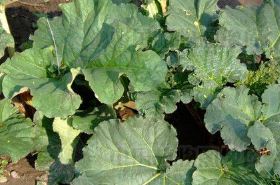
Also Known As: Wavy-Leaf Rhubarb, botanically known as *Rumex crispus*, goes by several other names in Traditional Chinese Medicine (TCM). You might find it referred to as Tang Da Huang (《中国药植志》), Tu Da Huang, or Tai Huang (《东北常用中草药手册》), and sometimes Yu Huang or Zi Huang (《大同药用植物手册》).
Flavor and Nature: In TCM, its taste is described as bitter, and its nature is considered cold. This means it's generally understood to have cooling and drying effects on the body.
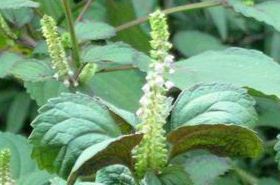
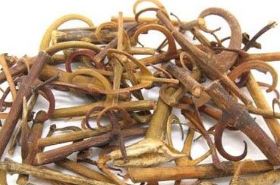
Medicinal Part: The therapeutic part of the Wavy-Leaf Rhubarb plant is its root and rhizome, belonging to the Polygonaceae family.
How to Use Wavy-Leaf Rhubarb (Dosage and Administration)
Internal Use: For internal consumption, it's typically prepared as a decoction (boiled in water), with a dosage ranging from 3-9 grams (equivalent to 1-3 *qian*, a traditional Chinese weight measurement). Alternatively, it can be ground into a fine powder for oral intake.
External Use: For topical application, the herb can be pulverized into a powder and either sprinkled directly onto the affected area or mixed with a suitable liquid to create a paste for external dressing.
Functions and Main Indications of Wavy-Leaf Rhubarb
Functions: Wavy-Leaf Rhubarb is widely known for its ability to clear heat, promote bowel movements (acting as a laxative), resolve accumulations, and invigorate blood to dispel stagnation.
Main Indications: It's traditionally used to treat various conditions, including constipation due to heat accumulation, damp-heat jaundice, carbuncles, boils, and other toxic sores, pain and bruising resulting from traumatic injuries, oral ulcers, and burns.
Contraindications for Wavy-Leaf Rhubarb
According to "Medicinal Plants in China's Desert Regions," Wavy-Leaf Rhubarb is strictly contraindicated for individuals experiencing general weakness, and particularly should be avoided during pregnancy and the postpartum period. As with any potent herbal remedy, it's crucial to consult a qualified TCM practitioner or healthcare provider before using Wavy-Leaf Rhubarb, especially if you have existing health conditions or are taking other medications.
Traditional Combinations and Formulas with Wavy-Leaf Rhubarb
Here are some traditional formulas where Wavy-Leaf Rhubarb is a key ingredient:
1. For Jaundice and Constipation: Combine Tu Da Huang (Wavy-Leaf Rhubarb) 9g (3 *qian*) with Yin Chen (Artemisia scoparia) 15g (5 *qian*). Prepare as a decoction for oral use. (From "Datong Medicinal Plants Handbook")
2. For Icteric Hepatitis (Damp-Heat Jaundice):
- Formula 1: Use Shan Da Huang (Wavy-Leaf Rhubarb) 6g (2 *qian*), Yin Chen (Artemisia scoparia) 24g (8 *qian*), and Long Dan Cao (Gentian Root) 9g (3 *qian*). Prepare as a decoction for oral use.
- Formula 2: Take Shan Da Huang (Wavy-Leaf Rhubarb) 12g (4 *qian*), Yin Chen (Artemisia scoparia) 30g (1 *liang*), Wen Jing (Equisetum arvense) 15g (5 *qian*), and Che Qian Cao (Plantago asiatica) 15g (5 *qian*). Prepare as a decoction for oral use, administered twice a day for a course of half a month.
3. For Acute Appendicitis: Combine Shan Da Huang (Wavy-Leaf Rhubarb), Jin Yin Hua (Honeysuckle Flower), Pu Gong Ying (Dandelion), Dan Pi (Moutan Cortex), Tao Ren (Peach Kernel), and Chuan Lian Zi (Sichuan Chinaberry Fruit). Prepare as a decoction for oral use.
4. For Acute Intestinal Obstruction: Ingredients include Shan Da Huang (Wavy-Leaf Rhubarb), Zhi Ke (Bitter Orange Peel), Hou Po (Magnolia Bark), Lai Fu Zi (Radish Seed), Mang Xiao (Glauber's Salt), Tao Ren (Peach Kernel), and Chi Shao (Red Peony Root). Prepare as a decoction for oral use.
5. For Acute Pancreatitis, Cholecystitis, and Cholelithiasis: This formula includes Shan Da Huang (Wavy-Leaf Rhubarb), Chai Hu (Bupleurum Root), Huang Qin (Scutellaria Root), Pu Gong Ying (Dandelion), Mu Xiang (Costus Root), Yu Jin (Turmeric Tuber), and Yuan Hu (Corydalis Rhizome). Prepare as a decoction for oral use.
6. For Traumatic Injuries with Stasis and Pain: Equal parts of Shan Da Huang (Wavy-Leaf Rhubarb) and Dang Gui (Angelica Sinensis Root) are ground into a fine powder. Take 12g (4 *qian*) per dose, twice daily, mixed with wine for administration.
7. For Radiation Dermatitis (Skin Damage): Combine equal parts of Shan Da Huang (Wavy-Leaf Rhubarb), Han Shui Shi (Glauberite), and Chi Shi Zhi (Red Halloysite), with 2% Bing Pian (Borneol) added. All ingredients are ground into a powder and sprinkled onto the affected area. (Formulas 2-7 are from "Medicinal Plants in China's Desert Regions")
8. For Oral Ulcers (Canker Sores): Equal parts of Shan Da Huang (Wavy-Leaf Rhubarb) and Ku Fan (Calcined Alum) are ground into a powder. Apply by rubbing onto the affected area, allowing salivation. (From "Inner Mongolia Chinese Herbal Medicine")
Quick Self-Check & Immediate Action
If... Then/Immediately...
If you're experiencing occasional constipation accompanied by a feeling of heat, or minor topical discomfort from bruises or small sores, then Wavy-Leaf Rhubarb might offer some traditional relief.
Immediately consult a qualified Traditional Chinese Medicine practitioner or your primary healthcare provider if you have severe abdominal pain, persistent jaundice, or any worsening symptoms, as these require professional diagnosis and treatment. Always seek expert medical advice for serious health concerns.
References
Studies suggest certain rhubarb species contain anthraquinones that contribute to its laxative effects and influence gut microbiota. PMID: 30678832
Research indicates *Rumex crispus* exhibits anti-inflammatory and antimicrobial properties, potentially supporting its traditional use in treating skin conditions and infections. PMID: 33276633
Flavonoids and other compounds in *Rumex crispus* have shown antioxidant and hepatoprotective activities, relevant to its application in liver conditions. PMID: 28666504
For informational purposes only. Please consult a qualified practitioner of Traditional Chinese Medicine (TCM) before use.