Artemisia annua: Your Go-To Herb for Clearing Heat and More
Known in Traditional Chinese Medicine (TCM) as Qing Hao, *Artemisia annua* is a powerful herb with a rich history. You might also hear it called by a few other names, reflecting its varied characteristics and uses.
Other Names
Bitter Wormwood, Stinky Sweet Wormwood, Fragrant Sweet Wormwood, Fine-leaf Wormwood.
Flavor and Nature
This herb carries a bitter and pungent flavor, and it's considered cold in nature. These qualities are what make it effective in clearing various types of heat.
Meridian Tropism
*Artemisia annua* primarily targets the Liver and Gallbladder meridians, influencing these key organ systems in the body's energy network.
Medicinal Part
The part of the plant used in medicine is the dried aerial portion (the parts growing above ground) of *Artemisia annua L.*, a species belonging to the Asteraceae (daisy) family.
Morphological Characteristics
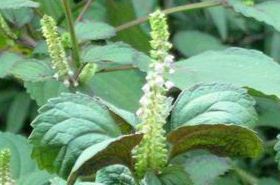
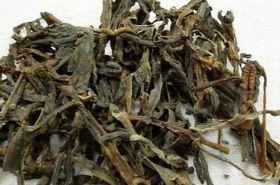
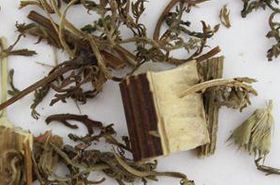
The stems of *Artemisia annua* are cylindrical, often branching in the upper sections, typically measuring 30-80 cm long and 0.2-0.6 cm in diameter. Their surface is yellowish-green or brownish-yellow, marked with longitudinal ridges. The texture is slightly hard and breaks easily, revealing a pithy center. The leaves are arranged alternately, appearing dark green or brownish-green, and are usually curled and fragile. When flattened, they display a tri-pinnately deeply lobed pattern, with the lobes and lobules being oblong or long-elliptic, covered with fine hairs on both surfaces. The herb has a distinctive aromatic scent and a slightly bitter taste.
Usage and Dosage
Dosage
A typical dosage ranges from 6 to 12 grams. It's important to add *Artemisia annua* near the end of the decoction process, usually about 10-15 minutes before finishing, to preserve its volatile aromatic compounds.
Preparation
Before use, remove any impurities, lightly spray with water, allow it to slightly soften, cut into sections, and then dry.
Functions and Indications
Functions
*Artemisia annua* is primarily known for its ability to clear deficiency heat (heat stemming from a lack of Yin), resolve the "bone steaming" sensation (a specific type of deep-seated fever), alleviate summer heat, interrupt malarial cycles, and reduce jaundice.
Indications
This powerful herb is commonly used to address conditions such as heat pathogens injuring Yin (where warm evils deplete the body's cooling Yin substances), fever at night with early morning coolness, fever due to Yin deficiency, consumptive fever with a sensation of bone-steaming, fevers caused by summer heat pathogens, alternating chills and fever associated with malaria, and damp-heat jaundice.
Traditional Formulations and Compatibility
Here are a few classic examples of how *Artemisia annua* is traditionally combined with other herbs:
- For Summer-Heat Toxin-Induced Dysentery: Combine 30g of *Artemisia annua* leaves with 3g of Licorice (Gancao). Decoction (boil with water) and take orally. (From *Sheng Ji Zong Lu* - Comprehensive Record of Holy Benevolence).
- For Chronic Debilitation with Night Sweats, Restlessness, and Dry Mouth: Take 500g of *Artemisia annua*. Extract its juice and decoct it into a paste. Mix in 30g each of Ginseng (Ren Shen) powder and Ophiopogon japonicus (Mai Dong) powder. Continue simmering until it can be rolled into pills the size of梧桐子 (Wutongzi, or Paulownia seeds). Take 20 pills with rice water after each meal. (From *Sheng Ji Zong Lu* - Qinghao Wan).
- For Warm Diseases with Night Fever, Early Morning Coolness, Fever Receding without Sweating, and Heat Originating from Yin: Use 6g of *Artemisia annua*, 15g of Turtle Shell (Bie Jia), 12g of Raw Rehmannia (Sheng Di Huang), 6g of Anemarrhena (Zhi Mu), and 9g of Tree Peony Bark (Dan Pi). Decoction with five cups of water until reduced to two cups, take twice daily. (From *Wen Bing Tiao Bian* - Systematic Differentiation of Warm Diseases - Qinghao Biejia Tang).
- For Emaciation Due to Overexertion: Finely chop 1 liter of tender *Artemisia annua* shoots. Boil with 3 liters of water and 5 liters of boy's urine (historically used, but modern practice would substitute with other clear liquids) until it forms a paste. Roll into pills the size of梧桐子. Take 10 pills with warm wine, at any time. (From *Jifeng Puji Fang* - Jifeng Universal Aid Prescriptions - Qinghao Jian).
*Artemisia annua* is celebrated for its diverse applications, particularly in managing fever and inflammatory conditions, and its compounds continue to be researched for their therapeutic potential (PMID: 29017253). Its traditional uses highlight its role in clearing heat and addressing specific patterns of imbalance in the body (PMID: 33458428). Modern scientific reviews often confirm the pharmacological activities that align with its historical applications (PMID: 32295618).
Quick Self-Check & Self-Care Tip!
Ever feel like your body is running hot, especially at night, even if you don't have a full-blown fever? Or maybe you're dealing with lingering discomfort from summer heat?
If: You experience a persistent low-grade fever, particularly in the afternoons or evenings, or feel a deep-seated heat that's hard to shake, and it often feels like it cools down slightly in the morning.
Then: This could be a sign of "deficiency heat" in TCM.
Immediately: Consider incorporating cooling foods like cucumber or watermelon into your diet, and discuss the suitability of herbs like *Artemisia annua* with a qualified TCM practitioner. This herb is excellent for gently clearing this specific type of heat and restoring balance.
References
Current knowledge on Artemisia annua and artemisinin derivatives in traditional Chinese medicine and modern science. PMID: 29017253
Comprehensive Review on Phytochemistry, Traditional Uses, and Biological Activities of Artemisia annua. PMID: 33458428
The Genus Artemisia: A Review of the Phytochemistry, Traditional Uses, and Pharmacology. PMID: 32295618
For informational purposes only. Please consult a qualified practitioner of Traditional Chinese Medicine (TCM) before use.