Qinghao Biejia Decoction
The Formula in Verse: Qinghao, Biejia, Shengdi, Danpi, Zhimu — when heat stems from Yin, observe carefully. Night fever with morning coolness, no sweat on release, nourish Yin and clear heat for peace.
Understanding the Formula: This condition often arises in the late stages of warm diseases, characterized by Yin deficiency with latent pathogenic heat. The primary treatment strategy is to nourish Yin and release this hidden heat. In the human body, the defensive Yang Qi (Wei Yang) circulates on the body's exterior during the day and retreats to the interior at night. When there's latent heat within the Yin aspect, the ingress of Yang Qi at night exacerbates this pathogenic heat, leading to fever that intensifies in the evening. As morning approaches, the Wei Qi returns to the exterior, and Yang emerges from Yin, causing the fever to recede and the body to cool. In the advanced stages of warm diseases, the body's Yin fluids are already depleted, which explains the absence of sweating even when the fever breaks.

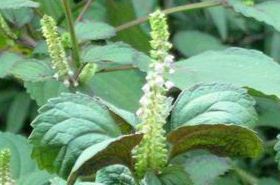
In this formula, Biejia (soft-shelled turtle shell) is salty and cold, directly targeting the Yin aspect to nourish Yin and reduce fever. Qinghao (sweet wormwood or Artemisia annua) is bitter, pungent, and cold, with an aromatic quality that helps clear heat, penetrate the collaterals, and expel external pathogens. These two herbs work synergistically to nourish Yin and clear heat, both internally cleansing and externally releasing. This allows the latent heat in the Yin aspect to be dispersed and resolved. They serve as the chief ingredients. As the classical physician Wu Tang himself explained: "This formula possesses the unique ability of entering first and exiting later. Qinghao cannot directly penetrate the Yin aspect; Biejia guides it in. Biejia cannot independently exit the Yang aspect; Qinghao guides it out." Shengdi (Rehmannia root, raw) is sweet and cold, nourishing Yin and cooling the blood. Zhimu (Anemarrhena rhizome) is bitter, cold, and moistening, nourishing Yin and subduing fire. Together, they assist Biejia in nourishing Yin and resolving deficiency heat, acting as minister herbs. Danpi (Moutan cortex) is pungent, bitter, and cool, dispelling latent fire in the blood, serving as the assistant herb. Combined, these herbs collectively achieve the therapeutic effect of nourishing Yin and releasing latent heat.
Dosage and Administration of Qinghao Biejia Decoction
Ingredients: Qinghao 6g, Biejia 15g, Shengdi (prepared Rehmannia root) 12g, Zhimu 6g, Danpi 9g.
Preparation: Traditionally, these herbs are decocted with five cups of water, boiled down to two cups, and taken twice daily. Modern usage typically involves decocting the herbs in water for oral administration.
Modifications: If there's evening fever and morning coolness accompanied by thirst, Shengdi may be removed, and Tianhuafen (Trichosanthes root) can be added to clear heat, generate fluids, and quench thirst. If there's concurrent Lung Yin deficiency, Shashen (Glehnia root) and Maidong (Ophiopogon root) can be added to nourish Yin and moisten the Lungs.
Functions and Indications of Qinghao Biejia Decoction
Functions: Nourishes Yin and releases latent heat.
Indications: This formula primarily addresses late-stage warm diseases where pathogenic heat is latent in the Yin aspect. Key symptoms include night fever with morning coolness, fever subsiding without sweating, a red tongue with scanty coating, and a thready, rapid pulse.
Clinical Application: This formula is utilized for late-stage warm diseases with pathogenic heat latent in the Yin aspect. The diagnostic hallmarks for its clinical application are night fever with morning coolness, fever resolving without sweating, a red tongue with minimal coating, and a thin, rapid pulse.
Contraindications for Qinghao Biejia Decoction
This formula should not be used in individuals with Yin deficiency who are prone to developing internal wind (e.g., tremors or convulsions).
Literature Abstracts on Qinghao Biejia Decoction
① From *Wen Bing Tiao Bian* (Treatise on Warm Diseases), Volume 3: "For night fever with morning coolness, fever subsiding without sweating, and heat originating from the Yin aspect, Qinghao Biejia Decoction is indicated."
② From *Wen Bing Tiao Bian*: "Qinghao Biejia Decoction employs a slightly modified approach from the *Xiao Chai Hu Tang* (Minor Bupleurum Decoction) method, yet it doesn't use the same herbs as *Xiao Chai Hu Tang*. *Xiao Chai Hu Tang* was originally formulated for cold damage, whereas malaria (a type of warm disease) arises from summer-dampness; their pathogenic origins are fundamentally different. Therefore, the herbs must be adapted, while maintaining the underlying principle, as both conditions involve the Shaoyang channel. Qinghao Biejia Decoction uses Qinghao to guide out the pathogen; Qinghao is milder in action than Chaihu and uniquely excels in its aromatic ability to dispel turbidity and open the collaterals. For cold damage injuring Yang, *Xiao Chai Hu Tang* contains Ren Shen (Ginseng), Gancao (Licorice), and Sheng Jiang (Ginger), all of which protect Yang. For stomach heat injuring Yin, Biejia is used to protect Yin; Biejia is a motile substance and can penetrate the Yin collaterals to search for pathogens. *Xiao Chai Hu Tang* addresses flank pain and dry heaving caused by fluid retention, hence using ginger and pinellia to harmonize Yang, descend Yin, and clear fluid pathogens. Qinghao Biejia Decoction, for pathogenic heat injuring Yin, uses Zhimu and Tianhuafen to clear heat and quench thirst, and Danpi to clear heat from the blood aspect of the Shaoyang, while Sangye (Mulberry leaf) clears heat from the Qi aspect of the Shaoyang collaterals. This adaptation of ancient methods and formulas accounts for the varying predominance of cold or heat in the pathogen. This demonstrates Master Ye's (Ye Tianshi's) skillful interpretation of ancient texts and adept application of classical formulas, a level of understanding far beyond those who are rigidly bound by literal interpretations."
Important Safety Information: While Traditional Chinese Medicine (TCM) offers time-honored remedies, individual responses to herbal formulas can vary. Always consult with a qualified practitioner of Traditional Chinese Medicine before starting any new herbal regimen, especially if you have pre-existing health conditions or are taking other medications. Self-treating can be risky.
Quick Check & Immediate Steps:
- 3-Second Self-Test: If you're experiencing a fever that specifically flares up at night but cools down by morning, without sweating when the fever resolves, and your tongue looks noticeably red with little or no coating, then you might be experiencing latent heat in the Yin aspect.
- 30-Second Self-Help Immediately: While waiting for a professional consultation, ensure you maintain adequate hydration with plain water or clear broths. Avoid spicy, greasy, or overly stimulating foods that might further aggravate heat. Immediately schedule an appointment with a licensed TCM practitioner for an accurate diagnosis and personalized treatment plan.
References
Qinghao (Artemisia annua) has been recognized for its antipyretic properties, especially in fever management. PMID: 26034444
Biejia (soft-shelled turtle shell) is traditionally used in TCM to nourish Yin and clear deficiency heat, contributing to its role in treating conditions involving Yin deficiency. PMID: 27958999
Understanding TCM patterns like Yin deficiency with latent heat is crucial for effective treatment of warm diseases. PMID: 29515599
For informational purposes only. Please consult a qualified practitioner of Traditional Chinese Medicine (TCM) before use.