Bai Wei: A Traditional Chinese Herb
Aliases: Zhi, Chun Cao (Spring Grass), Mang Cao (Rush Grass), Bai Wei (White Root), Wei Cao, Gu Mei, Long Dan Bai Wei (Gentian White Root).
Taste & Nature: Bitter, salty; cold in nature.
Meridian Tropism: Enters the Lung, Stomach, and Liver Meridians.
Medicinal Part: The root of *Cynanchum atratum Bunge* or *Cynanchum paniculatum (Bunge) Kitag.*, both belonging to the Apocynaceae family.
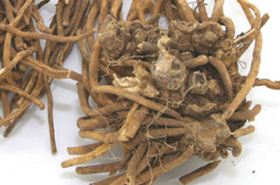
Morphological Characteristics: The rhizome is often curved, thick, short, and knotty, with a diameter of 0.5-1.2 cm. Its apex shows several round, sunken stem scars or a short stem base. Numerous fibrous roots cluster below and on the sides. The roots are cylindrical, slightly curved, resembling a horse's tail, measuring 5-25 cm long and 1-2 mm in diameter. The surface is yellowish-brown to brown, with fine longitudinal wrinkles or smooth texture. It is brittle and easily broken, revealing a flat cross-section. The cortex is well-developed, yellowish-white to pale yellowish-brown, while the woody core is small and yellow. It has a faint aroma and a slightly bitter taste.
How to Use Bai Wei
Internal Use: Typically prepared as a decoction, 3-15g; or incorporated into pills or powders.
External Use: An appropriate amount can be ground into a powder and applied; or fresh product can be pounded into a paste and applied.
Preparation: Remove impurities, wash thoroughly, moisten until fully penetrated, cut into sections, and dry.
Benefits and Indications of Bai Wei
Functions: Clears heat, cools blood, promotes urination, relieves painful urination, detoxifies, and treats sores.
Main Indications: Traditionally used for conditions such as Yin deficiency internal heat, insomnia with a burning sensation due to wind-heat, coughing up blood from lung heat, warm malaria, postpartum restlessness and fainting due to blood deficiency, hot painful urination, bloody painful urination, wind-damp painful obstruction, and scrofula (lymphadenitis).
Important Contraindications for Bai Wei
Herbal medicine is powerful, and Bai Wei has specific contraindications rooted in ancient texts:
① According to *Bencao Jing Ji Zhu* (Collection of Commentaries on the Classic of Materia Medica), Bai Wei is incompatible with Huang Qi (Astragalus Root), Da Huang (Rhubarb Root), Da Ji (Peking Euphorbia Root), Gan Jiang (Dried Ginger), Gan Qi (Rhus lacca), Da Zao (Jujube), and Shan Zhu Yu (Cornelian Cherry Fruit).
② *Bencao Jing Shu* (Commentary on the Classic of Materia Medica) advises against its use in cases of typhoid fever or epidemic febrile diseases where there's excessive sweating leading to significant Yang depletion, internal emptiness with loss of appetite or indigestion, internal emptiness with abdominal coldness after purging, or uncontrollable diarrhea due to excessive purging.
③ *Bencao Cong Xin* (New Compilation of Materia Medica) states that Bai Wei is suitable for blood heat but contraindicated in cases of blood deficiency. Always consult a qualified TCM practitioner to ensure proper diagnosis and safe use. PMID: 28867540
Traditional Combinations with Bai Wei
Bai Wei is often combined with other herbs to enhance its therapeutic effects:
① For chronic low-grade fever and night sweats due to body deficiency: Bai Wei and Di Gu Pi (Lycium Bark) each 12g, decocted in water. (From *Hebei Zhong Yao Shou Ce*)
② For tidal fever in pulmonary tuberculosis: Bai Wei 9g, Ju Cao Guo Shi (Japanese Hop Fruit) 15g, Di Gu Pi (Lycium Bark) 12g. Decocted in water for oral administration. (From *Qingdao Zhong Cao Yao Shou Ce*)
③ For urinary tract infections: Bai Wei 15g, Che Qian Cao (Plantain Herb) 30g, decocted in water. (From *Nanjing Chang Yong Zhong Cao Yao*)
④ For women experiencing internal emptiness, restlessness, nausea, and vomiting during lactation (*Jin Kui Yao Lue*'s Zhu Pi Da Wan modification): Raw Zhu Ru (Bamboo Shavings) 2 fen, Shi Gao (Gypsum Fibrosum) 2 fen, Gui Zhi (Cinnamon Twig) 1 fen, Gan Cao (Licorice Root) 7 fen, Bai Wei 1 fen. Grind these five ingredients into a powder, mix with jujube paste, and form into pills the size of a musket ball. Take one pill with a drink, three times during the day and twice at night. If there is heat, double the Bai Wei; if there is vexation and wheezing, add Bai Shi (Platycladus Seed) 1 fen. PMID: 23678077
⑤ For sudden fainting from blood collapse, appearing lifeless, motionless, unconscious, eyes closed, mouth locked, or semi-conscious but averse to human voices, or simply dizzy, waking after a period (*Quan Sheng Zhi Mi Fang*'s Bai Wei Tang): Bai Wei 30g, Dang Gui (Chinese Angelica Root) 30g, Ren Shen (Ginseng) 15g. Grind into a powder. For each dose, take 15g, boil with two cups of water until reduced to one cup, remove dregs, and drink warm.
⑥ For female enuresis (involuntary urination): Bai Wei and Bai Shao (White Peony Root) each 30g. Grind into a fine powder. Take a square-inch spoonful with wine, three times daily. (From *Qian Jin Fang*)
⑦ For "fire eye" (acute conjunctivitis): Bai Wei 30g, decocted in water. (From *Hunan Yao Wu Zhi*)
⑧ For nasal obstruction due to lung excess, with loss of smell (*Pu Ji Fang*): Bai Bu (Stemona Root) 60g, Kuan Dong Hua (Coltsfoot Flower), Chuan Bei Mu (Sichuan Fritillary Bulb, cored), Bai Wei each 30g. Grind into a powder. For each dose, take 3g, mixed with rice gruel.
⑨ For unceasing bleeding from knife wounds: Apply Bai Wei powder directly. (From *Ru Men Shi Qin*)
⑩ For scrofula (lymphadenitis): Fresh Bai Wei and fresh Tian Men Dong (Asparagus Root) in equal parts, pounded into a paste and applied to the affected area. (From *Guizhou Cao Yao*)
⑾ For wind-damp joint pain: Bai Wei, Chou Shan Yang (Mahonia Root), Da E Er Chang Gen (Cissampelos Root) each 15g. Infused in alcohol for consumption. (From *Guizhou Cao Yao*)
⑿ For persistent cold for two days (*Qian Jin Yao Fang*'s Bai Wei San): Bai Wei 12 zhu, Ku Xing Ren (Bitter Almond) 18 zhu, Chuan Bei Mu (Sichuan Fritillary Bulb) 18 zhu, Ma Huang (Ephedra) 36g. Grind these four ingredients into a fine powder. Take a square-inch spoonful with wine, cover up to induce sweat, and recovery should follow. Note: This formula includes Ephedra (Ma Huang) and Bitter Almond (Ku Xing Ren). Ephedra is a potent herb and should be used with extreme caution and only under the direct supervision of a qualified TCM practitioner due to its stimulating effects and potential cardiovascular risks. Bitter Almond requires proper processing to remove toxins before use. Never self-prescribe without expert guidance. PMID: 33729904
⒀ For wind-induced fright, convulsions of limbs, restless spirit, or sudden maniacal yelling and wandering, seeing ghosts or epileptic-like states (*Sheng Ji Zong Lu*): Bai Wei (dry-fried), Xi Xin (Asarum, remove sprouts and leaves) each 45g, Long Chi (Dragon's Teeth, pounded into powder) 90g, Ku Xing Ren (Bitter Almond, remove skin, tip, double kernels, stir-fried) 80 pieces. Roughly pound and sift these four ingredients. For each dose, take 15g with two cups of water, boil until reduced to 8 fen, remove dregs and drink warm, once on an empty stomach, at noon, and before bed. If wind-heat is excessively strong, add a little bamboo juice, stir well, and take. Note: This formula includes Bitter Almond (Ku Xing Ren), which requires proper processing to remove toxins before use. As with all potent herbal remedies, consult a qualified TCM practitioner before use.
⒁ For involuntary urination (*Sheng Hui Fang*'s Bai Wei San): Bai Wei 30g, Bai Lian (Japanese Ampelopsis Root) 30g, Bai Shao Yao (White Peony Root) 30g. Pound these ingredients into a fine powder. Take 6g before meals, mixed with rice gruel.
⒂ For persistent leukorrhea (vaginal discharge) in women (*Sheng Ji Zong Lu*'s Bai Wei Wan): Bai Wei (selected) 30g, Chi Shao Yao (Red Peony Root), Hai Piao Xiao (Cuttlebone, remove shell) each 15g. Pound these three ingredients into a fine powder, refine one cup of vinegar, boil into a paste, and form into pills the size of梧桐子 (Chinese Parasol Tree seeds). Take twenty pills per dose with hot water before meals, twice daily.
⒃ For eye fistula with pus discharge (*Zheng Zhi Zhun Sheng · Lei Fang*): Bai Wei 15g, Fang Feng (Siler Root), Ji Li (Tribulus Fruit), Shi Liu Pi (Pomegranate Rind), Qiang Huo (Notopterygium Root) each 9g. Grind into a powder, make into pills the size of桐子 (Tung Tree seeds) with rice flour paste. Take twenty pills per dose with plain water.
⒄ For hot painful urination and bloody painful urination (*Shi Yi De Xiao Fang*'s Bai Wei San): Bai Wei and Bai Shao (White Peony Root) in equal parts. Grind into a powder. Take 6g per dose, mixed with wine for immediate effect. Can also add Bing Lang (Areca Seed).
⒅ For vacuity heat with night sweats (*Hebei Zhong Cao Yao*): Bai Wei, Di Gu Pi (Lycium Bark) each 12g, Yin Chai Hu (Stellaria Root), Bie Jia (Turtle Plastron) each 9g. Decocted in water for oral administration.
Quick Self-Assessment & Immediate Steps
If... Then/Immediately...
- If you frequently experience low-grade fever, especially with night sweats and a feeling of internal heat: This could indicate Yin deficiency. Immediately consider discussing Bai Wei with a qualified TCM practitioner, as it's traditionally used to clear heat and cool blood.
- If you're dealing with uncomfortable, painful, or bloody urination: These symptoms suggest heat or damp-heat in the urinary system. Immediately seek advice from a TCM expert about Bai Wei's potential to promote urination and relieve pain.
- If you're a new mother experiencing significant restlessness, anxiety, or even fainting after childbirth: This might point to postpartum blood deficiency and internal heat. Immediately consult a TCM practitioner, as Bai Wei is historically noted for calming such disturbances.
References
[Review on the traditional uses and modern pharmacology of Cynanchum atratum] PMID: 33729904 [Anti-inflammatory effects of Cynanchum atratum] PMID: 28867540 [Antipyretic and analgesic activities of Cynanchum atratum] PMID: 23678077For informational purposes only. Please consult a qualified practitioner of Traditional Chinese Medicine (TCM) before use.