Lycium Root Bark (Di Gu Pi)
Known in Traditional Chinese Medicine (TCM) as Di Gu Pi, Lycium Root Bark is the dried root bark of the Lycium chinense Mill. or Lycium barbarum L. plant, commonly referred to as Goji Berry. This esteemed herb has been a cornerstone in herbal medicine for centuries, highly valued for its ability to clear heat and cool the blood. It's an ingredient you'll often find when exploring natural remedies for heat-related discomforts.
Also Known As: Lycium Root (杞根, Qǐ Gēn), Earth Bone (地骨, Dì Gǔ), Earth Auxiliary (地辅, Dì Fǔ), Earth Knot (地节, Dì Jié) (from "The Divine Farmer's Materia Medica Classic"), Goji Root, Goji Root Bark (from "Collection of Commentaries on the Materia Medica," "Treatise on the Nature of Medicinals"), Mountain Lycium Root, Sweet Tooth Root (甜齿牙根, Tián Chǐ Yá Gēn), Red Ear Drop Root (红耳堕根, Hóng Ěr Duò Gēn) (from "Henan Chinese Materia Medica Handbook"), Mountain Goji Root, Dog Milk Berry Root Bark (狗奶子根皮, Gǒu Nǎi Zǐ Gēn Pí) (from "Shandong Chinese Materia Medica"), Red Pomegranate Root Bark (红榴根皮, Hóng Liú Gēn Pí) (from "Handbook of Chinese Medicinal Materials"), Dog Earth Sprout Bark (狗地芽皮, Gǒu Dì Yá Pí) (from "Sichuan Chinese Materia Medica").
Flavor: Sweet.
Nature: Cold.
Meridian Tropism: Lung, Liver, Kidney.
Medicinal Part: The root bark of Lycium chinense and related species of the Solanaceae family.
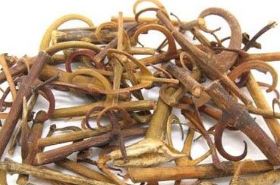
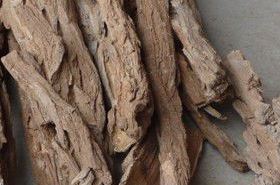
Morphological Characteristics: The dried root bark typically presents as short, tubular or trough-shaped curled pieces, varying in size. Generally, they are 3–10 centimeters (about 1.2-4 inches) long, 0.6–1.5 centimeters (about 0.2-0.6 inches) wide, and approximately 3 millimeters (about 0.12 inches) thick. The outer surface is grayish-yellow or brownish-yellow, rough, and marked by crisscrossing longitudinal cracks that are often easy to peel off. The inner surface is yellowish-white, smoother, with fine longitudinal lines. The bark is light and brittle, breaking easily to reveal an uneven cross-section; the outer layer is brownish-yellow, and the inner layer is grayish-white. It has a slight, subtle odor and a faintly sweet taste. The best quality pieces are large, thick, free from woody core, and any extraneous impurities.
How to Use Lycium Root Bark (Di Gu Pi)
Internal Use: Most commonly prepared as a decoction, with a typical dosage ranging from 9–18 grams (3–6 qian). It can also be incorporated into traditional pills or powders.
External Use: A decoction can be prepared for gargling or external washing. Alternatively, the dried bark can be ground into a fine powder for topical application, either sprinkled directly or mixed into a paste.
Preparation: Before using, carefully remove any impurities and the woody core from the bark. Lightly wash it, then sun-dry thoroughly, and cut it into manageable sections.
Actions and Indications of Lycium Root Bark (Di Gu Pi)
Actions: Lycium Root Bark is primarily renowned for its ability to clear heat and cool blood. This makes it a valuable herb for managing a variety of heat-related conditions throughout the body.
Indications: Traditionally, Di Gu Pi is utilized to address a wide spectrum of symptoms and health concerns, including:
- Debilitating tidal fever and night sweats (虚劳潮热盗汗)
- Coughing and wheezing stemming from lung heat (肺热咳喘)
- Vomiting blood (吐血) and nosebleeds (衄血)
- Blood in urine (hematuria, 血淋)
- Wasting and thirsting syndrome (消渴), which often presents with symptoms akin to diabetes mellitus
- High blood pressure (高血压)
- Carbuncles (痈肿) and stubborn, deep-rooted sores (恶疮)
Contraindications and Important Precautions for Lycium Root Bark (Di Gu Pi)
Crucial Safety Information: Lycium Root Bark should be used with caution, and its use is strictly contraindicated for individuals experiencing Spleen and Stomach deficiency-cold (脾胃虚寒者忌服). This condition is characterized by symptoms like a pale tongue, cold limbs, and digestive discomfort.
- Historically, as advised in "Medical Gateway," it's recommended to avoid using iron utensils during its preparation (忌铁). This practice aligns with traditional beliefs about potential interactions with certain metallic cookware.
- According to "Compendium of Materia Medica," for those with an abundance of deficiency fire yet a weakened Spleen and Stomach, leading to reduced appetite and diarrhea, the dosage should be carefully reduced (虚劳火旺而脾胃薄弱,食少泄泻者宜减之). This highlights the importance of individualized dosing based on a practitioner's assessment.
- "Orthodox Materia Medica" cautions against its use in cases of "false heat" patterns (假热者勿用), where symptoms of heat are present but originate from a cold or deficiency condition. Accurate differential diagnosis by a qualified practitioner is paramount.
Always, and we mean always, consult a qualified practitioner of Traditional Chinese Medicine (TCM) before initiating any new herbal treatment. This is especially vital if you have any existing health conditions, are pregnant or breastfeeding, or are currently taking other medications. A professional diagnosis ensures safe and effective use.
Traditional Combinations with Lycium Root Bark (Di Gu Pi)
Lycium Root Bark is frequently combined with other herbs to synergize its therapeutic properties for targeted conditions. Here are some time-honored formulations:
- For Bone Steaming with Muscle Heat, Alleviating All Types of Deficiency Vexation and Restlessness, and Promoting Fluid Production: Known as "Earth Immortal Powder" (地仙散) from "Benshi Fang." Combine Lycium Root Bark (washed, woody core removed) and Siler Root (防风, Fáng Fēng, remove calyx) each 30 grams (1 ounce), and prepared Licorice Root (甘草, Gān Cǎo) 7.5 grams (1/4 ounce). Grind these into a fine powder. Take 6 grams (2 qian) with one cup of water, 3 slices of fresh ginger, and 7 pieces of bamboo leaf, prepared as a decoction.
- For Consumptive Fever (Heat Consumption Syndrome): Featured as "Lycium Root Bark Powder" (地骨皮散) in "Sheng Ji Zong Lu." Take Lycium Root Bark 60 grams (2 ounces) and Bupleurum Root (柴胡, Chái Hú, remove sprouts) 30 grams (1 ounce). Pound and sift them into a fine powder. Take 6 grams (2 qian) mixed with a decoction of Ophiopogon Root (麦门冬, Mài Mén Dōng, woody core removed).
- For Deficiency Consumption with Bitter Taste and Thirst in the Mouth, and Vexing Heat or Cold in the Joints: This is a "Goji Decoction" (枸杞汤) from "Qian Jin Fang." Combine Lycium Root Bark (sliced) 5 sheng (approx. 5 liters volume), Ophiopogon Root 2 sheng (approx. 2 liters volume), and Wheat (小麦) 2 sheng (approx. 2 liters volume). Decoction these three ingredients with 2 dou (approx. 20 liters) of water until the wheat is thoroughly cooked. Remove the herbal dregs and consume 1 sheng (approx. 1 liter) per dose, twice daily.
- For Pediatric Lung Exuberance with Urgent Qi, Wheezing Cough: This formula is "Xie Bai San" (泻白散) from "Xiao Er Yao Zheng Zhi Jue." Combine Lycium Root Bark and processed Mulberry Bark (桑白皮, Sāng Bái Pí, stir-fried) each 30 grams (1 ounce), and prepared Licorice Root 3.75 grams (1 qian). Chop these into a coarse powder. Add a small handful of Japonica rice (粳米) and 2 small cups of water, then decoct until 70% of the liquid remains. Take before meals.
- For Vomiting Blood and Bloody Stools: As described in "Pu Ji Fang." Lycium Root Bark and Goji Berries (枸杞子, Gǒu Qǐ Zǐ) are ground into a powder, then prepared as a decoction for internal consumption.
- For Blood in Urine (Hematuria): Featured in "Jing Yan Guang Ji" as "Di Gu Jiu" (地骨酒). Lycium Root Bark is decocted with wine. If using fresh Lycium Root Bark, pound it to extract its natural juice; if no juice is obtainable, decoct it with water to make a juice. Add a small amount of wine to each cup and take warm on an empty stomach for a potentially better effect.
- For Wasting-Thirsting Syndrome (Diabetes Mellitus Symptoms) with Incessant Drinking Day and Night, and Frequent Urination: This is "Di Gu Pi Yin" (地骨皮饮) from "Sheng Ji Zong Lu." Take Lycium Root Bark (sliced), Snake Gourd Root (土瓜根, Tǔ Guā Gēn, sliced), Trichosanthes Root (栝楼根, Guā Lóu Gēn, sliced), and Reed Root (芦根, Lú Gēn, sliced) each 45 grams (1.5 ounces); Ophiopogon Root (woody core removed, roasted) 60 grams (2 ounces); and 7 pitted Jujube dates. Chop all six ingredients to the size of hemp seeds or soybeans. For each dose, take 12 grams (4 qian), decoct with one cup of water until 80% of the liquid remains. Remove the dregs and consume warm.
- For Wasting-Thirsting Syndrome with Dry Lips and Mouth: Another "Goji Decoction" (枸杞汤) from "Yi Xin Fang." Combine Lycium Root Bark (sliced) 5 sheng (approx. 5 liters volume), Gypsum (石膏, Shí Gāo) 1 sheng (approx. 1 liter volume), and Wheat 3 sheng (approx. 3 liters volume). Chop these three ingredients, then decoct with water until the wheat is cooked. Remove the dregs and drink the preparation when it has cooled to a comfortable temperature.
- For Epidemic Acute Eye Swelling, Itching, and Pain: This remedy is "Di Gu Pi Tang" (地骨皮汤) from "Sheng Ji Zong Lu." Take Lycium Root Bark (sliced) 1.5 kilograms (3 jin). Decoction with 3 hu (approx. 300 liters) of water until 3 sheng (approx. 3 liters) of liquid remains. Strain out the dregs, then add 60 grams (2 ounces) of salt, and further decoct until 1 sheng (approx. 1 liter) of liquid remains. Use this solution to wash the eyes.
- For Toothache due to Wind and Worms (Dental Caries): From "Zhou Hou Fang." Prepare a decoction of Lycium Root Bark with vinegar for gargling. A decoction made with water for drinking is also considered acceptable.
- For Bladder Heat Transferred to the Small Intestine, Leading to Oral Erosion, Sores, and Ulcerations, with Stagnant Heat in the Heart and Stomach, Hindering Food and Water Intake: This is "Di Gu Pi Tang" (地骨皮汤) from "Lan Shi Mi Cang." Take Bupleurum Root and Lycium Root Bark, each 9 grams (3 qian). Decoction with water for consumption.
- For Deafness with Persistent Purulent Discharge: Presented as "Di Gu Pi San" (地骨皮散) in "Sheng Ji Zong Lu." Combine Lycium Root Bark 15 grams (half an ounce) and Galla Chinensis (五倍子, Wǔ Bèi Zǐ) 3.75 grams (one fen). Pound these two ingredients into a fine powder. Apply a small amount into the affected ear.
- For Multiple Small Red Pustules (Resembling Red Beans) Appearing Suddenly on the Hands, Feet, Shoulders, and Back, Exuding Fluid When Peeled (瘭疽): From "Qian Jin Fang." Combine Lycium Root and Mallow Root and Leaves (葵根叶, Kuí Gēn Yè). Decoction their juice, then further decoct it until it reaches a consistency similar to sugar, and consume it.
- For Intestinal Wind with Hemorrhoidal Fistula and Incessant Bloody Stools: Known as "Di Gu Pi San" (地骨皮散) from "Jing Yan Fang." Combine Lycium Root Bark and Indian Mallow Root Bark (凤眼根皮, Fèng Yǎn Gēn Pí) in equal parts (stir-fried until they turn slightly yellowish). Pound into a fine powder. Take 9 grams (3 qian) on an empty stomach mixed with warm wine. Avoid oily foods during this treatment.
- For Hemorrhoids: This is "Goji Powder" (枸杞散) from "Sheng Ji Zong Lu." Obtain fresh Lycium Root immediately, scrape off the rough red outer skin, and take only the second thin white layer. Sun-dry it and pound into a fine powder. For every 30 grams (1 ounce) of this powder, add 3.75 grams (1 qian) of Earthworm (地龙, Dì Lóng, pounded) powder. Mix well. First, wash the affected area with hot vinegar water, then apply the dry powder topically three times a day.
- For Fistula and Canker Sores from Qi Stagnation, Unhealed for Years: Presented as "Ying Xiao San" (应效散) in "Wai Ke Jing Yi." Take an unspecified amount of Lycium Root Bark and pound it into a fine powder. Use a paper wick to dip and apply the powder into the sore opening frequently to naturally promote flesh growth. Additionally, consume 6 grams (2 qian) mixed with rice gruel, three times a day at no specific time.
- For Vaginal Swelling or Sores in Women: From "Yong Lei Qian Fang." Prepare a decoction of Lycium Root for frequent washing of the affected area.
- For Kidney Meridian Deficiency and Damage, Resulting in Blurry Vision, or Corneal Opacity: This formula is named "Four Spirit Pills" (四神丸). Combine 500 grams (1 jin) of Goji Berries, thoroughly moistened with good quality wine. Divide them into four equal portions: one portion stir-fried with 30 grams (1 ounce) Szechuan Peppercorn (蜀椒, Shǔ Jiāo), another with 30 grams (1 ounce) Fennel Seed (小茴香, Xiǎo Huí Xiāng), a third with 30 grams (1 ounce) Sesame Seed (芝麻, Zhī Má), and the last with 30 grams (1 ounce) Sichuan Chinaberry Fruit (川楝肉, Chuān Liàn Ròu). After frying, carefully pick out the Goji Berries. Then add prepared Rehmannia Root (熟地黄, Shú Dì Huáng), Atractylodes Rhizome (白术, Bái Zhú), and Poria Mushroom (白茯苓, Bái Fú Líng) each 30 grams (1 ounce). Grind all ingredients into a fine powder and form into pills using refined honey. Consume an appropriate amount daily.
- For Strengthening Tendons and Bones, and Replenishing Essence and Marrow: This potent remedy is "Earth Bone Wine" (地骨酒). Combine Lycium Root, Rehmannia Root (生地黄, Shēng Dì Huáng), and Chrysanthemum Flowers (甘菊花, Gān Jú Huā) each 500 grams (1 jin). Coarsely pound these herbs, then add 1 dan (approx. 100 liters) of water, and decoct until 5 dou (approx. 50 liters) of juice remains. Use this concentrated juice to cook 5 dou (approx. 50 liters) of glutinous rice. Mix with fine starter (qu, 曲) and brew wine according to the usual methods. Once the wine matures and clarifies, drink three bowls daily.
- For Bone Steaming with Vexing Heat (Including all types of deficiency consumption vexing heat and post-illness vexing heat): Another formulation of "Earth Immortal Powder" (地仙散). Combine Lycium Root Bark 60 grams (2 ounces) and Siler Root 30 grams (1 ounce), and prepared Licorice Root 15 grams (half an ounce). Mix these well. For each dose, take 15 grams (5 qian), add 5 slices of fresh ginger, and prepare as a water decoction.
- For Kidney Deficiency Low Back Pain: Combine Lycium Root, Eucommia Bark (杜仲, Dù Zhòng), and Dioscorea Hypoglauca Rhizome (萆薢, Bì Xiè) each 500 grams (1 jin). Soak these herbs in 3 dou (approx. 30 liters) of good quality wine. Seal the mixture in an earthenware pot and then place it within a larger pot of water to cook for an entire day. Consume the liquid regularly.
- For Red Eye Swelling and Pain: Take Lycium Root Bark 1.5 kilograms (3 jin), add 3 dou (approx. 30 liters) of water, and decoct until 3 sheng (approx. 3 liters) of liquid remains. Remove the dregs, then add 30 grams (1 ounce) of salt, and further decoct until 2 sheng (approx. 2 liters) of liquid remains. Use this solution frequently to wash and dab the eyes.
- For Bloody Urination (Hematuria): Wash fresh Lycium Root Bark thoroughly and pound it to extract its natural juice. If no juice is obtainable, add water and decoct to create a juice. Consume one bowl per dose, adding a little wine, warm, and before meals.
- For Oral Erosion (When bladder heat transfers to the small intestine, causing oral sores, stagnant heat in the heart and stomach, and difficulty consuming food and water): This is "Di Gu Pi Tang" (地骨皮汤). Take Bupleurum Root and Lycium Root Bark, each 9 grams (3 qian). Decoction with water for consumption.
- For Male Chancres (Genital Sores): First, wash the affected area with fermented rice water. Subsequently, apply Lycium Root Bark powder to promote tissue regeneration and alleviate pain.
- For Vaginal Swelling or Sores in Women: Prepare a decoction of Lycium Root for frequent washing of the affected area.
- For Carbuncles and Deep-rooted Sores with Incessant Pus and Blood: Take an unspecified amount of Lycium Root Bark, wash it clean, and carefully scrape off the rough outer bark, preserving the finer inner bark. Use a decoction of Lycium Root Bark to wash the affected area until the pus and blood are fully cleared. Then, apply the fine inner bark directly to the affected area for rapid efficacy.
- For Corns on Toes, Causing Pain and Sores: Grind Lycium Root Bark together with Safflower (红花, Hóng Huā) into a fine powder and apply it topically to the affected area.
- For Dry Eyes with Corneal Opacity: Take Lycium Leaf (枸杞叶, Gǒu Qǐ Yè) and Plantain Leaf (车前叶, Chē Qián Yè) each 60 grams (2 ounces), and pound them to extract their juice. Wrap this juice with a mulberry leaf and suspend it in a shaded, cool place overnight. Use the resulting juice to dab the eyes. Noticeable improvement is often observed within three to five applications.
- For Five Overstrains and Seven Injuries, Leading to Sexual Weakness: Take 250 grams (half a jin) of Lycium Leaf, finely chopped. Add 2 ge (approx. 200ml) of Japonica rice and an appropriate amount of fermented black bean broth (豉汁). Cook these ingredients together to form a nourishing porridge. Consume daily for effectiveness.
References
Research indicates the anti-inflammatory properties of Cortex Lycii Radicis, supporting its traditional use in clearing heat and addressing inflammatory conditions. PMID: 21919424
Studies on Lycium chinense Mill. extracts, including the root bark, demonstrate potential in influencing osteoclast and osteoblast activity, which is relevant to bone health and conditions like "bone steaming." PMID: 24707202
A comprehensive review on the chemical constituents and pharmacological activities of Lycium barbarum L. root bark further elucidates its broad traditional applications and potential therapeutic mechanisms. PMID: 34969411
Quick Self-Test & Immediate Self-Help
If... Then/Immediately...
- If you're experiencing mild night sweats and a subtle sensation of warmth or vexation in your bones: Then immediately reflect on your recent diet and stress levels. For temporary, gentle relief, a simple decoction of 10-15 grams of Lycium Root Bark might help to cool your system. If symptoms persist, consult a TCM practitioner.
- If you notice unexplained, persistent thirst accompanied by frequent urination and a dry mouth: Then immediately increase your pure water intake and consult a healthcare professional. While Lycium Root Bark has traditional uses for "wasting-thirsting syndrome," these symptoms could indicate a serious underlying condition requiring professional diagnosis and personalized treatment.
- If you have a persistent, dry cough that feels hot, especially if you have a history of lung heat: Then immediately try a soothing herbal tea incorporating a small amount of Lycium Root Bark and mulberry leaf to help gently cool the lungs. If your cough persists or worsens, seek advice from a qualified TCM practitioner for a proper assessment.
For informational purposes only. Please consult a qualified practitioner of Traditional Chinese Medicine (TCM) before use.