Hu Huang Lian
Flavor and Nature: Bitter, Cold.
Meridian Tropism: Liver, Stomach, Large Intestine meridians.
Medicinal Part: This product is the dried rhizome of Picrorhiza scrophulariiflora Pennell, a plant from the Scrophulariaceae family.
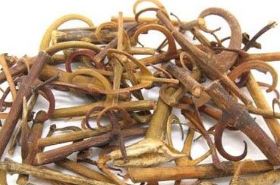
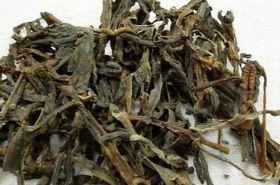
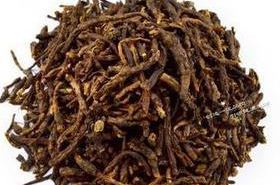
Morphological Characteristics: This product is cylindrical, slightly curved, occasionally branched, 3-12 cm long, with a diameter of 0.3-1 cm. The surface is grayish-brown to dark brown, rough, with dense annular nodes and slightly raised bud or root scars. The upper part is densely covered with dark brown scale-like petiole remnants. It is light in weight, hard and brittle, easily broken. The cross-section is slightly flat, pale brown to dark brown, with 4-10 whitish punctate vascular bundles arranged in a ring in the woody part. It has a faint aroma and an extremely bitter taste.
Hu Huang Lian: Usage and Dosage
Internal Use: For decoction, 0.5-1.5 Qian (approximately 1.5-5.5 grams); or processed into pills or powders.
External Use: Ground into powder for topical application or steeped for eye drops.
Processing: Remove impurities, wash thoroughly, moisten until soft, slice thinly and dry, or crush before use.
Important Safety Note: Hu Huang Lian possesses extremely bitter and cold properties. It is generally not recommended for individuals with severe deficiency of Yin and blood, depleted vital essence, or weak spleen and stomach functions. Even when indicated, it should be used cautiously and often combined with spleen- and stomach-strengthening herbs to avoid adverse effects. Always consult a qualified TCM practitioner before use.
Hu Huang Lian: Functions and Indications
Functions: Clears damp-heat, eliminates steaming bone syndrome, resolves infantile malnutrition with fever. (PMID: 29074094)
Indications: Used for damp-heat dysentery, jaundice, hemorrhoids, tidal fever with steaming bone sensation, and infantile malnutrition with fever. (PMID: 28126139)
Traditional Formulations with Hu Huang Lian
① For treating infantile malnutrition with fever: 15g (five Qian) Cuan Huang Lian, 15g (five Qian) Hu Huang Lian, 3g (one Qian) Cinnabar (ground separately). Grind the first two ingredients into a fine powder, then add the Cinnabar powder. Fill this mixture into a pig's gallbladder, then cook in light rice water. Suspend it with a stick and string in a pot, ensuring it doesn't touch the bottom. After one cooking period, remove and grind in 0.3g (one Fen) of Aloe vera and 0.3g (one Fen) of Musk. Mix with cooked rice and form into pills the size of sesame seeds. Take 5-7 pills, up to 20-30 pills, with rice water after meals. (From "Xiao Er Yao Zheng Zhi Jue" – Hu Huang Lian Wan)
② For treating infantile malnutrition with fever, abdominal distension, tidal fever, and dry, brittle hair: 15g (five Qian) Hu Huang Lian, 30g (one Liang) Trogopterus dung (Ling Zhi). Grind into powder, mix with bile from a male pig, and form into pills the size of mung beans. Take 10-20 pills with rice water. (From "Quan You Xin Jian")
③ For treating dysentery with blood: Equal parts Hu Huang Lian, dried Mume fruit, and earth from beneath the stove. Grind into powder. Mix with strong tea and take warm before meals on an empty stomach. (From "Su Shen Liang Fang" – San Wu San)
④ For treating hot dysentery with abdominal pain: Hu Huang Lian powder, mixed with cooked rice into pills the size of Firmiana seeds. Take 30 pills with rice water. (From "Xian Yu Shu Gou Xuan")
⑤ For treating relapsing fever from external contraction, with body heat, and red urine and stools like blood: 30g (one Liang) Hu Huang Lian, 60g (two Liang) Gardenia fruit (peeled, mixed with 15g (half Liang) honey and stir-fried until slightly scorched). Pound and sift the two ingredients into a powder, mix with pig's bile, and form into pills the size of Firmiana seeds. For each dose, steep two slices of ginger, one Mume fruit, and 300ml (three Ge) of boy's urine for half a day, then strain. After meals, warm the urine and take 10 pills. Take another dose before bed. (From "Bencao Tu Jing")
⑥ For treating night sweats and intermittent tidal fever in children: Equal parts Hu Huang Lian and Bupleurum root. Grind very finely, mix with refined honey, and form into pills the size of a chicken's head. Take 2-3 pills. Dissolve in a small amount of wine in a silver vessel, add 5 parts water, boil in a double boiler for 20-30 minutes, let cool, and take with the residue after meals. (From Sun Yong He)
⑦ For treating vomiting blood and nosebleeds: Equal parts Rehmannia root and Hu Huang Lian. Grind into powder, mix with pig's bile, and form into pills the size of Firmiana seeds. Take 50 pills before bed, washed down with a decoction of cogongrass flower. (From "Pu Ji Fang" – Hu Huang Lian San)
⑧ For treating infant red eyes: Mix Hu Huang Lian powder with tea and apply to the palms of hands and soles of feet. (From "Ji Ji Xian Fang")
⑨ For treating severe painful, swollen hemorrhoids: Mix Hu Huang Lian powder with goose bile and apply topically. (From "Sun Tian Ren Ji Xiao Fang")
⑩ For treating anal fistula forming a canal: 30g (one Liang) Hu Huang Lian (purified powder), 15g (five Qian) pangolin scales (boiled in sesame oil until yellow), 15g (five Qian) abalone shell (calcined), 15g (five Qian) Sophora flower (slightly stir-fried). Grind into powder. Mix with refined honey and form into pills the size of sesame seeds. Take 3g (one Qian) each time on an empty stomach with clear rice water, twice daily (morning and evening). Severe cases may heal within 40 days. This formula avoids needles or cutting. If there are hard protrusions around the fistula, add 20 stir-fried silkworm cocoons (ground into powder) to the medicine. Effective for all types of fistulas throughout the body. (From "Wai Ke Zheng Zong" – Huang Lian Bi Guan Wan)
⑾ For treating carbuncles and scrofula, whether ulcerated or not: Equal parts Hu Huang Lian and pangolin scales (burnt to ash). Grind into powder. Mix with tea or egg white and apply topically. (From "Jian Yi Fang Lun")
⑿ For treating syphilis sores: Boil Hu Huang Lian and pig pancreas together and take. (From "Bencao Qiu Yuan") (PMID: 31562095)
Scholarly Insights on Hu Huang Lian
① From "Bencao Jingshu": "Hu Huang Lian excels at clearing damp-heat, hence it treats chronic dysentery leading to infantile malnutrition, as well as hot and cold dysentery, strengthening the intestines and stomach. For coughs due to external contraction, the evil heat resides in the Hand Taiyin and Foot Yangming meridians. For warm malaria and steaming bone sensation, the heat is within the bones. Its ability to regulate the waist and kidneys and eliminate groin sweat indicates a deficiency of the kidneys with damp-heat descending and lodging within the kidneys. For infantile convulsions, intermittent fevers, and loss of appetite, heat generates wind leading to convulsions, and heat in the stomach aperture causes loss of appetite. The heart governs the five colors, and the spleen and stomach govern the muscles; when damp-heat is cleared from these two meridians, complexion naturally improves. Three Wasting syndromes, Five Hemorrhoids, and adults' five-center vexing heat are all manifestations of damp-heat in the intestines and stomach, or fire between the five Zang organs. Its extreme coldness and bitterness, possessing the ultimate clearing nature, can clear heat from the intestines and stomach all the way to the bones, eliminating all damp-heat, evil heat, and hidden heat in the Yin aspect that gives rise to various diseases." "Hu Huang Lian, with its extremely bitter and cold nature, should not be lightly administered to those with extreme deficiency of Yin and blood, depleted vital essence, or weak spleen and stomach functions, even if they present with the aforementioned symptoms. If its use is absolutely necessary, it must be combined with spleen- and stomach-strengthening herbs to avoid harm."
② From "Yaopin Huayi": "Hu Huang Lian uniquely enters the blood level to clear heat. Dan Xi said that steaming bone fever is all caused by accumulation. This herb effectively cools the blood and nourishes Yin, demonstrating unique efficacy. If fever occurs at night and subsides during the day, indicating heat in the blood level, combining this with Ligusticum wallichii and Angelica sinensis as Er Lian Tang (Two Coptis Decoction) remarkably clears the heat."
③ From "Ben Jing Feng Yuan": "Hu Huang Lian, bitter and descending, powerfully eliminates evil heat from the Zang-Fu organs and bone marrow. It is a potent medicine for resolving gestational heat in women and infantile malnutrition with fever and accumulated qi in children. When combined with Mume fruit, it stops infantile bloody dysentery; with chicken liver, it treats infantile eye problems due to malnutrition; with pig pancreas, it treats syphilis sores; with dried ginger, it treats fruit accumulation – all by eliminating heat and evil from the Liver and Kidneys. Children's kidney qi is inherently robust, hence they can tolerate this herb. However, if administered to those with insufficient Spleen, Stomach, or Kidney functions, it can severely deplete the body's fundamental vitality. Only for syphilis does Hu Huang Lian directly reach the lower Jiao, effectively searching out and removing the toxic fire."
④ From "Bencao Zheng Yi": "Comparing Hu Lian (Hu Huang Lian) with Cuan Lian (Coptis chinensis), their effects are largely similar. However, Hu Lian's descending nature is particularly rapid, making its power to clear and guide damp-heat from the lower Jiao more specific and its efficacy quicker than Cuan Lian. For conditions such as hot dysentery with rectal prolapse, anal fistula and sores, bloody dysentery, bloody urine, and syphilis with accumulated damp-fire, this herb is indispensable for directly reaching the affected area. It can also be used for excess patterns of infantile malnutrition with abdominal distension. Its bitter-descending action is swift in guiding heat downwards, and it does not remain in the middle Jiao for long, thus avoiding hindrance to the harmonious qi of the spleen and stomach." "Hu Lian is extremely bitter and cold, purely Yin in nature, and even more potent than Cuan Lian. Since Su Gong first mentioned its use for gestational heat in women, subsequent Materia Medica texts have reiterated this. However, prenatal excess fire is just one of many conditions, and during pregnancy, the spleen and stomach are paramount. How can extremely bitter and cold herbs be lightly administered? Su Gong also prescribed it for steaming bone consumption (laozhai), but in cases where heat has entered the bone marrow and vital essence and blood are already depleted, although it is called fire hyperactivity, it is actually due to Yin exhaustion. Such extremely cold and bitter herbs can damage life's vitality; even if the fire is suppressed, what becomes of the major life force? It merely hastens the decline. Miao Shi's 'Jingshu' also states it treats chronic dysentery leading to infantile malnutrition. This seems to refer to infantile consumptive diseases. However, after prolonged dysentery, how can potent bitter-cold herbs be aggressively used to further harm the spleen qi?!"
Quick 3-Second Self-Check + 30-Second Self-Help:
If you're experiencing persistent digestive discomfort with a heavy, sticky feeling, or unexplained fevers that worsen in the evening and subside during the day, often accompanied by a general sense of internal heat...
Then immediately consider if a consultation with a qualified Traditional Chinese Medicine (TCM) practitioner about "damp-heat" or "steaming bone syndrome" could be beneficial for you. While Hu Huang Lian is a powerful herb in TCM, self-diagnosing or self-prescribing is not recommended. A professional can accurately assess your specific pattern and suggest the most appropriate and safest course of action, which might include specific dietary changes or other herbal formulas tailored to your needs.
References:
Phytochemistry, traditional uses, and pharmacological properties of Picrorhiza kurroa Royle ex Benth PMID: 29074094
Picrorhiza kurroa Royle ex Benth: A comprehensive review on its ethnomedicine, phytochemistry, and pharmacology PMID: 28126139
Traditional Chinese Medicine for the Treatment of Chronic Inflammation: A Systematic Review PMID: 31562095
For informational purposes only. Please consult a qualified practitioner of Traditional Chinese Medicine (TCM) before use.