Composition and Preparation of Gegen Tang
Gegen Tang, also known as Kudzu Decoction, is a foundational formula in Traditional Chinese Medicine (TCM). Understanding its components and how to prepare it is key to appreciating its therapeutic actions.
Composition: Kudzu Root (Gegen) four liang, Ephedra Stem (Ma Huang) three liang (nodes removed), Cinnamon Twig (Gui Zhi) two liang (bark removed), White Peony Root (Shao Yao) two liang (cut), Honey-fried Licorice Root (Zhi Gan Cao) two liang, Fresh Ginger (Sheng Jiang) three liang (cut), Chinese Date (Da Zao) twelve pieces (broken open).
Preparation: Take the seven ingredients listed above. Add one dou of water and first boil the Ephedra Stem and Kudzu Root. Reduce the liquid by two sheng, skim off any white foam, then add the remaining herbs. Continue to boil until three sheng of liquid remain. Remove the dregs and take one sheng warm. Cover yourself to induce a slight sweat. For subsequent care and contraindications, follow the instructions for Gui Zhi Tang. All other decoctions should be prepared similarly.
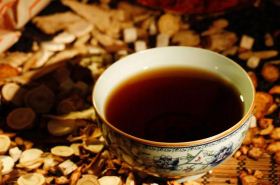
Important Safety Note: Ephedra Stem (Ma Huang) is a potent herb that can have significant stimulating effects. It's crucial to consult a qualified healthcare professional, particularly a licensed practitioner of Traditional Chinese Medicine, before using any formula containing Ma Huang, especially if you have pre-existing heart conditions, high blood pressure, or are taking other medications. Self-medication with Ma Huang can be dangerous and should be strictly avoided.
Functions and Indications of Gegen Tang
Gegen Tang is highly regarded for its ability to address specific external conditions by influencing the body's vital energy and fluid balance. Its primary actions are to induce sweating to release external pathogens and promote the circulation of body fluids to relax muscles.
Functions: Induces sweating to dispel pathogens, resolves exterior conditions, promotes body fluids, and relaxes tendons and muscles.
Indications: This formula is traditionally used to treat external invasion of wind-cold leading to an exterior excess pattern. Symptoms include aversion to cold, fever, headache, significant stiffness and rigidity of the neck and back, body aches with no sweating, slight abdominal pain, or even diarrhea, dry heaving, or slight wheezing. The tongue typically appears pale with a white coating, and the pulse is floating and tight.
Current clinical applications extend to conditions like the common cold, influenza, measles, dysentery, and joint pain, provided these conditions present with the aforementioned symptoms. PMID: 37021319
Main Conditions Treated: It primarily addresses Taiyang pattern conditions characterized by stiffness and rigidity of the neck and back, no sweating, and aversion to wind. It also targets combined Taiyang and Yangming patterns presenting with diarrhea.
Understanding the Formula (Fang Yi)
As Master Cheng (Cheng Wuji) observed, "Light substances can remove excess," and herbs like Kudzu Root and Ephedra Stem exemplify this principle. Gegen Tang integrates these two potent herbs into a modified Gui Zhi Tang formula, specifically for cases of wind-cold invasion manifesting as an exterior excess pattern.
In this formula, Kudzu Root (Gegen) serves as the chief herb, responsible for promoting the generation of body fluids and moistening the tendons and vessels. Ephedra Stem (Ma Huang) and Cinnamon Twig (Gui Zhi) act as the deputy herbs, working together to disperse wind-cold, induce sweating, and release the exterior. White Peony Root (Shao Yao) and Honey-fried Licorice Root (Zhi Gan Cao) function as assistant herbs, generating fluids, nourishing yin, easing spasms, and relieving pain. Fresh Ginger (Sheng Jiang) and Chinese Date (Da Zao) are the envoy herbs, harmonizing the Spleen and Stomach and invigorating their ascending Qi, which supports the body's overall healing response.
Together, these herbs synergistically achieve the formula's core functions: releasing the exterior through sweating and relaxing tendons and muscles by promoting fluid circulation. PMID: 38318721
Different Versions of Gegen Tang
Throughout TCM history, various interpretations and modifications of Gegen Tang have emerged, each tailored to specific clinical presentations. Here are a few notable versions:
Version One
Source: Volume 2 of Yi Xue Xin Wu (Insights into Medical Practice).
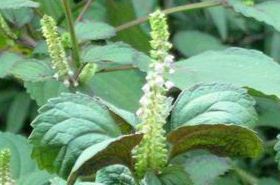
Composition: Kudzu Root (Gegen) 6 grams, Cimicifuga Rhizome (Sheng Ma), Gentiana macrophylla Root (Qin Jiao), Schizonepeta (Jing Jie), Red Peony Root (Chi Shao Yao) 3 grams each, Perilla Leaf (Su Ye), Angelica Dahurica Root (Bai Zhi) 2.4 grams each, Licorice Root (Gan Cao) 1.5 grams, Fresh Ginger (Sheng Jiang) 2 slices.
Preparation: Decoct in water for oral administration.
Functions: Induces sweating and resolves muscle layer tension.
Indications: Yangming channel pattern characterized by eye pain, dry nose, parched lips, desire to rinse the mouth but not swallow, and a long pulse.
Modifications: If there is no sweating and thirst, indicating heat entering the Yangming fu organ, add Anemarrhena Rhizome (Zhi Mu). If there is spontaneous sweating and thirst, add Gypsum Fibrosum (Shi Gao) and Ginseng Root (Ren Shen). If there is spontaneous sweating but no thirst, indicating wind-stroke affecting the Yangming channel, remove Perilla Leaf (Su Ye) and add Cinnamon Twig (Gui Zhi). If used in late spring/early summer and there's concern about coexisting warm-heat pathogens, making Cinnamon Twig unsuitable, add Atractylodes Macrocephala Rhizome (Bai Zhu) 4.5 grams.
Version Two
Source: Chong Ding Yan Shi Ji Sheng Fang (Revised Yan's Formulas for Benefiting Life).
Alternate Name: Gegen Douchi Tang (Kudzu and Fermented Soybean Decoction) from Volume 16 of Chi Shui Xuan Zhu.
Composition: Kudzu Root (Gegen) 60 grams, Immature Bitter Orange (Zhi Shi, pith removed, stir-fried with wheat bran), Gardenia Fruit (Zhi Zi Ren), Fermented Soybean (Dan Dou Chi) 30 grams each, Honey-fried Licorice Root (Zhi Gan Cao) 15 grams.
Preparation: Chop the above herbs coarsely. Take 12 grams per dose, add 300 ml of water, and decoct until 240 ml remain. Remove dregs and take warm, without strict regard to time.
Indications: Alcohol-induced jaundice (Jiu Dan). This condition arises from excessive alcohol consumption causing heat in the Stomach, followed by exposure to wind and water after drinking. Symptoms include yellowing of the body and eyes, vexation in the chest, swollen legs and ankles, yellow urine, and red facial patches.
Version Three
Source: Volume 3 of Bei Ji Qian Jin Yao Fang (Formulas Worth a Thousand Gold for Emergencies).
Composition: Kudzu Root (Gegen), Fresh Ginger (Sheng Jiang) 18 grams each, Pubescent Angelica Root (Du Huo) 12 grams, Chinese Angelica Root (Dang Gui) 9 grams, Licorice Root (Gan Cao), Cinnamon Bark (Gui Xin), Poria (Fu Ling), Gypsum Fibrosum (Shi Gao), Ginseng Root (Ren Shen), Atractylodes Macrocephala Rhizome (Bai Zhu), Ligusticum Wallichii Rhizome (Chuan Xiong), Ledebouriella Root (Fang Feng) 6 grams each.
Preparation: Coarsely chop the twelve herbs. Add 1.2 liters of water, decoct until 300 ml remain. Remove dregs. Take 100 ml per dose, three times daily.
Indications: Postpartum wind-stroke (Zhong Feng) with lockjaw, spasms, rapid and urgent breathing, dizziness, and extreme exhaustion.
Version Four
Source: Shang Han Lun (Treatise on Cold Damage).
Composition: Kudzu Root (Gegen) 12 grams, Ephedra Stem (Ma Huang) 9 grams (nodes removed), Cinnamon Twig (Gui Zhi) 6 grams (bark removed), Fresh Ginger (Sheng Jiang) 9 grams (cut), Honey-fried Licorice Root (Zhi Gan Cao) 6 grams, White Peony Root (Shao Yao) 6 grams, Chinese Date (Da Zao) 12 pieces (broken open).
Preparation: Take the seven ingredients above. Add 1 liter of water, first boil Ephedra Stem and Kudzu Root until reduced to 800 ml. Skim off any foam, then add the other herbs. Decoct until 300 ml remain. Remove dregs. Take 150 ml per dose warm, then cover to induce a slight sweat.
For a deeper understanding of Ma Huang's individual pharmacological actions, consult relevant research. PMID: 30049282
Functions: Induces sweating to dispel pathogens, resolves exterior conditions, promotes body fluids, and relaxes tendons and muscles.
Indications: External invasion of wind-cold leading to an exterior excess pattern, presenting with aversion to cold, fever, headache, significant stiffness and rigidity of the neck and back, body aches with no sweating, slight abdominal pain, or even diarrhea, dry heaving, or slight wheezing. The tongue appears pale with a white coating, and the pulse is floating and tight. Currently used for common cold, influenza, measles, dysentery, and joint pain with the aforementioned symptoms.
Version Five
Source: From Liu Hejian's formula cited in Volume 56 of Jing Yue Quan Shu (Jingyue's Complete Works).
Composition: Kudzu Root (Gegen) 1 qian, Cinnamon Twig (Gui Zhi) 1 qian, Ligusticum Wallichii Rhizome (Chuan Xiong) 1 qian, Asarum (Xi Xin) 1 qian, Ledebouriella Root (Fang Feng) 1 qian, Ephedra Stem (Ma Huang) 8 fen, Immature Bitter Orange (Zhi Ke) 8 fen, White Peony Root (Shao Yao) 8 fen, Ginseng Root (Ren Shen) 8 fen, Honey-fried Licorice Root (Zhi Gan Cao) 8 fen.
Indications: Cold pathogen lodged in the channels, causing intolerable pain in the hypochondriac region.
Preparation: Coarsely chop the above herbs. Add 1.5 zhong (cups) of water, along with 3 slices of Fresh Ginger. Decoct until 8 fen (0.8 cups) remains. Take warm, a while after meals.
Version Six
Medicinal Composition: Kudzu Root (Gegen) 4 liang, Fermented Soybean (Dan Dou Chi) 1 sheng.
Prescription Source: From Wang Shi Ji Yan Fang (Wang's Collection of Proven Formulas) cited in Volume 62 of Yi Fang Lei Ju (Classified Collection of Medical Formulas).
Formula Indications: Initial stages of cold damage (Shang Han), up to 2 days, with headache, internal heat, and a surging pulse.
Usage and Dosage: Add 3 sheng of water to the above, decoct until 0.5 sheng remains. Take warm.
3-Second Self-Test + 30-Second Self-Help
If you're experiencing:
- Stiffness and rigidity in your neck and upper back?
- Aversion to cold, even with a fever, and no sweat?
- General body aches and a headache?
References
This meta-analysis investigated the effects of Gegen decoction on symptoms and inflammatory markers in patients with acute upper respiratory tract infection, showing potential benefits. PMID: 37021319
This study explored the pharmacological mechanisms of Pueraria lobata (Kudzu Root) for treating cervical spondylotic radiculopathy, highlighting its potential in alleviating neck-related issues. PMID: 38318721
A comprehensive review of the pharmacological actions of Ephedra sinica (Ma Huang), detailing its various effects and emphasizing the need for cautious use. PMID: 30049282
For informational purposes only. Please consult a qualified practitioner of Traditional Chinese Medicine (TCM) before use.