Hops: A Comprehensive Guide to its Traditional Chinese Medicine Uses
Hops, scientifically known as Humulus lupulus L., might be most famous for its role in brewing beer, but in Traditional Chinese Medicine (TCM), it holds a unique and respected place as a medicinal herb. Often referred to by its aliases such as "Humulus" or "Fragrant Hemp," this plant offers a range of potential health benefits.
Understanding Hops in TCM
Nature and Flavor
In TCM, Hops are characterized by a **bitter taste** and a **slightly cool nature**. This profile suggests its actions in the body, often related to clearing heat, drying dampness, and descending rebellious Qi (vital energy).
Meridian Affinity
Hops are said to **enter the Liver and Stomach meridians**. This means it primarily influences the functions of these organ systems, which are crucial for digestion, emotional regulation, and detoxification according to TCM principles.
Medicinal Part Used
The part of the Hops plant utilized in medicine consists of its **immature, flower-bearing fruit spikes**. These are carefully harvested to preserve their active compounds.
Botanical Characteristics
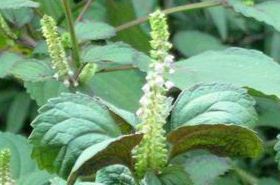
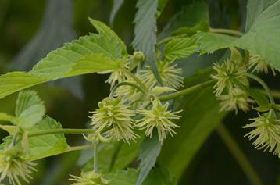
These medicinal fruit spikes typically appear as **flattened spherical bodies**, ranging in color from pale yellowish-white. They are covered in overlapping, **membranous bracts** that are oval or elliptic, measuring 0.5-1.2 cm long and 0.3-0.8 cm wide. When held against light, these bracts appear translucent, revealing characteristic brownish-yellow glandular spots. Within the axils of the bracts, you might find two small female flowers or one to two flattened achenes (small, dry fruits). Hops have a **slightly aromatic scent** and a taste that is **faintly sweet and bitter**.
How to Use Hops in TCM
Dosage and Administration
For internal use, Hops are typically prepared as a **decoction** (boiled in water like a tea), with a recommended dosage of **3-9 grams**.
Preparation (Pao Zhi)
The collection of Hops for medicinal use usually occurs in the **summer and autumn seasons**, specifically when the fruit spikes are green but just beginning to show a yellowish tint. After harvesting, they are either sun-dried or oven-dried. It's crucial that the drying temperature **does not exceed 45℃** to preserve their delicate active compounds.
Efficacy and Indications of Hops
Key Actions (Efficacy)
Hops are valued in TCM for their abilities to:
- **Support healthy digestion and strengthen the stomach (健胃消食):** Helping to break down food and alleviate digestive discomfort.
- **Promote urination and calm the spirit (利尿安神):** Assisting the body in expelling excess fluids and fostering a sense of tranquility, which can be beneficial for restless nights.
- **Possess anti-inflammatory properties and historical use for anti-tuberculosis effects (抗痨消炎):** Traditionally applied for its ability to reduce inflammation and in historical contexts for conditions like tuberculosis.
Main Indications (What It Treats)
Hops have been traditionally used to address a variety of health concerns, including:
- **Digestive issues:** Indigestion and abdominal distension (bloating).
- **Fluid retention:** Edema (swelling).
- **Inflammatory conditions:** Bladder inflammation (cystitis).
- **Respiratory concerns:** Cough.
- **Sleep disturbances:** Insomnia.
- **Serious historical applications:** Pulmonary tuberculosis and leprosy.
Important Safety Note: While Hops have historical uses for serious conditions like pulmonary tuberculosis and leprosy, it is crucial to understand that these conditions require professional medical diagnosis and treatment. Do not attempt to self-treat severe illnesses with herbal remedies. Always consult a qualified healthcare provider for proper evaluation and management of any health concern, especially serious ones like cystitis, tuberculosis, or leprosy.
Traditional Formulas Featuring Hops
Hops are often combined with other herbs to enhance their therapeutic effects. Here are some traditional formulas:
- **For Indigestion and Abdominal Distension:**
Hops (9g), Massa Fermentata (Shen Qu, 9g), and Aucklandia Root (Mu Xiang, 6g). Decocted in water for oral administration. (Excerpted from Xinjiang Chinese Herbal Medicine)
- **For Chest and Abdominal Distension:**
Hops (15g), Bitter Orange (Zhi Ke, 15g), Aucklandia Root (Mu Xiang, 15g), and Stir-fried Hawthorn (Chao Shan Zha, 15g). Decocted in water for oral administration. (Excerpted from Qingdao Chinese Herbal Medicine Handbook)
- **For Pulmonary Tuberculosis and Bladder Inflammation (Cystitis):**
Burdock Root (Niu Bang Gen, 9g), Plantain (Che Qian Cao, 9g), Isatis Root (Ban Lan Gen, 9g), Hops (6g), and Scutellaria Root (Huang Qin, 15g). Decocted in water for oral administration. (Excerpted from Xinjiang Chinese Herbal Medicine)
- **For Bronchitis:**
Option 1: Hops (1.5-3g), steeped as a tea. Option 2: Hops root (9g), Fritillary Bulb (Bei Mu, 9g), Platycodon Root (Jie Geng, 9g), and Aster Root (Zi Yuan, 9g). Decocted in water for oral administration.
- **For Insomnia:**
Hops (15g), Sour Jujube Seed (Suan Zao Ren, 9g), Albizia Flower (He Huan Hua, 15g), and Polygala Root (Yuan Zhi, 9g). Decocted for oral administration. (Formulas 4-5 are from Qingdao Chinese Herbal Medicine Handbook)
Historical Perspectives on Hops
Various classical TCM texts and regional handbooks highlight the diverse applications of Hops:
- The Xinjiang Chinese Herbal Medicine states: "Strengthens the stomach and aids digestion, calms the spirit and promotes urination. Primarily treats indigestion, abdominal distension, pulmonary tuberculosis, bladder inflammation, neurasthenia, and insomnia." This aligns with modern understanding of hops' calming and digestive properties. PMID: 22849837
- The Qingdao Chinese Herbal Medicine Handbook notes: "Primarily treats bronchitis."
- The Zhejiang Medicinal Plants Flora mentions: "Primarily treats pleurisy and hysteria."
Hops have been studied for their potential in improving sleep quality due to their sedative compounds. PMID: 21338515 Additionally, research indicates that Hops possess anti-inflammatory properties, supporting their traditional use for various inflammatory conditions. PMID: 27932398
Quick Self-Check & Self-Help
If you've been struggling with occasional indigestion, bloating, or simply finding it hard to unwind and get a good night's sleep, then Hops might be a traditional herbal remedy worth exploring. Immediately consult a qualified TCM practitioner or your healthcare provider to discuss if Hops are suitable for your specific needs and to ensure proper guidance.
For informational purposes only. Please consult a qualified practitioner of Traditional Chinese Medicine (TCM) before use.