Purple Cowrie Shell
Known in Traditional Chinese Medicine (TCM) as "Zibeichi," the Purple Cowrie Shell is a fascinating ingredient with a rich history. You might also hear it called Purple Cowrie, Patterned Cowrie, Purple Cowrie Seed, Snake's Teeth, or Dog's Conch.
In TCM, understanding the properties of an ingredient is key to its therapeutic use. Zibeichi is characterized by its **salty taste and neutral nature**. It primarily **enters the Liver Meridian**, an energetic pathway in the body associated with functions like blood storage, emotional regulation, and vision.
Part Used for Medicine
For medicinal purposes, the **shell is prepared after removing the flesh**.
Morphological Characteristics
The Purple Cowrie Shell comes from various species, each with distinct features:
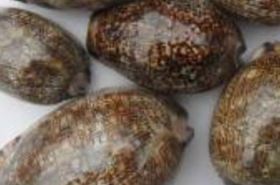
1. Snakehead Cowrie (Cypraea caputserpentis): This small, sturdy shell is typically about 3 cm long, 2.4 cm wide, and 1.5 cm high. Its surface is covered with a smooth, glossy enamel layer. Mature shells have their spiral parts hidden by enamel, with the body whorl making up most of the shell. The edges are deep brown, with lighter brown at the front and back. White spots of varying sizes are scattered on the dorsal side, while the ventral side's edges are greyish-blue. The shell opening is narrow and elongated, with 14-17 fine white "teeth" along the inner and outer lips. Young shells are thinner, showing 2-3 whorls, with a milky white surface and a broad brown band along the middle of the back. The animal itself is soft and can fully retract into its shell. It has a broad head, short proboscis, long pointed antennae, and prominent eyes located outside the antennae. Its foot is well-developed. This species lives in caves on rocks or coral reefs near the low tide line. It's carnivorous, feeding on sponges, foraminifera, and small crustaceans. It's found around Hainan Island and the Xisha Islands.
2. Lynx Cowrie (Cypraea lynx): A medium-sized shell, approximately 4.3 cm long, 2.7 cm wide, and 2.2 cm high. Its edges and base are white, while the dorsal side is brown, covered with irregular dark brown and light blue spots. There are 26-29 teeth along the lips of the shell opening, with blood-red spaces in between. Its distribution is similar to the Snakehead Cowrie.
3. Argus Cowrie (Cypraea argus) (from Bencao Gangmu): Another medium-sized shell, about 4.5 cm long, 2.7 cm wide, and 2.1 cm high. Its edges are reddish-milk-white with dark blue-brown spots, and its ends are dark brown. The dorsal side is greyish-white with dense, irregular brownish longitudinal stripes. The base is slightly reddish, with scattered dark blue spots along its edges. The lips of the shell opening are slightly reddish, each having 23-26 fine brownish teeth. This species is found in Hainan Island, Xisha Islands, Nansha Islands, Fujian, and Taiwan.
Dosage and Administration of Purple Cowrie Shell
Internal Use: For decoction, use 10-15g, crushed and decocted first.
External Use: An appropriate amount can be prepared through wet grinding (levigation) for ophthalmic application (eye drops).
Processing Methods (Pao Zhi)
The preparation of Purple Cowrie Shell is crucial for its therapeutic efficacy and safety:
1. Raw Purple Cowrie Shell (Sheng Zibei): As described in "Bencao Qiuzhen," it is used raw and ground into a fine powder. Currently, the raw material is cleaned of impurities, washed, sun-dried, and then crushed.
2. Calcined Purple Cowrie Shell (Duan Zibei): "Qian Jin Yao Fang" mentions charring it over charcoal into a powder. "Bencao Yanyi" suggests calcining it until charred but retaining its properties (shao cun xing). "Yixue Rumen - Bencao" recommends washing with medicated wine, calcining with fire, finely grinding, and then levigating with water. "Shenshi Yaohan" describes calcining with fire, quenching with water, drying, and grinding. Currently, clean Purple Cowrie Shell is placed in a suitable container and calcined over a smokeless fire until it becomes crisp. It is then removed, cooled, and ground into a powder or crushed.
3. Salt-Processed Purple Cowrie Shell (Yan Zibei): Clean Purple Cowrie Shell is placed in an earthenware pot, calcined red hot, removed, mixed evenly with salt water, and then finely ground. For every 100 kg of Purple Cowrie Shell, 1.6 kg of salt and an appropriate amount of water are used.
Functions and Indications of Purple Cowrie Shell
Functions: It clears heat from the Heart and calms the spirit, and pacifies Liver Yang and brightens the eyes. (It's worth noting that in TCM, the Heart governs the mind and spirit, while the Liver is closely associated with eye health and emotional balance).PMID: 32095924
Indications: It is traditionally used for symptoms such as palpitations, restlessness and insomnia, red eyes and dizziness, and skin rashes or eruptions.PMID: 31085287
Traditional Prescriptions with Purple Cowrie Shell
Here are some historical examples of how Purple Cowrie Shell has been used in Traditional Chinese Medicine:
1. For Childhood Smallpox Rashes Affecting the Eyes (Zibei San from "Ying Tong Bai Wen"): Take one raw Purple Cowrie Shell, grind it into a powder. Cut open a lamb's liver, sprinkle 1 Qian (approx. 3.75g) of the powdered medicine inside, tie it with string, and cook it in rice water. Place it in a small bottle and fume the eyes while hot. Once cool, remove it, expose it overnight under the stars and moon, and take it on an empty stomach the next morning.
2. For Carbuncles and Abscesses (from "Puji Fang"): Calcine Purple Cowrie Shell into ash and apply it topically.
3. For Acute Oral Gangrene, Erosive Mouth and Nose Nearing Death (from "You You Jicheng"): Calcine marine Purple Cowrie Shells, grind into powder, and mix with preserved pork lard for topical application.
4. For Foul-Smelling Yellow Nasal Discharge (from "You You Jicheng"): Take two or three Purple Cowrie Shells, calcine them, quench them with vinegar, grind into powder, wrap in paper, and place on the ground to remove any residual heat. For adults, take 2 Qian (approx. 7.5g), for children 1 Qian (approx. 3.75g), mixed with a decoction of luffa vine, on an empty stomach until cured.PMID: 31102927
5. For Tuberculous Meningitis (from "Qingdao Zhongcaoyao Shouce"): Purple Cowrie Shell 9g, Common Heliotrope Flower (Xuanfuhua) 9g, Hematite (Daizheshi) 9g, Pearl Shell (Zhubei Ke) 9g. Decocted in water for oral administration.
6. For Common Cold and Cough (from "Qingdao Zhongcaoyao Shouce"): Purple Cowrie Shell (ground into powder) 9g, with Aged Tangerine Peel (Chenpi) and Licorice Root (Gancao) decocted in water for oral administration.
Quick Self-Check & Immediate Relief Tips
Feeling a bit off? Here's a quick way to check if Zibeichi's traditional uses resonate with you, and a simple tip for temporary relief:
- If... you've been experiencing restless nights, finding it hard to calm your mind, or noticing your heart racing for no clear reason, Then Immediately... try a few minutes of deep belly breathing to gently soothe your nervous system.
- If... your eyes often feel red, irritated, or strained, especially when accompanied by occasional lightheadedness or a sense of inner agitation, Then Immediately... take a break from screens, close your eyes, and gently massage your temples to encourage relaxation.
For informational purposes only. Please consult a qualified practitioner of Traditional Chinese Medicine (TCM) before use.
References
TCM provides various approaches to calming the mind and addressing sleep disturbances. PMID: 32095924
The Liver meridian plays a crucial role in TCM for maintaining eye health and addressing conditions like dryness and irritation. PMID: 31085287
Traditional Chinese Medicine offers diverse strategies for managing inflammatory skin conditions and rashes. PMID: 31102927