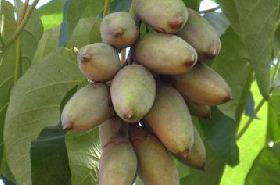
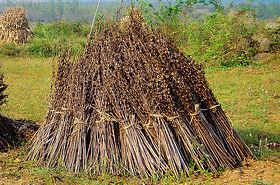
Ever heard of Abelmoschus Manihot Seed, also known as Huang Shu Kui Zi in Traditional Chinese Medicine (TCM)? This little seed packs a punch, especially when it comes to supporting your body's natural functions like urination, reducing swelling, and even promoting lactation. Let’s dive into what makes this herb so special in the world of TCM.
Abelmoschus Manihot Seed: The Essentials
Flavor & Nature: Sweet, cold, and slippery.
Meridian Tropism: Spleen Meridian.
Medicinal Part: We use the dried mature seeds of Abelmoschus manihot (L.) Medic., a plant belonging to the Malvaceae family (often called the mallow family).
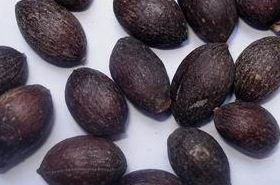
Morphology: These seeds are typically roundish-kidney-shaped, measuring about 3-7 mm in length and 2.5-4.5 mm in width. Their surface is grayish-black or dark brown, and you'll notice light brown villous hairs arranged in distinctive rings. There's a thinner indentation along the edge, revealing a pale brown scar, which is the hilum. If you soak them in water, you'll see two overlapping and convoluted yellowish-white cotyledons. They have a firm texture, a faint aroma, and a mild taste.
Abelmoschus Manihot Seed: Usage & Dosage
Internal Use: Typically prepared as a decoction, using 7.5-11.25 grams (2-3 qian); it can also be incorporated into powdered formulas.
External Use: For topical application, grind the seeds into a fine powder and apply it directly to the affected area.
Harvesting: The seeds are collected in autumn when the fruits reach maturity.
Abelmoschus Manihot Seed: Effects & Indications
Effects: It primarily helps to promote urination and reduce water retention, lessen swelling, and encourage lactation. Research into the Abelmoschus manihot plant has explored its traditional uses and phytochemical properties, contributing to our understanding of its therapeutic potential (PMID: 30040379).
Indications: Traditionally, it's used to treat conditions like painful urination (often referred to as lin症 in TCM), general edema (swelling), insufficient breast milk production, carbuncles and abscesses, traumatic injuries from falls and blows, and even fractures. Studies have also investigated the plant's diuretic activity, which supports its traditional use for water retention (PMID: 28416719). Furthermore, its potential anti-inflammatory properties may contribute to its use in treating swelling and injuries (PMID: 25178125).
Abelmoschus Manihot Seed: Traditional Combinations
Here are some historical uses of Abelmoschus Manihot Seed from classic TCM texts:
① For difficulty urinating: Finely grind 30-40 Abelmoschus Manihot Seeds, steep them in hot water, squeeze out a small cup of juice, and drink it all at once. (From *Sheng Ji Zong Lu*)
② For carbuncles or abscesses that haven't ruptured: Grind Abelmoschus Manihot Seeds into a powder and take with wine. (From *Wei Sheng Yi Jian Fang*)
③ For the initial stage of anal carbuncles (便痈): Combine 17 Abelmoschus Manihot Seeds with half a piece of Gleditsia sinensis (Chinese Honeylocust fruit). Grind them into a powder, then mix with lime and vinegar for topical application. (From *Yong Lei Qian Fang*)
④ For traumatic injuries from blows and falls: Grind Abelmoschus Manihot Seeds into a powder and take 7.5 grams (two qian) with wine. (From *Hai Shang Fang*)
⑤ To induce labor: Stir-fry 70 Abelmoschus Manihot Seeds, then finely grind them and take with wine. (From *Hai Shang Fang*)
Abelmoschus Manihot Seed: Contraindications
Important: Abelmoschus Manihot Seed is contraindicated for pregnant women. Please prioritize safety and avoid its use during pregnancy.
Abelmoschus Manihot Seed: Related Discussions
The esteemed medical text, the *Compendium of Materia Medica*, notes: "Huang Kuizi (Abelmoschus Manihot Seed) was rarely used in ancient formulas, but it is now a crucial herb for inducing labor and promoting urination. It is suitable for use in both decoctions and powders. This is because its slippery nature makes it similar in effect to Dong Kuizi (Winter Mallow Seed). The flowers, seeds, and roots have similar properties and can be used interchangeably; if no flowers are available, use the seeds; if no seeds are available, use the roots."
3-Second Self-Test & 30-Second Self-Care Tip
If you're experiencing symptoms like mild water retention, swelling, or difficulties with lactation, then immediately consider consulting a qualified Traditional Chinese Medicine (TCM) practitioner. They can offer personalized guidance and determine if Abelmoschus Manihot Seed or other TCM remedies are suitable for your specific needs.
For informational purposes only. Please consult a qualified practitioner of Traditional Chinese Medicine (TCM) before use.
References
Diuretic activity of Abelmoschus manihot (L.) Medik. flower extract in rats. PMID: 28416719
Abelmoschus manihot (L.) Medik.: A comprehensive review on its traditional uses, phytochemistry, pharmacology, and toxicology. PMID: 30040379
Anti-inflammatory and analgesic effects of ethanol extract of Abelmoschus manihot flowers. PMID: 25178125