Dry Lacquer (Gan Qi)
Other Names: Lacquer Dregs, Lacquer Sediment, Lacquer Foot, Life-Prolonging Cylinder (Xuming Tong), Black Lacquer.
Taste and Nature: Pungent (辛), Warm (温).
Meridian Tropism: Liver (肝), Spleen (脾).
Medicinal Part: The processed and dried resin of the lacquer tree, *Toxicodendron vernicifluum* (Stokes) F.A. Barkl., a plant belonging to the Anacardiaceae family.
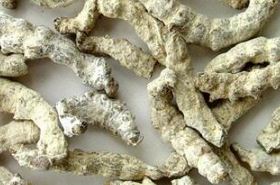
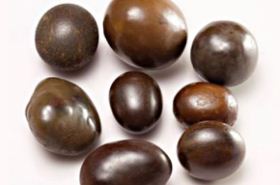
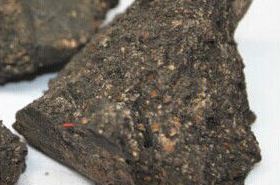
Characteristics: This substance typically appears as irregular blocks, dark brown or reddish-brown in color. Its surface is rough, often exhibiting fine honeycomb-like pores or a granular texture. It is hard and difficult to break, with an uneven cross-section. Dry Lacquer possesses a distinctive, characteristic odor.
Usage and Dosage of Dry Lacquer
Dosage: 2 to 5 grams.
Preparation: Take the raw dry lacquer and heat it over a fire until it becomes charred and brittle. Alternatively, break it into small pieces, then stir-fry it in a pan until it is charred and the black smoke dissipates. Remove from heat and allow it to cool.
Functions and Indications of Dry Lacquer
Functions: Invigorates blood circulation, resolves blood stasis, unblocks menstruation, eliminates accumulations, and expels parasites.
Indications: Traditionally used for menstrual blockages due to blood stasis, abdominal masses and accumulations (Zheng Jia Ji Ju), and abdominal pain caused by parasitic accumulation.
Contraindications for Dry Lacquer
Important Safety Warning: Pregnant women and individuals with known allergies to lacquer (or its derivatives) must strictly avoid the use of Dry Lacquer. Due to its potent nature, always consult a qualified Traditional Chinese Medicine (TCM) practitioner before considering its use.
Traditional Combinations with Dry Lacquer
1. **For abdominal masses in women:** To treat women suffering from abdominal masses below the navel, comparable in size to a cup or larger, accompanied by irregular menstruation, intermittent attacks, diarrhea, and emaciation (diagnosed as Qi Jia, a type of abdominal mass). * **Formula:** Finely powder one *jin* (approx. 500g) of dry lacquer. Prepare thirty *jin* (approx. 15kg) of fresh Rehmannia root (*Di Huang*), pounded and juiced. Decoct the dry lacquer over fire until it can be formed into pills. * **Usage:** Take three pills, each the size of a Wutong seed, three times daily after meals. (From *Bu Que Zhou Hou Fang* [Supplements to Elbow-Back Formulas for Emergencies])
2. **For roundworm-induced abdominal pain in children:** To treat children experiencing abdominal pain attributed to roundworms. * **Formula:** Take one *liang* (approx. 30g) of dry lacquer, crush it, and stir-fry until smoke appears. Grind it into a fine powder. * **Usage:** For each dose, mix a small amount (one *zi*, a tiny measurement) with one *ge* (approx. 10ml) of fresh well water and a "small oak-bucket" (Xiang Dou Zi, a historical measure) of raw oil. Administer on an empty stomach. No more than three doses should be given; this treatment is expected to expel the worms. (From *Sheng Hui Fang* [Prescriptions of Sagacious Benevolence])
3. **For severe throat obstruction:** To treat severe, life-threatening throat obstruction where acupuncture and other medications are ineffective. * **Method:** Burn dry lacquer to produce smoke and inhale the smoke through a tube. (From *Sheng Ji Zong Lu* [General Collection for Holy Relief])
Relevant Classical Discussions on Dry Lacquer
1. **From *Shennong Ben Cao Jing* (The Divine Farmer's Materia Medica):** "Primarily treats traumatic injuries, tonifies the middle Jiao, mends sinews and bones, replenishes marrow and brain, calms the five Zang organs, addresses five flaccidities and six urgencies, and wind-cold-damp painful obstruction (Bi syndrome)."
2. **From *Bencao Jing Shu* (Commentary on the Classic of Materia Medica):** "Dry Lacquer possesses the ability to kill parasites and dispel accumulations, effectively removing all tangible stagnant accumulations within the intestines and stomach. Once these organs are clear, the five Zang organs naturally find balance, and conditions of flaccidity and painful obstruction resolve themselves. Furthermore, traumatic injuries are fundamentally issues of blood stasis. Blood is a tangible substance, and when the physical body is afflicted, only pungent, warm, dispersing, and slightly salty substances can penetrate the blood layer to resolve it. When blood stasis is cleared, traumatic injuries heal, sinews and bones mend, and marrow and brain are replenished. Conditions like abdominal masses and lower back pain, as well as women's hernia and masses, often stem from cold accumulation in the lower Jiao blood division, leading to blood coagulation. Its action of 'benefiting the small intestine' (利小肠) refers to its function of clearing and activating the meridians. Regarding the treatment of cough, while not its primary indication, some cases of cough arise from blood stasis accumulation contributing to consumptive disease with a 'steaming bone sensation.' By leveraging its power to dispel blood stasis, the 'steaming bone sensation' recedes, and the cough is consequently alleviated."
3. **From *Ben Jing Feng Yuan* (Elaborations on the Classic of Materia Medica):** "Dry Lacquer ash, with its descending nature, profoundly breaks blood stasis. Therefore, its use in reducing swelling, killing parasites, and unblocking menstruation all stem from its capacity to remove stagnant blood. The *Shennong Ben Cao Jing*'s mention of treating traumatic injuries and tonifying the middle Jiao highlights its potent ability to break old stasis and generate new, vital blood. As Wang Elementus noted, 'It meticulously removes deeply rooted, hardened accumulations and powerfully breaks up long-standing, congealed blood stasis.' This statement encapsulates the full therapeutic breadth of Dry Lacquer. However, it is strictly contraindicated for individuals without blood stasis, as it can severely deplete Yin Blood and impair Stomach Qi; consequently, those with Stomach deficiency often experience nausea when consuming it. While this might appear to contradict the *Shennong Ben Cao Jing*, in essence, it does not. In cases of postpartum blood dizziness, burning old lacquerware and inhaling its smoke can revive the patient, which also illustrates its ability to promote blood discharge and resolve blood stasis within the meridians."
3-Second Self-Test & 30-Second Self-Help
If you frequently experience persistent, unexplained abdominal masses, chronic menstrual blockages, or significant abdominal pain that you suspect might be due to accumulations or parasitic issues, Then Immediately consult a licensed Traditional Chinese Medicine (TCM) practitioner. Do not attempt to self-diagnose or self-treat with potent herbs like Dry Lacquer, as improper use can lead to adverse effects. A qualified practitioner can accurately assess your condition and recommend a safe and appropriate treatment plan.
For informational purposes only. Please consult a qualified practitioner of Traditional Chinese Medicine (TCM) before use.
References
Traditional uses and classical descriptions of Dry Lacquer are extensively documented in authoritative Traditional Chinese Medicine texts, including the *Shennong Ben Cao Jing* and *Bencao Jing Shu*.
Further insights into the pharmacological activities of *Toxicodendron vernicifluum* can be found in modern research. PMID: 29777174
For detailed information on materia medica in Traditional Chinese Medicine, consult comprehensive scholarly works. PMID: 24719541