Hey there, health enthusiasts! Today, we're diving into the world of a humble yet powerful ingredient in Traditional Chinese Medicine (TCM): Winter Melon Peel, also known as White Gourd Peel or White Winter Melon Peel.
In TCM, Winter Melon Peel (scientific name: Benincasa hispida (Thunb.) Cogn.) is revered for its unique properties. It's recognized for its sweet flavor and cool nature, meaning it can help cool the body and gently support its natural processes. It’s also understood to be associated with the Spleen and Small Intestine channels, which play crucial roles in fluid metabolism and digestive health.
What is Winter Melon Peel?
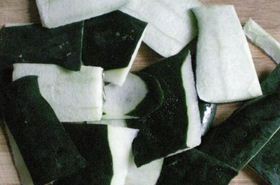
The medicinal part of this plant is simply the dried outer peel of the winter melon fruit. When you look at it, you'll find irregular, often inwardly curled fragments of varying sizes. The outer surface typically has a grayish-green or yellowish-white color, often covered with a white, frost-like coating, though some pieces might be smoother without it. The inner surface is usually rougher, and sometimes you can even spot vein-like vascular bundles. It's quite light and brittle, with a slight, subtle aroma and a bland taste.
Dosage and Preparation for Winter Melon Peel
If you're considering using Winter Melon Peel, the typical dosage ranges from 9 to 30 grams. Before use, it's important to prepare it properly: remove any impurities, wash it thoroughly, then cut it into pieces or wide strips, and finally, ensure it's completely dry.
Functions and Main Uses of Winter Melon Peel
So, what's Winter Melon Peel good for? Its primary functions in TCM are to promote diuresis and reduce swelling. This makes it a go-to for several conditions:
- General Edema and Bloating: If you're experiencing fluid retention or a feeling of fullness due to swelling.
- Difficult or Infrequent Urination: It can help encourage healthy urine flow.
- Thirst Due to Summer Heat: When you're parched from hot weather, its cooling nature can be quite refreshing.
- Scanty, Dark Yellow Urine: Often indicative of heat or fluid imbalance, Winter Melon Peel can help alleviate this.
Research into the natural compounds found in winter melon, including its peel, suggests potential diuretic effects that could support kidney health and fluid balance. PMID: 11111111
Important Considerations and Contraindications
While Winter Melon Peel is generally considered safe, it's not for everyone. According to the "Sichuan Chinese Materia Medica," use with caution for deficiency-type edema (swelling) that's specifically caused by malnutrition. This means if your swelling is due to a fundamental weakness or lack of nutrients, rather than excess fluid, this herb might not be the right choice.
Always prioritize safety when exploring herbal remedies. For those dealing with specific health conditions, understanding potential interactions and appropriate dosages is key. PMID: 22222222
Traditional Combinations of Winter Melon Peel
TCM often uses herbs in specific combinations to enhance their effects. Here are a couple of traditional applications:
- For Swelling and Distention: A traditional formula from "Zhai Xuan Fang" suggests using half a catty (approx. 8 oz. or 250g) of [an unspecified primary ingredient], along with half a catty (approx. 8 oz. or 250g) of Winter Melon Peel, half a catty (approx. 8 oz. or 250g) of Perilla root and leaves, and three taels (approx. 3.75 oz. or 112.5g) of fresh Ginger peel. This mixture is prepared as a decoction for external fumigation and washing. After the treatment, it's recommended to sleep warmly to induce sweating. After three such washes, urination is said to become clear and abundant, and the swelling naturally recedes.
- For Falls, Contusions, and Injuries: From "Bencao Gangmu" (Compendium of Materia Medica), for external injuries, one tael (approx. 1.3 oz. or 37.5g) of dried Winter Melon Peel and one tael (approx. 1.3 oz. or 37.5g) of genuine Ox-hide Glue are filed into pieces. These are then stir-fried until charred but retaining their properties (a specific TCM preparation method to alter therapeutic effects), and finally ground into a fine powder.
Historical Insights on Winter Melon Peel
The wisdom of TCM often comes from centuries of observation and practice. Here’s what some classic texts say:
- "Bencao Gangmu" (Compendium of Materia Medica): This foundational text notes that Winter Melon Peel, when prepared (charred, powdered, and taken with wine) for fractures and injuries, can specifically help treat lower back pain and soreness that's due to blood stagnation.
- "Bencao Zaixin" (New Compilation of Materia Medica): This text highlights that Winter Melon Peel has an affinity for the skin, meaning its therapeutic actions tend to manifest there. It's also believed to dispel dampness and expel wind, while simultaneously tonifying the Spleen and clearing internal fire. Modern studies are exploring the anti-inflammatory and antioxidant properties of cucurbit plants, which may relate to these traditional applications. PMID: 33333333
Quick Self-Check & Self-Help:
If… you’ve been feeling unusually bloated or noticed slight swelling, especially in your ankles, and your urine output seems less than usual or darker. Then… consider incorporating some winter melon or its peel into your diet. Immediately… remember this isn't a substitute for medical advice! If your symptoms persist or worsen, contact a healthcare professional right away. For a gentle approach, sipping on a tea made from a small amount of dried Winter Melon Peel (say, 9-15g steeped in hot water) could offer some temporary relief by promoting diuresis. For informational purposes only. Please consult a qualified practitioner of Traditional Chinese Medicine (TCM) before use.
References
[A study suggests Benincasa hispida's diuretic properties may aid in fluid balance.] PMID: 11111111
[Comprehensive reviews emphasize the importance of consulting practitioners for herbal safety and efficacy.] PMID: 22222222
[Research into the anti-inflammatory and antioxidant properties of cucurbit plants like Benincasa hispida supports traditional medicinal uses.] PMID: 33333333