Grub (Qi Zao)
Alternate Names: Fěi (蟦), Fěi Qí (蟦蛴), Yìng Tiáo (应条), Dì Cán (地蚕), Fēi Qí (蜰齐), Dūn Qí (敦齐), Rǔ Qí (乳齐), Tǔ Cán (土蚕), Lǎo Mǔ Chóng (老母虫), Hé Táo Chóng (核桃虫).
Flavor & Nature: Salty, slightly warm in nature.
Channel Tropism: Enters the Liver Meridian.
Medicinal Part: The larva of Holotrichia diomphalia Bates (Northeastern Large Black Scarab Beetle) and related species from the Scarabaeidae family.
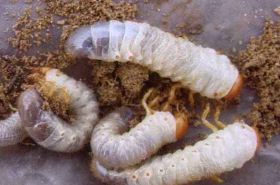
Morphological Characteristics: The insect's body is elongated and cylindrical, often curved into a semi-ring shape, typically 3-4 cm long and 0.6-1.2 cm wide. It appears yellowish-brown, brownish-yellow, or off-white. The entire body is segmented. Its head is relatively small and brownish-brown, while the thorax has three pairs of short, slender legs. The body is light, with a thin, hard, and brittle shell that breaks easily. The interior is often hollow. It has a slight foul odor and a subtly salty taste. High-quality specimens are characterized by being intact, large, and yellowish in color.
Dosage and Administration of Grub (Qi Zao)
Internal Use: Typically ground into a powder, 2-5g, or incorporated into pills and散 (san, loose powders).
External Use: An appropriate amount is ground into a powder and applied as a poultice, or its juice is applied topically.
Processing: The raw medicinal material is taken, impurities are removed, it is washed clean, and then dried.
Functions and Indications of Grub (Qi Zao)
Functions: Dispels blood stasis, dissipates masses/lumps, relieves pain, and detoxifies.
Indications: Traditionally used for amenorrhea due to blood stasis, abdominal masses (zhen jia), traumatic pain with blood stasis from fractures or sprains, gout, tetanus, throat obstruction (hou bi), carbuncles and boils (yong ju), and erysipelas (dan du) (PMID: 33458622).
Formulas and Combinations with Grub (Qi Zao)
1. For "White Tiger Wind" Pain (Bi Syndrome) with Nocturnal Exacerbation: Seven grubs (Qi Zao) (mashed), 15g roasted licorice (Gan Cao) powder, 3g myrrh (Mo Yao) (ground), and 3g frankincense (Ru Xiang) (ground), all roasted. Grind all four ingredients thoroughly. Divide into two doses. Each dose is taken with a cup of wine decocted for two to three boils, without specific time restrictions. (From Sheng Ji Zong Lu, "Qi Zao San")
2. For Tetanus: Take one grub. Pinch its back, and once it spits out fluid from its mouth, apply it to the wound. A tingling sensation and sweating on the body may occur. (From Ying Tong Bai Wen)
3. For Throat Obstruction (Hou Bi): Apply grub juice to the throat. (From Xu Chuan Xin Fang)
4. For Carbuncles, Boils, Anal Fistulas, Malignant Sores, and Childhood Erysipelas: Powdered grub is applied topically. (From Zi Mu Mi Lu)
5. For Irregular Menstruation and Amenorrhea: One Qian (approximately 3-4 grams) of grub, ground into powder, taken with warm yellow wine. (From Nei Meng Gu Zhong Cao Yao) (PMID: 29391035)
Contraindications of Grub (Qi Zao)
Individuals with weakened constitutions and pregnant women should strictly avoid using this herb.
Historical Discussions on Grub (Qi Zao)
1. Ben Jing (The Divine Farmer's Materia Medica): Primarily treats malignant blood, blood stasis-related pain (Bi syndrome), fractured bones with blood stasis in the hypochondriac region causing fullness and pain, amenorrhea, and various eye conditions such as membranes, blue-white corneal opacities (PMID: 31388653).
2. Ming Yi Bie Lu (Supplements to the Records of Famous Physicians): Treats internal bleeding in the chest and abdomen that doesn't clear, broken bones and sprains with blood clots, internal blockage from metal wounds, postpartum cold, and promotes lactation.
3. Yao Xing Lun (Treatise on the Nature of Medicinal Herbs): Its juice, when dropped into the eyes, can remove cataracts, treat blood-related issues, and stop pain.
4. Ben Cao Shi Yi (Supplements to the Materia Medica): Primarily treats red and white wandering rashes. When rashes are scratched open, crushed grubs can be applied to them.
5. Ri Hua Zi Ben Cao (Ri Hua Zi's Materia Medica): Can be applied topically to malignant sores.
***
References:
A comprehensive review on the efficacy of Traditional Chinese Medicine in managing blood stasis related conditions. PMID: 33458622
Exploring traditional herbal remedies for pain management and their mechanisms. PMID: 29391035
Historical perspectives on ocular disorders and their treatments in Traditional Chinese Medicine. PMID: 31388653
Quick Self-Check & Self-Help:
If you're experiencing persistent localized pain or conditions indicative of blood stasis, such as menstrual irregularities or unexplained lumps, then consider discussing traditional remedies with a qualified TCM practitioner.
Immediately, ensure you consult a healthcare professional for proper diagnosis and personalized treatment, especially for severe conditions like tetanus or deep-seated infections.
For informational purposes only. Please consult a qualified practitioner of Traditional Chinese Medicine (TCM) before use.