Achyranthes Root
Aliases: Radix Achyranthis Bidentatae, Bai Bei, Niu Jing, Jiao Si Deng, Tie Niu Xi, Du Niu Xi, Huai Niu Xi, Huai Xi, Zhen Xi, Huai Xi, Tu Niu Xi, Huai Niu Xi, Hong Niu Xi, Niu Ke Xi, Niu Ke Xi, Niu Gai Xi, Nian Cao Zi Gen, Niu Ge Xi Gai, Ye Niu Chong Xi, Niu Gai Xi Tou.
Flavor/Nature: Bitter, Sour, Neutral.
Meridian Tropism: Liver Meridian, Kidney Meridian.
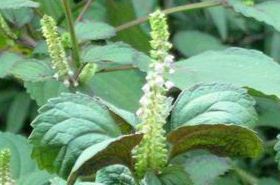
Medicinal Part: The dried root of Achyranthes bidentata Blume, a plant from the Amaranthaceae family.
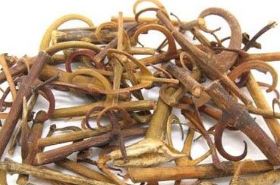
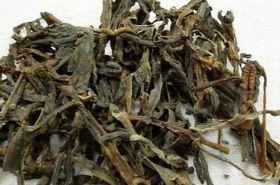
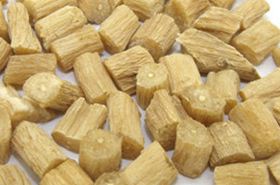
Morphological Characteristics: This herb appears as a slender, cylindrical root, slightly curved. It's a bit thicker at the top and tapers towards the bottom, typically measuring 15-50 cm (approximately 6-20 inches) in length and 0.4-1 cm (approximately 0.16-0.4 inches) in diameter. Its surface is grayish-yellow or light brown, marked with fine, slightly twisted longitudinal wrinkles, elongated horizontal lenticels, and scattered fine root scars. The texture is hard and brittle, easily broken, but becomes soft when exposed to moisture. The cross-section is flat, yellowish-brown, slightly horny, and somewhat oily. The central vascular bundle (xylem) is relatively large and yellowish-white, surrounded by numerous scattered dot-like vascular bundles arranged in 2-4 rings. It has a faint aroma and a slightly sweet, yet somewhat bitter and astringent taste.
Dosage and Administration for Achyranthes Root
Internal Use: Typically prepared as a decoction, 5-15g; or steeped in wine; or incorporated into pills or powders.
External Use: Apply an appropriate amount as a poultice; or crush and drip the juice into the nose; or grind into powder and sprinkle into tooth gaps.
Preparation: Remove any impurities, wash thoroughly, moisten to soften, remove rootlets (or fibrous stem base), cut into sections, and sun-dry.
Efficacy and Indications of Achyranthes Root
Efficacy: Achyranthes Root is traditionally used to nourish the Liver and Kidneys, strengthen sinews and bones, promote urination and clear painful urination (stranguria), and guide blood downwards to relieve stagnation.
Indications: It is traditionally used to address conditions such as stranguria (painful, difficult urination), hematuria (blood in urine), amenorrhea (absent menstruation), abdominal masses (Zheng Jia, often due to blood stasis), difficult labor, retained placenta, postpartum abdominal pain due to blood stasis, throat impediment (Huo Bi, referring to severe sore throat or swelling), carbuncles and boils, traumatic injuries, limb contractures (spasms and contractions of the four limbs), and flaccid paralysis (Wei Bi).
Traditional Formulas and Combinations with Achyranthes Root
① For difficult urination, excruciating pain in the urethra, and women's abdominal pain with hard masses due to blood stagnation: Take a handful of Achyranthes root with leaves (any amount), decoct it with wine, and drink. (From *Zhou Hou Fang*)
② For amenorrhea in young women with hard masses below the navel, as large as a cup or liter, accompanied by intermittent fever, dysentery, and emaciation, diagnosed as Xue Jia (blood mass): Dry Lacquer (finely pounded and stir-fried until no smoke) and Achyranthes root (soaked in wine overnight), each 1.6 liang (as powder). Take 4.8 liang of Rehmannia root (Sheng Di Huang), extract its juice, and slowly decoct it over low heat to form pills the size of a parasol seed. Take two pills on an empty stomach with rice water or warm wine, twice daily. Do not arbitrarily increase the dosage. Discontinue medication once the illness resolves. (From *San Yin Fang*, Wan Bing Wan)
③ For sudden Zheng (abdominal masses) with stone-like objects in the abdomen, stabbing pain, and constant crying day and night: Take 2 jin of Achyranthes root, soak it in 1 dou of wine, seal it, and warm it over hot charcoal until the flavor emerges. Drink 5 ge to 1 sheng, adjusting the dosage according to individual tolerance. (From *Bu Que Zhou Hou Fang*)
④ For retained placenta: Achyranthes root 8 liang, Mallow Seeds (Dong Kui Zi) 1 liang. Decoct with 9 sheng of water to yield 3 sheng, divide into three doses. (From *Mei Shi Ji Yan Fang*)
⑤ For historical methods of abortion (expelling the fetus): Use 1 liang of male Tu Niu Xi (Achyranthes root, *Achyranthes aspera*), 1 qian of genuine Musk, pound them evenly, melt wax and roll into a long strip, and historically, this was inserted into the vagina to induce abortion. (From *Yao Jian*)
SAFETY WARNING: NEVER attempt to self-induce abortion with herbal remedies. This is an extremely dangerous practice and can lead to severe complications, injury, or death. Always consult with a qualified medical professional for reproductive health concerns.
⑥ For throat impediment (Huo Bi, severe sore throat) and tonsillitis (Ru E): Take a handful of fresh Achyranthes root, seven Artemisia leaves. Pound them, mix with human milk, extract the juice, and instill into the nostrils. Shortly thereafter, phlegm will be discharged from the mouth and nose. Artemisia leaves can be omitted. (From *Ben Cao Gang Mu*)
⑦ For carbuncles and boils that have already ulcerated: Slightly scrape the skin off an Achyranthes root, insert it into the sore opening, leaving half an inch exposed. Take a handful each of tender orange leaves and Knotweed (Di Jin Cao), pound them, and apply over the root, replacing as it dries. (From *Chen Ri Hua Jing Yan Fang*)
⑧ For sores and ulcerations in the mouth and on the tongue: Soak Achyranthes root in wine and gargle with it. If no wine is available, simply holding it in the mouth is also effective. (From *Zhou Hou Fang*)
⑨ For wind-itchy urticaria, bone tuberculosis (Gu Ju), and leprosy: Grind Achyranthes root into powder, take one fangcun bi (a square spoon's worth) with wine, three times daily. (From *Qian Jin Fang*)
⑩ For pain from metal wounds (traumatic injuries): Pound fresh Achyranthes root and apply as a poultice to the wound. (From *Mei Shi Ji Yan Fang*)
⑪ For rheumatic arthralgia (Bi syndrome) with lower back pain and weakness: Achyranthes root 1 liang (remove sprouts), Cinnamon bark (Gui Xin) 0.3 liang, Cornus fruit (Shan Zhu Yu) 1 liang. Grind the above ingredients into a fine powder. Before meals, take 2 qian mixed with warm wine. (From *Sheng Hui Fang*)
⑫ For carbuncles and boils that have already ulcerated: Slightly scrape the skin off an Achyranthes root, insert it into the sore opening, leaving half an inch exposed. Take a handful each of tender orange leaves and Knotweed (Di Jin Cao), pound them into a paste, and apply over the sore.
⑬ For "Crane's Knee Wind" (He Xi Feng, a type of knee joint pain/swelling): Achyranthes root, Papaya (Mu Gua), Acanthopanax bark (Wu Jia Pi), Drynaria rhizome (Gu Sui Bu), Honeysuckle flower (Jin Yin Hua), Viola herb (Zi Hua Di Ding), Phellodendron bark (Huang Bai), Stephania root (Bi Xie), Chrysanthemum root (Gan Ju Gen). Decoct with water and take orally. (From *Ben Cao Hui Yan*)
⑭ For flaccid paralysis (Wei Bi), deficiency and emaciation, strengthening sinews and bones, and dispelling chronic malaria: Decoct Achyranthes root juice and mix with fermented rice to brew wine, or chop the root, place in a bag, soak in wine, then decoct and drink. (From *Ben Cao Gang Mu*, Niu Xi Jiu)
⑮ For chronic persistent malaria: Take a "tiger's mouth" (a traditional measure) of large, long Achyranthes root. Cut it, decoct with 6 sheng of water to yield 2 sheng. Divide into two doses: the first dose should be taken one mealtime before the expected onset, and the second dose just before the onset. (From *Qian Jin Fang*)
⒃ For dysentery with initial red and then white discharge: Achyranthes root 3 liang. Pound it, soak in 1 sheng of wine overnight. Drink two cups per dose, three times daily. (From *Zhou Hou Fang*)
⒄ For insatiable thirst (Xiao Ke, often referring to diabetes-like symptoms) with deficiency and damage to the lower Jiao: Achyranthes root 5 liang, finely chopped and powdered. Immerse in 5 sheng of Rehmannia root juice (Sheng Di Huang Zhi), expose to sun during the day and soak overnight until the juice is fully absorbed. Form into honey pills the size of a parasol seed. Take thirty pills on an empty stomach with warm wine. (From *Jing Yan Hou Fang*)
⒅ For chronic malaria: Take a handful of fresh, long Achyranthes root, slice it, add 6 sheng of water, decoct to yield 2 sheng. Divide into three doses (one in the early morning, one before the expected malaria attack, and one at the time of the attack).
⒆ For insatiable thirst (Xiao Ke) due to deficiency of the lower Jiao: Grind Achyranthes root 5 liang finely, immerse in 5 sheng of Rehmannia root juice. Sun-dry during the day and soak overnight until the juice is fully absorbed. Add honey and form into pills the size of a parasol seed. Take thirty pills on an empty stomach with warm wine. Prolonged use is beneficial for the body.
⒇ For women's blood disorders (menstrual obstruction, amenorrhea, periumbilical cold Shan pain, postpartum vital energy and blood imbalance, various unresolved abdominal masses [Zheng Jia]): Soak Achyranthes root in wine overnight, then remove and bake dry; separately, stir-fry lacquer until no smoke appears. Grind each to 1 liang of powder. Add 1 sheng of Rehmannia root juice, slowly decoct over low heat into a thick paste, form into pills the size of a parasol seed. Take three pills on an empty stomach with rice water. This formula is named Wan Bing Wan (Ten Thousand Illnesses Pill).
(21) For toothache: Gargle with powdered Achyranthes root, or apply the ash of burnt Achyranthes root to the affected area.
(22) For malignant sores (unidentified): Pound Achyranthes root and apply as a poultice.
Contraindications for Achyranthes Root
It is contraindicated for individuals with Sinking Qi of the Middle Jiao, spleen deficiency causing diarrhea, unstable lower Jiao (such as incontinence or weak lower back), seminal emission, excessive menstruation, and especially pregnant women.
① According to *Ben Cao Jing Ji Zhu*: It is antagonistic to Fireflies (Ying Huo), Tortoise Plastron (Gui Jia), and Lycopus lucidus (Lu Ying). It is incompatible with Cynanchum stauntonii (Bai Qian).
② According to *Pin Hui Jing Yao*: Not to be taken by pregnant women.
③ According to *Ben Cao Jing Shu*: Should not be used for recent amenorrhea if pregnancy is suspected; should not be included in prescriptions for the Upper Jiao; contraindicated for uncontrollable menorrhagia (profuse uterine bleeding).
④ According to *Ben Cao Tong Xuan*: Should be avoided by those experiencing seminal emission.
⑤ According to *Ben Cao Zheng*: Should be avoided by those with cold in the Zang organs leading to loose stools and unstable lower Jiao.
⑥ According to *Yao Pin Hua Yi*: Not suitable for individuals with diarrhea and dysentery due to spleen deficiency, especially if accompanied by leg and knee soreness and pain.
⑦ According to *De Pei Ben Cao*: Contraindicated for deficiency of Middle Qi and spontaneous urination (frequent urination).
References
Achyranthes bidentata extract shows potential in promoting bone formation in osteoporosis models. PMID: 29051834
Polysaccharides from Achyranthes bidentata demonstrate anti-inflammatory effects by modulating inflammatory pathways. PMID: 32624513
Studies suggest Achyranthes bidentata may influence blood circulation by inhibiting platelet aggregation and promoting fibrinolysis. PMID: 34978013
Quick Check & Action Plan
3-Second Self-Assessment:
- If you're experiencing chronic lower back pain, knee weakness, or menstrual irregularities and are not pregnant, it might be related to Liver and Kidney disharmony.
- If you're suffering from painful urination or unexplained abdominal masses, and other medical conditions have been ruled out.
- If you have a history of blood stasis symptoms like severe menstrual pain or retained placenta (in the past, for historical context).
30-Second Self-Help (Consult a TCM Practitioner Immediately):
- If you suspect you have any of the mentioned conditions, then immediately seek consultation with a qualified Traditional Chinese Medicine practitioner. They can accurately diagnose your condition and determine if Achyranthes Root, or a formula containing it, is appropriate and safe for your specific situation.
- If you are pregnant, trying to conceive, or have any pre-existing medical conditions, then absolutely avoid self-prescribing and consult your healthcare provider or a TCM expert before considering any herbal remedies.
For informational purposes only. Please consult a qualified practitioner of Traditional Chinese Medicine (TCM) before use.