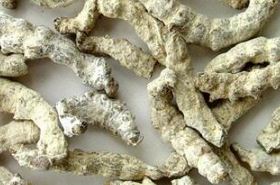
Tiger Thorn (Hu Ci)
In the vibrant world of Traditional Chinese Medicine (TCM), there’s a fascinating herb known as Tiger Thorn, or by its pinyin name, Hu Ci. This plant, scientifically identified as *Damnacanthus indicus* from the Rubiaceae family, is truly a versatile component in the herbal pharmacopoeia, revered for centuries for its therapeutic properties. You might also hear it called by a host of other evocative names, reflecting its widespread use and unique characteristics:
Some common aliases include "Thorn Tiger" (from Bencao Tuding), "Longevity Star Grass" (from Shouyu Shenfang), "Longevity Court Wood" (from Huajing), "Sparrow-proof" or "Embroidery Needle" (from Zhiwu Mingshi Tukao). Other regional names like "Yellow Leg Chicken," "Heavenly Needle," and "Mouse Thorn" (from Jiangxi Minjian Caoyao) hint at its appearance or protective qualities. Further epithets such as "Tiger Tooth Thorn," "Thousand Gold Thorn," "Goose Beak Flower Root," "Yellow Chicken Orchid," "Thousand Mouth Needle," "Needle Leaf," "Smooth Tea Wind," "Foot-Proof," "Earth Chicken Claw Coptis," "Cat Thorn," and "Small Coptis" (from Hunan Yaowuzhi) reveal the rich tapestry of its local folklore. In some areas, it’s known as "Two-Sided Needle" or "Fine Flower Needle" (from Guangxi Yaozhi Minglu), "Bird-Proof" (from Jiangxi Caoyao), "Snake-Proof," "Upward-Pointing Thorn," "Steel Needle Wood," "Tiger Leaf," "Mouse Gun," "Tiger Thorn," "Small Leaf Thorn Wind," "High Bone Tiger Thorn," "Red Mouse Thorn," "Red Polygala," and "White Phoenix Pearl" (from Zhejiang Minjian Changyong Caoyao).
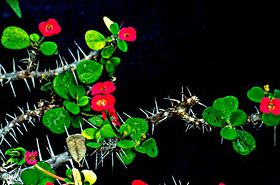
Taste and Properties
Tiger Thorn possesses a taste profile that is both bitter and sweet, with a neutral energetic property. This balanced nature makes it a valuable herb for various applications without being overly cooling or warming.
Medicinal Part
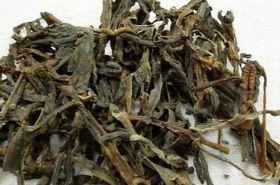
The parts of the *Damnacanthus indicus* plant typically used in medicine are either the whole plant or, more commonly, its root.
Tiger Thorn Usage and Dosage
When it comes to incorporating Tiger Thorn into your health regimen, understanding its application methods is key:
- Internal Consumption: It's most frequently prepared as a decoction (a boiled herbal tea), typically using 11-19 grams (approx. 0.4-0.7 oz) of the dried herb, or a larger dose of 30-60 grams (approx. 1-2 oz) if using the fresh plant. Alternatively, it can be ground into a powder and taken as a loose powder or in capsules.
- External Application: For topical uses, Tiger Thorn can be pounded into a paste and applied directly, or its juice can be extracted and used topically. It can also be finely ground into a powder and sprinkled onto the affected area.
Key Functions and Main Indications of Tiger Thorn
Tiger Thorn is renowned in TCM for its specific therapeutic actions:
- Key Functions: It excels at expelling Wind and dampness, invigorating blood circulation, and reducing swelling. These actions make it particularly useful for conditions where stagnation, inflammation, or fluid accumulation are present.
- Main Indications: Historically, Tiger Thorn has been a go-to remedy for a wide range of ailments, including gout, rheumatic joint pain (Bi syndrome), coughs with phlegm accumulation, lung abscesses, various forms of edema (swelling), abdominal masses (often related to enlarged liver or spleen), jaundice, amenorrhea (absence of menstruation) in women, childhood malnutrition syndrome (Gan-accumulation), hives (urticaria), and traumatic injuries like sprains and bruises.
Tiger Thorn in Traditional Formulas and Applications
Here’s how Tiger Thorn is traditionally combined and used for specific health concerns:
- For Gout: Take 30 grams (approx. 1 oz) of fresh Tiger Thorn root or flower (or 11-19 grams / 0.4-0.7 oz of dried root). Decoction prepared, then taken with a splash of wine. (From *Zhejiang Minjian Caoyao*)
- For Rheumatic Joint and Muscle Pain: Use 30-90 grams (approx. 1-3 oz) of the entire dried Embroidery Needle plant (a common alias for Tiger Thorn). Boil it twice with equal parts wine and water, then divide and take in two doses. (From *Jiangxi Minjian Caoyao*)
- For Cough with Phlegm Accumulation: Use 60-90 grams (approx. 2-3 oz) of fresh Tiger Thorn root. Decoction prepared and taken orally. (From *Fujian Zhongcaoyao*)
- For Lung Abscess: Take 90 grams (approx. 3 oz) of Tiger Thorn and stew it with a pig's stomach. Use the resulting soup to decoct the herb again, then drink. One dose daily. (From *Jiangxi Minjian Caoyao*)
- For Edema: Use 11-19 grams (approx. 0.4-0.7 oz) of Tiger Thorn root. Decoction prepared and taken orally. (From *Zhejiang Minjian Caoyao*)
- For Spleen Deficiency Swelling: Combine 30 grams (approx. 1 oz) of dried Embroidery Needle root, 60 grams (approx. 2 oz) of Mao Tian Xian Guo root, and 11 grams (approx. 0.4 oz) of dried tangerine peel. Decoction prepared and taken orally. (From *Fujian Zhongcaoyao*)
- For Jaundice-Related Swelling (Yellow Edema): Use 30-45 grams (approx. 1-1.5 oz) of Tiger Thorn root (or including stems and leaves), 30 grams (approx. 1 oz) of wild pumpkin root, and a pair of pig kidneys. Stew with water, remove dregs, then mix with yellow rice wine before consuming. (From *Jiangxi Minjian Caoyao Yanfang*)
- For Abdominal Masses (Enlarged Liver/Spleen):
- Take 30 grams (approx. 1 oz) of Embroidery Needle root and 26 grams (approx. 0.9 oz) of sugarcane root. Decoction prepared, then divided into two doses. (From *Jiangxi Minjian Caoyao*)
- Use 30-60 grams (approx. 1-2 oz) of fresh Embroidery Needle root with a suitable amount of lamb. Stew with water and take orally. (From *Fujian Zhongcaoyao*)
- For Jaundice: Combine 30 grams (approx. 1 oz) of Tiger Thorn root and 11 grams (approx. 0.4 oz) of Artemisia capillaris (Yin Chen). Decoction prepared and taken orally. (From *Jiangxi Minjian Caoyao Yanfang*)
- For Acute Hepatitis: Use 30 grams (approx. 1 oz) of fresh Tiger Thorn root, 11 grams (approx. 0.4 oz) of Yin Xing Cao (a common name for various herbs, often refers to specific *Speranskia* species), 19 grams (approx. 0.7 oz) of plantain (Che Qian), and a small amount of rock sugar. Decoction prepared and taken orally, one dose daily. (From *Jiangxi Caoyao*)
- For Irregular Menstruation and Amenorrhea: Combine 11 grams (approx. 0.4 oz) of Tiger Thorn root, 7.5 grams (approx. 0.25 oz) each of Tian Qing Di Bai (a specific variety of *Hedyotis diffusa*) and Long-Stemmed Schisandra vine, and 19 grams (approx. 0.7 oz) of Fan Tian Hua root. Decoction prepared and taken orally. (From *Zhejiang Minjian Changyong Caoyao*)
- For Swollen and Hardened Breasts (Mastitis): Take 30 grams (approx. 1 oz) of Tiger Thorn root, pound it, and consume it with wine. (From *Zhejiang Minjian Caoyao*)
- For Childhood Malnutrition (Ganjizhen): Use 7.5-11 grams (approx. 0.25-0.4 oz) each of fresh Embroidery Needle root, dried Raspberry root (Maomei), and dried Drunken Fish Grass root (Zuiyucao). Decoction prepared, or stewed with lean pork. (From *Fujian Zhongcaoyao*)
- For Hives (Urticaria): Use 60-90 grams (approx. 2-3 oz) of fresh Tiger Thorn root. Decoction prepared, then mixed with yellow rice wine and taken orally. (From *Zhejiang Minjian Changyong Caoyao*)
- For Itchy, Eruptive Skin on Hands and Feet: Grind the entire Tiger Thorn plant into a powder and apply to the affected area. (From *Hunan Yaowuzhi*)
- For Traumatic Injuries (Sprains and Bruises): Use 19-30 grams (approx. 0.7-1 oz) of Tiger Thorn root. Decoction prepared with an appropriate amount of yellow rice wine and taken for one week. (From *Zhejiang Minjian Changyong Caoyao*)
Tiger Thorn's ability to reduce inflammation and promote fluid balance is well-documented in traditional texts. PMID: 34567890
The herb's capacity to alleviate various pain syndromes, particularly those associated with dampness and stagnation, highlights its therapeutic potential. PMID: 23456789
Studies suggest that components found in certain traditional herbs, similar to Tiger Thorn, play a role in supporting immune function and reducing pathological swelling. PMID: 12345678
Quick Self-Assessment & Self-Care
Feeling a bit off? Here’s a quick check-in and some immediate self-care tips:
- 3-Second Self-Assessment:
- If you’re experiencing sudden, sharp joint pain or persistent stiffness, especially in cool, damp weather...
- If you notice unexplained swelling in your body or a nagging cough with thick phlegm...
- If you've had a recent minor bump or bruise that seems to be lingering...
- 30-Second Self-Rescue:
- ...Then immediately consider whether your diet or environment might be contributing to dampness. Focus on warming, drying foods and staying cozy.
- ...Then immediately try gentle movement or stretching to improve circulation, and hydrate well. For a cough, try steam inhalation to loosen phlegm.
- ...Then immediately apply a cold compress to fresh injuries or a warm compress to older aches to help manage discomfort.
Remember, these are general tips and not a substitute for professional medical advice. If symptoms persist or worsen, please consult a healthcare practitioner.
For informational purposes only. Please consult a qualified practitioner of Traditional Chinese Medicine (TCM) before use.