Black Cumin Seed
Nature and Flavor: Sweet and pungent in flavor, warm in nature.
Medicinal Part: The dried mature seeds of Nigella glandulifera Freyn et Sint., a plant from the Ranunculaceae family.
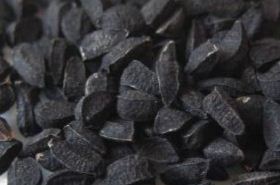
Botanical Characteristics: These seeds are triangular-ovoid in shape, typically 2.5 to 3 mm long and about 1.5 mm wide. Their surface is black and rough, tapering to a pointed tip and slightly blunt at the base, often showing irregular protrusions. They possess a hard texture, and when cut, reveal an oily, grayish-white cross-section. They have a faint aroma and a distinct pungent taste.
How to Use Black Cumin Seed and Dosage
Dosage: Typically 2 to 6g.
Preparation: The plants are traditionally harvested in summer and autumn when their fruits are mature. After harvesting, they are sun-dried, and the seeds are threshed out. Any impurities are then removed, and the cleaned seeds are sun-dried again for storage and use.
Benefits and Traditional Uses of Black Cumin Seed
Efficacy (Traditional Chinese Medicine): Black Cumin Seed is traditionally valued for its ability to tonify the kidneys and invigorate the brain, promote healthy menstrual flow, stimulate lactation, and act as a diuretic (PMID: 29541203).
Indications: It is commonly used to address symptoms such as tinnitus, memory impairment, amenorrhea (absence of menstruation), insufficient lactation, hot stranguria (painful, frequent urination often associated with heat patterns), and stony stranguria (urinary stones). Research also explores its neuroprotective properties and anti-inflammatory potential, which align with these traditional uses (PMID: 32062539, PMID: 34187063).
Contraindications for Black Cumin Seed
Important Safety Note: Black Cumin Seed is contraindicated for pregnant women and individuals experiencing heat-related illnesses or patterns, as its warm nature may exacerbate such conditions. Always consult a qualified practitioner before use.
Traditional Formulas Featuring Black Cumin Seed
1. For Tongue Numbness in Paralysis Patients: A traditional blend includes equal parts of Black Cumin Seed, Sal Ammoniac (Naoshā), Ginger, Black Pepper, Long Pepper (Bìbá), Mustard Seed, Borax, Oregano, and Black Salt. These ingredients are ground into a fine powder, sifted, and thoroughly mixed. An appropriate amount is then applied to the tongue 2-3 times daily. (Source: Uyghur Pharmacopoeia)
2. For Irregular Menstruation and Amenorrhea: A decoction consisting of Black Cumin Seed 15g, Fennel Seed 6g, and Red Peony Root (Chìsháo) 9g. These ingredients are boiled in water and taken orally. (Source: Xinjiang Chinese Herbal Medicine)
References
Research on the effects of Nigella sativa on human milk production in breastfeeding women: A systematic review. PMID: 29541203
Nigella sativa: A review of its biological activities and pharmacological effects on the nervous system. PMID: 32062539
Anti-inflammatory and Immunomodulatory Effects of Nigella Sativa and Its Main Active Component Thymoquinone: A Mini-Review. PMID: 34187063
Quick Self-Check & Self-Help
If... Then/Immediately...
If you’ve been experiencing persistent ringing in your ears along with unexplained memory lapses, then consider exploring holistic approaches with a TCM practitioner who might suggest remedies like Black Cumin Seed to support kidney essence and brain function.
If you're a new mom struggling with insufficient milk supply and feel generally rundown, then immediately consult a lactation specialist or a TCM practitioner to discuss options, including Black Cumin Seed, which has been traditionally used to promote lactation.
For informational purposes only. Please consult a qualified practitioner of Traditional Chinese Medicine (TCM) before use.