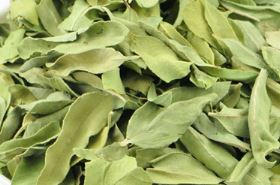
Euonymus alatus
Known by various names such as Weimao, Guijian, Six-Month Ling, Four-Sided Edge, Castor Wood, Four-Edged Tree, Mountain Chicken Twig, Four-Pronged Halberd, Swelling Dissolver, and Anesthetic Herb, Euonymus alatus is a prominent herb in Traditional Chinese Medicine.
Its taste is bitter and pungent, and its energetic property is cold.
It primarily acts upon the Liver Meridian.
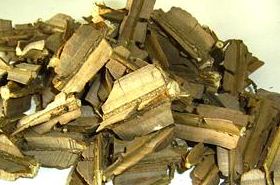
The medicinal part used is the winged branches or the winged appendages of the Euonymus alatus plant (scientific name: Euonymus alatus, a species from the Celastraceae family).
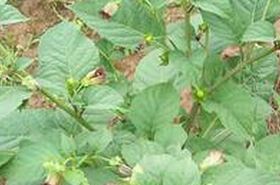
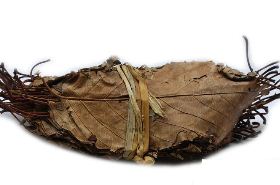
Morphological Characteristics: These are cylindrical branches featuring distinct wing-like structures, often multi-branched at the top, typically 40-60 cm in length, with a diameter of 2-6 mm. The surface is somewhat rough, ranging from dark grayish-green to grayish-yellow-green, marked with longitudinal lines and lenticels. The lenticels are longitudinally arranged, grayish-white, slightly raised, and gently curled outwards. The wing-like structures are flattened, slightly thicker near the base and gradually thinning outwards, measuring 4-10 mm in width and approximately 2 mm in thickness. Their surface is deep grayish-brown to dark brownish-red, featuring fine, long, straight textures or slightly wavy patterns. These wings are very prone to peeling off, so broken marks are commonly seen on the branches. The branches themselves are hard and tenacious, difficult to break. A cross-section reveals a pale yellowish-white, coarse fibrous texture. The herb has a faint aroma and a slightly bitter taste.
Dosage and Administration of Euonymus alatus
Internal Use: Typically prepared as a decoction, with a dosage of 4-9g. It can also be steeped in wine or incorporated into pills and powders.
External Use: An appropriate amount can be pounded and applied topically, or decocted for washing affected areas. It can also be ground into a fine powder and mixed with a medium for topical application.
Functions and Indications of Euonymus alatus
Functions: It actively breaks up blood stasis, unblocks menstruation, clears toxins, reduces swelling, and eliminates parasites.
Indications: It is traditionally used to address amenorrhea (absence of menstruation), abdominal masses or accumulations, postpartum abdominal pain resulting from blood stasis, and abdominal pain caused by parasitic accumulation.
Formulas and Combinations featuring Euonymus alatus
Here are some traditional formulas utilizing Euonymus alatus:
① To treat postpartum blood stasis that fails to disperse, hard abdominal masses (兒枕塊) with intermittent pain, and cases where new mothers, vulnerable after childbirth, experience internal invasion of wind and cold, leading to sluggish lochia, and abdominal distension and hardness with pain: Red Flower (Honghua), Euonymus alatus (Guijian, with the inner woody core removed), and Chinese Angelica Root (Danggui, stems removed, stir-fried), each one ounce. Grind the above into a coarse powder. For each dose, take three qian (approximately 9g), decoct in a large cup of wine until reduced to seven parts. Remove the dregs and take warm before porridge. (From "Ju Fang" Danggui San)
② To treat severe postpartum blood stasis approaching collapse: Chinese Angelica Root (Danggui) one ounce, Euonymus alatus two ounces. Coarsely pound and sift these two ingredients. For each dose, take three qian-bi (approximately 9g), decoct in one cup of wine until reduced to six parts. Remove the dregs and take warm. Repeat consecutively. (From "Sheng Ji Zong Lu" Danggui Yin)
③ To treat sudden onset chest pain (惡疰心痛), sharp stabbing pain in the abdomen or hypochondriac region, or migratory pain in the shoulders and back: Euonymus alatus, Peach Kernel (Taoren, soaked in water, peeled, tips removed, stir-fried until slightly yellow with wheat bran), Red Peony Root (Chishao), Podophyllum (Guijiu, whiskers removed), Dried Tangerine Peel (Chenjupi, soaked in water, white pith removed, baked), Chinese Angelica Root (Danggui, chopped, slightly stir-fried), Cinnamon Bark (Gui xin, or Rougui), Bupleurum Root (Chaihu, sprouts removed), Cinnabar (Zhusha, finely ground), each one ounce. Raw Rhubarb (Chuan Dahuang) two ounces (chopped, ground, slightly stir-fried). Grind the above herbs into a fine powder, then add Cinnabar and mix well. For each dose, take one qian (approximately 3g) at any time, mixed with warm wine. (From "Sheng Hui Fang" Guijianyu San)
④ To treat women with insufficient breast milk: Euonymus alatus five ounces. Boil in six liters of water until reduced to four liters. Take eight ge (approximately 80ml) per dose, three times daily. Alternatively, burn it to ash and take one fangcun bi (approximately 1.5-2g) with water, three times daily. (From "Qian Jin Yao Fang" Dan Xing Guijian Tang)
⑤ To treat malaria: Euonymus alatus and Pangolin Scales (Lingli Jia, or Chuan Shan Jia, calcined to retain properties) each one fen (approximately 0.3g). Pound and sift these two ingredients into a fine powder. For each dose, take one zi (a very small amount, typically the size of a grain of rice) and snort it into the nose, just before the onset of symptoms. (From "Sheng Ji Zong Lu" Yizi San)
⑥ To treat abdominal masses: Euonymus alatus 6g, Red Peony Root (Chishao) 9g, Safflower (Honghua) 9g, Sappanwood (Sumu) 3g. Decocted in water for oral administration. (From "Liaoning Common Chinese Herbal Medicines Handbook")
⑦ To treat amenorrhea and abdominal pain due to blood stasis: Euonymus alatus 9g, Salvia Root (Danshen) 15g, Red Peony Root (Chishao) 12g, Motherwort (Yimucao) 30g, Cyperus Rhizome (Xiangfu) 9g. Decocted in water for oral administration. (From "Shandong Chinese Herbal Medicines Handbook")
⑧ To treat irregular menstruation: Euonymus alatus stems and branches 15g. Decocted in water, then add brown sugar for oral administration. (From "Hunan Materia Medica")
⑨ To treat menorrhagia (excessive uterine bleeding): Euonymus alatus 10g, Chinese Angelica Root (Danggui) 10g, Licorice Root (Gancao) 10g. Decocted in water, taken orally twice. (From "Northeast Medicinal Plants")
⑩ To treat postpartum collapse from blood stasis, with fainting and near-death symptoms: Euonymus alatus one ounce, Chinese Angelica Root (Danggui) one ounce (chopped, slightly stir-fried), Motherwort (Yimucao) one ounce. Pound these ingredients into a fine powder. For each dose, at any time, mix two qian (approximately 6g) with half a cup of pre-warmed young boy's urine and half a cup of wine. (From "Sheng Hui Fang" Guijianyu San)
⑪ To treat wind entering the heart and abdomen, causing cramping and spasms: A piece of Euonymus alatus the size of a chicken egg, baked Licorice Root (Gancao) one chi (approximately 30cm, baked, chopped), Ephedra (Mahang) four ounces (root and nodes removed, decocted, skimmed of foam, baked dry), a piece of Gypsum (Shigao) the size of a chicken egg. Coarsely pound and sift these four ingredients. For each dose, take five qian-bi (approximately 15g), decoct in one and a half cups of water until reduced to eight parts. Remove dregs and take one dose on an empty stomach and one before bed. Strictly avoid external wind. **(Please Note: This formula contains Ephedra (Mahang). Ephedra is a potent herb that should be used with extreme caution and only under the strict supervision of a qualified healthcare practitioner due to potential cardiovascular and central nervous system side effects. Consult your doctor before considering any use.)**
⑫ To treat nephritis: Euonymus alatus stem bark 60g. Decocted to obtain the juice, then use this medicinal juice to prepare and drink egg tea. (From "Henan Chinese Herbal Medicines Handbook")
⑬ To treat rheumatic pain: Euonymus alatus stem (with wings) 60-90g. Decocted in water for oral administration. (From "Zhejiang Folk Common Herbal Medicines")
⑭ To treat dry cough: Euonymus alatus and Red Dates (Hongzao) each 30g. Decocted for oral administration. (From "Zhejiang Folk Herbal Medicines")
⑮ To treat common cold: Euonymus alatus stems and branches 30g. Decocted in water for oral administration. (From "Fujian Materia Medica")
⑯ To treat traumatic injuries: Euonymus alatus 50g, Red Peony Root (Chishao) 25g, Safflower (Honghua) and Peach Kernel (Taoren) each 15g, Rhubarb (Dahuang) 5g. All finely ground into a powder. For each dose, take 5g, three times daily. (From "Northeast Medicinal Plants")
⑰ For local anesthesia in orthopedic surgery: Anesthetic Herb (Mayao, which is Euonymus alatus) 60g, Black Tiger (Heilaohu) 30g, Ox-Ear Maple (Niuerfeng) 30g, Pearl-Covered Wave Umbrella (Zhenzhugaishalangsan) 30g. Infused in an appropriate amount of wine for external use. (From "Northern Guangdong Herbal Medicines")
⑱ To treat lacquer-induced dermatitis: An appropriate amount of Euonymus alatus branches and leaves, plus an equal amount of Ginkgo leaves (Baiguoye). Decocted in water to wash the affected area. Can also use only Euonymus alatus branches and leaves. (From "Shaanxi Chinese Herbal Medicines")
⑲ To treat generalized intermittent pain and itching: Euonymus alatus 9-12g, Pangolin Scales (Chuan Shan Jia) 6g, Garlic 500g. Decocted in water for oral administration. (From "Hunan Materia Medica")
⒇ To treat rubella/urticaria: Euonymus alatus, Cicada Slough (Chantui, or Chan Dui), Tribulus Fruit (Cijili) each 9g, Ledebouriella Root (Fangfeng) 6g. Decocted in water for oral administration. (From "Hebei Chinese Herbal Medicines")
(21) To treat burns and scalds: Finely grind the corky wings of Euonymus alatus into a powder and sprinkle onto the affected area, or mix with egg yolk oil for topical application. (From "Shaanxi Chinese Herbal Medicines")
Contraindications of Euonymus alatus
According to "Pin Hui Jing Yao" (Essentials of Materia Medica Compilation): Euonymus alatus should not be taken during pregnancy. **(Important Safety Note: Pregnant individuals must avoid using Euonymus alatus due to potential adverse effects.)**
3-Second Self-Test & 30-Second Self-Rescue
If... you often experience irregular or painful periods, stubborn abdominal discomfort, or feel generally sluggish due to stagnant blood flow,
Then/Immediately... consider discussing Euonymus alatus and its traditional uses with a qualified TCM practitioner. A simple herbal foot soak with warm water and a small amount of finely ground Euonymus alatus (if not pregnant and properly prepared) could be a gentle way to promote localized circulation, but always consult a professional for internal use and proper diagnosis.
References
Pharmacological activities of Euonymus alatus: A review. PMID: 29334005
Anti-inflammatory triterpenoids from Euonymus alatus. PMID: 25870020
Ethnomedicinal uses and phytochemistry of Euonymus alatus: A comprehensive review. PMID: 28620409
For informational purposes only. Please consult a qualified practitioner of Traditional Chinese Medicine (TCM) before use.