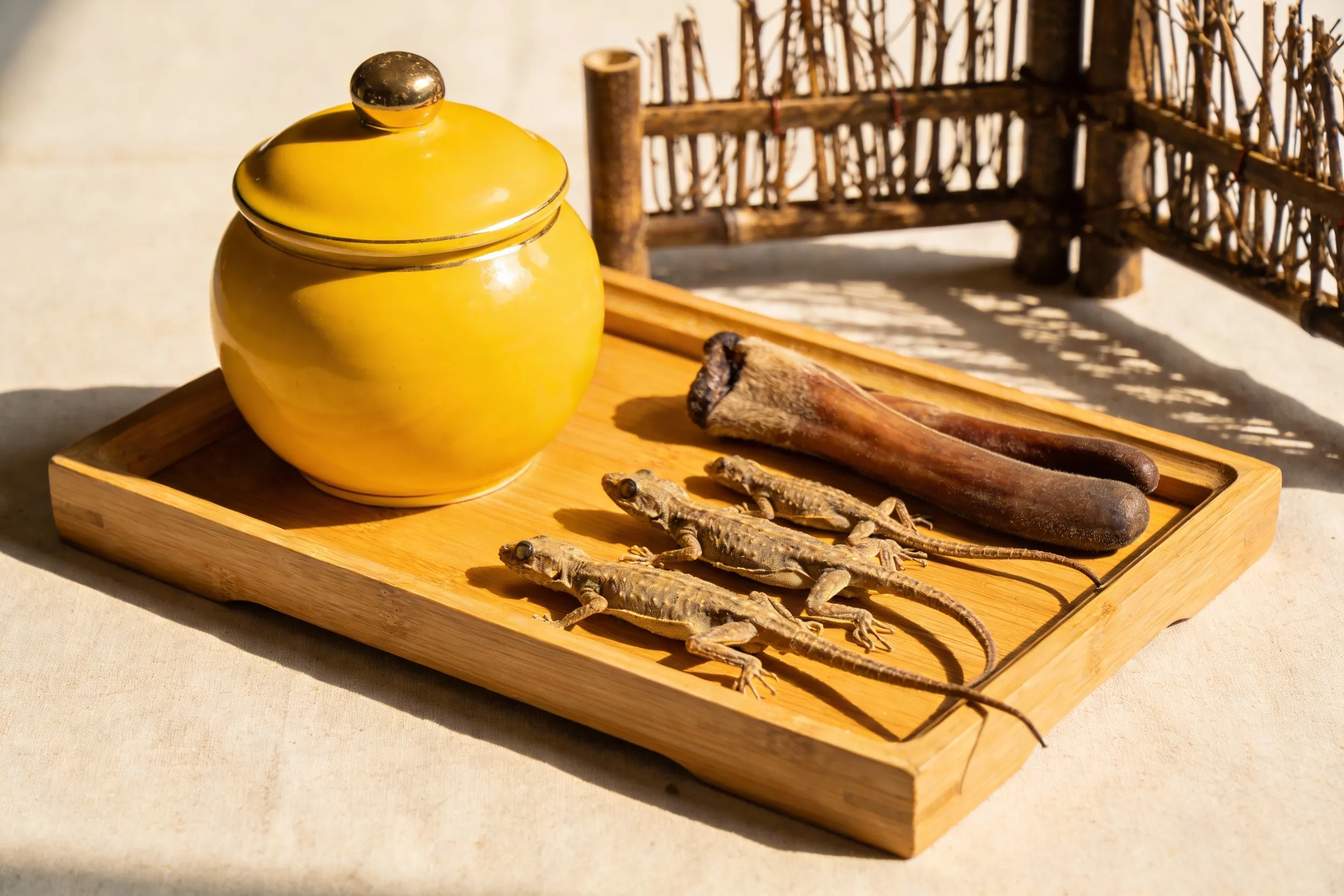
Gecko
Aliases:
Known by various names in Traditional Chinese Medicine (TCM), including Shou Gong (守宫), Climbing Gecko (爬壁虎), Scorpion Lizard (蝎虎), and Wartless Gecko (无疣壁虎).
Energetic Properties (Xing Wei):
Gecko is characterized by a salty taste and a cold nature.
Meridian Tropism (Gui Jing):
It primarily influences the Kidney and Liver meridians, which are crucial energy pathways in TCM.
Medicinal Part:
In TCM, the entire body of certain gecko species from the Gekkonidae family is used. This typically includes the Japanese Gecko (Gekko japonicas Dumeril et Bibron), Swinhoe's Gecko (Gekko swinhonis Guenther), or the Many-spotted Gecko (Gekko subpalmatus Gunther).
Morphological Characteristics:
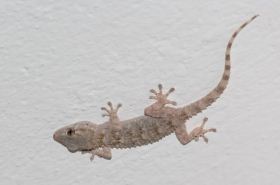
Geckos have a dorsoventrally flattened body, with their skin covered in granular scales, sometimes interspersed with wart-like scales. Their digits are expanded at the tips, forming skin folds underneath that are densely covered with glandular hairs. The substance itself has a faint odor, a salty taste, and is considered slightly toxic. **Due to its inherent slight toxicity, it is crucial to use Gecko only under the strict guidance and supervision of a qualified Traditional Chinese Medicine practitioner.**
How Gecko is Used in TCM
Usage (Yong Fa):
Gecko is often stir-fried and then ground into a fine powder. For powdered form, the typical dosage is 0.9 to 1.5 grams per serving. Alternatively, it can be decocted in water, with a dosage ranging from 1.5 to 4.5 grams for a decoction.
Preparation (Pao Zhi):
Geckos are typically caught during the summer and autumn months, often at night using light to attract them. They can be used fresh, or after capture, their head and abdomen are pierced with a bamboo stick, and their tail is secured to the stick with string. They are then slowly roasted over a low flame until dry. During collection and processing, care must be taken to ensure the tail remains attached, as it's considered an important part of the medicinal efficacy.
TCM Functions and Indications of Gecko
TCM Functions (Gong Xiao):
In TCM, Gecko is believed to Expel Wind (祛风), Unblock Collaterals (活络), and Dissipate Nodules or Masses (散结). Its anti-inflammatory properties are particularly noted for conditions involving joint pain and swelling, making it a subject of modern research for rheumatic conditions (PMID: 29424700).
Primary Indications (Zhu Zhi):
Gecko is traditionally applied for a range of conditions, including paralysis resulting from stroke, rheumatic joint pain, osteomyelitis, lymphatic tuberculosis, and even as a supportive therapy for certain cancers, such as esophageal cancer, lung cancer, primary liver cancer, and intestinal cancer. Research continues to explore its potential in these areas (PMID: 25298539, PMID: 30424596).
References:
Anti-rheumatic mechanisms of Gekko japonicus have been investigated in animal models of rheumatoid arthritis. PMID: 29424700
Traditional Chinese Medicine, including Gekko japonicas, has been explored as a complementary therapy in the treatment of advanced non-small cell lung cancer. PMID: 25298539
Extracts of Gekko japonicas have demonstrated antitumor effects on human hepatocellular carcinoma cells in vitro studies. PMID: 30424596
Quick Check & Next Steps:
3-Second Self-Test: If you're experiencing persistent joint pain, muscle stiffness, or concerns about lymphatic swelling often associated with "Wind-dampness" or internal masses in TCM terms, it might be time to investigate traditional approaches.
30-Second Self-Rescue: If you resonate with these symptoms or are considering natural therapies for serious conditions like chronic pain or supportive cancer care, immediately consult a licensed Traditional Chinese Medicine practitioner or your healthcare provider to discuss whether Gecko or other TCM strategies are appropriate for your specific health needs.
For informational purposes only. Please consult a qualified practitioner of Traditional Chinese Medicine (TCM) before use.
![[Low Libido] 2 Traditional Chinese Medicine Dietary Remedies for Low Sexual Function](https://img.naturalhealingchina.com/uploads/blog/content/202602/3c98cd99928ce28227589ef3f22d3a24.webp)