Selaginella
Common Names: 'Yiba Zhua' (A Handful Grab), 'Laohu Zhua' (Tiger's Claw), 'Chang Sheng Cao' (Everlasting Herb).
Properties: Pungent in flavor, neutral in nature.
Meridian Affinity: Liver and Heart meridians.
Medicinal Part: The dried whole herb of Selaginella tamariscina (Beauv.) Spring or Selaginella pulvinata (Hook.et Grev.) Maxim., both from the Selaginellaceae family.
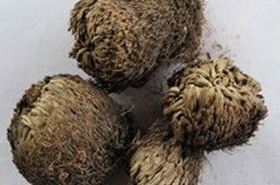
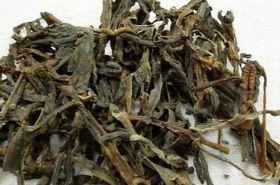
Morphological Characteristics: Selaginella typically appears as curled, segmented clumps. Its branches are flat and bifurcated, ranging from green to brownish-yellow, curling inward. The branches are densely covered with scale-like small leaves, which have long awns at their tips. The central leaves (ventral leaves) are arranged in two rows, ovoid-oblong or ovate-lanceolate, positioned obliquely or erectly, with a membranous margin that is irregularly finely serrated or entire. The dorsal leaves (lateral leaves) often have a brownish-black membranous margin on their back. It has a slight aroma and a mild taste.
Selaginella: Usage and Dosage
Dosage: 5–10g.
Preparation: It can be harvested year-round. After removing fibrous roots and soil, it is sun-dried.
Selaginella: Actions and Indications
Actions: Raw Selaginella invigorates blood and regulates menstruation; Selaginella Carbon (charred Selaginella) resolves blood stasis and stops bleeding.
Indications: Raw Selaginella is traditionally used for amenorrhea with dysmenorrhea (painful and absent menstruation), abdominal masses, and traumatic injuries. Selaginella Carbon is used for conditions like vomiting blood, abnormal uterine bleeding, blood in stool, and rectal prolapse.
Selaginella: Traditional Formulas
1. For women experiencing amenorrhea leading to abdominal masses, alternating chills and fever, and infertility: Take 4 liang (approx. 120g) of Selaginella, 2 liang (approx. 60g) of Angelica sinensis (Dang Gui) (both stir-fried with wine after soaking), 2 liang (approx. 60g) each of Atractylodes macrocephala (Bai Zhu) and Moutan Cortex (Mu Dan Pi), 1 liang (approx. 30g) of Paeonia lactiflora (Bai Shao Yao), and 5 qian (approx. 15g) of Ligusticum chuanxiong (Chuan Xiong). Divide into seven doses, decoct with water and take orally; alternatively, refine into honey pills, taking 4 qian (approx. 12g) each morning with plain water. (From Bencao Huiyan - Compendium of Materia Medica)
2. For bleeding in the large intestine: Take equal parts of Selaginella, Platycladus orientalis (Ce Bai Ye), and Trachycarpus fortunei (Zong Lv Tan). Char them to retain their medicinal properties, then grind into a powder. Take 3 qian (approx. 9g) per dose with wine; it can also be taken as rice-paste pills. (From Rencun Fang)
Selaginella: Important Cautions
Important Caution: Pregnant women should use Selaginella with extreme caution and only under the guidance of a qualified practitioner.
Selaginella: Historical Perspectives
1. From Bencao Qiuzhen (Seeking the Truth in Materia Medica): Selaginella's therapeutic actions differ based on whether it is used raw or processed. When raw, it is slightly cooling and potent in invigorating blood circulation and regulating menstruation, thus effective for conditions like abdominal masses and difficult urination. When processed (e.g., charred), it becomes pungent and warm, capable of stopping bleeding, making it suitable for intestinal bleeding and rectal prolapse. Its properties and applications are distinct from Platycladus orientalis (Ce Bai Ye) and should be carefully distinguished.
2. From Shennong Benjing (The Divine Farmer's Materia Medica Classic): It primarily addresses harmful influences affecting the five vital organs, cold-heat pain in the female reproductive system, abdominal masses, amenorrhea leading to infertility. Long-term use is believed to lighten the body and enhance complexion.
3. From Mingyi Bielu (Records of Famous Physicians): It alleviates cough and vomiting, treats rectal prolapse, dissipates various accumulations (like urinary stones or lymphatic nodules), addresses dizziness and vertigo, aids paralysis, and strengthens essence and Yin.
4. From Bencao Gangmu (Compendium of Materia Medica): For general use, it is traditionally prepared by boiling in saltwater for half a day, then in well water for another half day, followed by sun-drying and roasting before use.
3-Second Self-Test + 30-Second Self-Rescue
If you're experiencing persistent abdominal discomfort, irregular or painful periods, or unexplained minor bruises, then consider these as signs that your body might be seeking balance. Immediately consult with a qualified Traditional Chinese Medicine practitioner to explore if Selaginella or other personalized herbal remedies could support your journey back to wellness!
References
Selaginella species are rich in bioactive compounds with diverse pharmacological activities. PMID: 36777006
Traditional Chinese Medicine formulations show promise in managing primary dysmenorrhea. PMID: 37190013
Detailed research confirms the phytochemistry and traditional uses of Selaginella tamariscina. PMID: 28726588
For informational purposes only. Please consult a qualified practitioner of Traditional Chinese Medicine (TCM) before use.