Citron (Fructus Citri)
Hey there, ever heard of Citron? In Traditional Chinese Medicine (TCM), it’s a pretty special fruit. You might also know it by its other names: Gou Yuan (枸橼), Gou Yuan Gan (钩缘干), or even Xiang Pao Shu (香泡树), which loosely translates to 'Fragrant Pomelo Tree'.
In TCM, Citron is considered to have a pungent, bitter, and sour taste, and it’s generally warm in nature. This unique combination allows it to work its magic by targeting the Liver, Spleen, and Lung meridians.
What Part of the Plant Do We Use?
When we talk about Citron as a medicinal herb, we're referring to the dried, mature fruit of *Citrus medica* L. or *Citrus wilsonii* Tanaka, both members of the Rutaceae family. Think of it as the mature, dried version of the fruit you might see in a specialty market.
Spotting the Difference: Citron Varieties
There are a couple of main forms you might encounter:
-
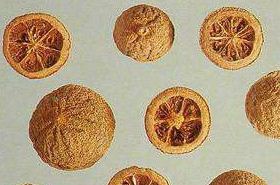
Common Citron (*Citrus medica* L.): This one usually comes in round or oblong slices, typically 4 to 10 cm in diameter and about 0.2 to 0.5 cm thick. If you look at a cross-section, the outer peel is yellowish or yellow-green with wavy edges and tiny sunken oil spots. The middle layer, called the mesocarp, is quite thick (1-3 cm), yellowish-white, and crisscrossed with irregular, net-like vascular bundles. Inside, you'll find 10 to 17 pulp chambers. A longitudinal slice will show a robust central core. It's soft and flexible, with a clear, fragrant aroma and a slightly sweet, bitter, and pungent taste.
-
Xiang Yuan (*Citrus wilsonii* Tanaka): This variety typically appears as a sphere, hemisphere, or round slice, about 4 to 7 cm in diameter. Its surface is dark green or yellowish-brown, densely dotted with concave oil glands and a network of raised, coarse wrinkles. At the top, you might see remnants of the style and a raised ring, while the base usually has a remnant of the fruit stalk. This one is quite firm. When sliced thin, the oil spots on the edges are distinct, and the mesocarp is about 0.5 cm thick. Inside, there are 9 to 11 pulp chambers, which are brownish or pale reddish-brown, sometimes containing yellowish-white seeds. It has a fragrant aroma and tastes sour and bitter.
How to Use Citron (Fructus Citri)
Typically, the recommended dosage ranges from 3 to 10 grams. As for preparation, if you have whole fruits, they’re usually broken into smaller pieces. If it’s already sliced, it’s often moistened thoroughly, cut into thin threads, and then air-dried before use.
The Power of Citron: Functions and Indications
So, what exactly can this remarkable fruit do for you?
Key Functions:
- Soothes the Liver and Regulates Qi: This means it helps your body’s vital energy (Qi) flow smoothly, especially in the Liver system, which TCM believes is crucial for emotional well-being and digestion.
- Harmonizes the Middle Burner: It helps ease discomfort and fullness in your stomach and spleen area, promoting better digestion.
- Transforms Phlegm: It assists in breaking down and clearing away excess phlegm, which can be a real nuisance in respiratory issues.
What It’s Used For:
Citron is traditionally used for conditions like: Liver and Stomach Qi stagnation, which often manifests as distending pain in the chest and hypochondriac region. It’s also a go-to for epigastric and abdominal fullness and discomfort, frequent vomiting and belching, and even excessive phlegm and chronic cough.
Research continues to explore the mechanisms behind these traditional uses, with studies highlighting the fruit's potential digestive and anti-inflammatory properties, supporting its role in regulating vital energy and alleviating discomfort. PMID: 35919420
Important Considerations: Who Should Be Cautious?
While Citron is generally well-tolerated, it’s always wise to exercise caution. It’s not recommended for individuals with Yin deficiency and blood dryness. Also, pregnant women experiencing Qi deficiency should use it carefully and only under the guidance of a qualified TCM practitioner.
Additionally, some historical texts suggest that while effective, excessive or prolonged single use of Citron might deplete the body’s upright Qi (vital energy) without proper guidance. PMID: 32360814
Citron Combinations: Traditional Formulas
Citron often shines when combined with other herbs. Here are a few traditional recipes:
-
For Abdominal Distension (like ascites): Take one aged Citron (including its pulp), two large walnuts (with their skins), and two 'qians' (traditional weight unit, roughly 6 grams) of Amomum Fruit (Shukou Sha Ren, with the membrane removed). These ingredients are calcined (heated until reduced to ash) and then powdered. Mix with sugar and take on an empty stomach immediately. (From *Ben Jing Feng Yuan*).
-
For Cough: Slice a Citron thinly (after removing the seeds – an important step to avoid an overly astringent effect!), place it with a suitable amount of wine in a ceramic pot, and cook until it's very soft. This process traditionally lasted from dusk until 5 AM. Then, mix with honey. When awakened during sleep, take a spoonful. (From *Yang Bing Man Bi*).
-
For Rebellious Qi Leading to Inability to Eat or Frequent Vomiting (Xiang Yuan Wan - Citron Pill): You’ll need two aged and potent Citrons, three 'liang' (traditional weight unit, roughly 90 grams) of genuine Fritillaria (Chuan Bei Mu, with the core removed to enhance its phlegm-reducing properties), one and a half 'liang' of stir-fried black Angelica Sinensis (Dang Gui), one 'liang' of dried White Tong Cao, one 'liang' of aged watermelon rind, and three 'qians' of sweet Platycodon Root (Jie Geng). Grind all these ingredients into a fine powder. Then, use a concentrated decoction of broken White Sandalwood to form pills, about the size of a tung tree seed. Take three 'qians' per dose with warm water. For those with significant deficiency, adjust the dosage accordingly. (From *Mei Shi Yan Fang Xin Bian*).
The use of Citron in treating respiratory ailments, particularly cough and phlegm, is well-documented in traditional texts and continues to be explored in modern pharmacology for its expectorant and anti-tussive properties. PMID: 29775390
Historical Insights: What the Classics Say About Citron
Throughout history, various TCM scholars have praised Citron for its medicinal qualities:
-
1. *Ben Jing Feng Yuan* (Essentials of the Materia Medica): "Treats cough and Qi stagnation."
-
2. *Yi Lin Zuan Yao* (Compendium of Medical Forests): "Treats stomach pain, harmonizes the middle, regulates Qi, and dispels stagnation."
-
3. *Ben Cao Zai Xin* (Revised Materia Medica): "Calms the Liver, relieves depression, regulates Lung Qi, unblocks channels, promotes urination, and treats lumbar and leg pain/weakness."
-
4. *Ben Cao Qiu Yuan* (Origins of the Materia Medica): "Clears chronic asthma."
-
5. *Ben Cao Tong Xuan* (Elaborations on the Materia Medica): "Xiang Yuan is mild and balanced in nature, but using it singly or excessively can still harm the upright Qi. When used with Ginseng and Atractylodes, there are no such drawbacks."
-
6. *Ben Jing Feng Yuan* (Essentials of the Materia Medica): "Citron encompasses both Buddha's Hand and Citron, and their properties are similar, which is why *Compendium of Materia Medica* discusses them without distinction. However, 'Gan' refers to Buddha's Hand, and 'Yuan' to Citron. Both help break down phlegm and water. In recent times, aged Citron is also used for cough and Qi stagnation. Removing the pulp and seeds helps avoid any overly sour-astringent effects."
-
7. *Ben Cao Bian Du* (Materia Medica for Easy Reading): "Citron peel descends Qi, resolves phlegm, harmonizes the middle, and enlivens the diaphragm. While it lacks the warming property of tangerine peel, it is ultimately an aromatic and drying substance. Therefore, individuals with Yin deficiency and blood dryness should still avoid it."
Quick Self-Check & Self-Care with Citron Insights
3-Second Self-Assessment:
If you often feel a nagging distention or dull ache in your chest or ribs, experience a heavy, full feeling in your stomach after eating, or find yourself frequently belching with thick phlegm, you might be dealing with some Liver and Stomach Qi stagnation or phlegm accumulation.
30-Second Self-Help Tip:
If you've identified with these symptoms, immediately consider incorporating foods that gently regulate Qi and help with digestion, like small amounts of citrus peel or ginger tea. For ongoing issues, consulting a TCM practitioner about herbs like Citron can offer a targeted approach to soothe the Liver, harmonize your digestion, and clear that stubborn phlegm!
For informational purposes only. Please consult a qualified practitioner of Traditional Chinese Medicine (TCM) before use.
References
- A comprehensive review of Citrus medica L., including its phytochemical composition, traditional uses, and diverse biological activities. PMID: 32360814
- A review focusing on Citrus medica L.'s phytochemistry, bioactivity, and traditional applications, particularly highlighting its digestive and anti-inflammatory effects. PMID: 35919420
- An in-depth look at the traditional uses, phytochemistry, and pharmacology of Citrus medica L. in the context of respiratory diseases. PMID: 29775390