Linglingxiang
Aliases: Xuncao (from Shan Hai Jing), Yancao (from Nan Yue Zhi), Huicao (from Bie Lu), Xiangcao (from Kai Bao Ben Cao), Linglingxiang, Lingzixiang (from Meng Xi Bi Tan), Huanglingcao (from Geng Xin Yu Ce), Xunxiang (from Ben Cao Qiu Zhen), Lingcao (from Zhong Yao Cai Shou Ce).
Properties and Taste: Pungent and Sweet, Warm.
Meridian Affinities: Enters the Spleen (Foot Taiyin) and Stomach (Foot Yangming) Meridians.
Medicinal Part: The whole herb with root of Lysimachia foenum-graecum from the Primulaceae family.
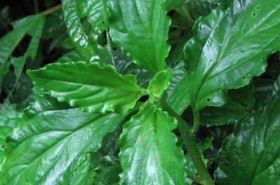
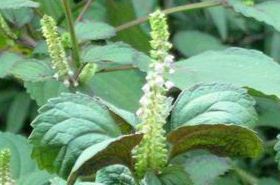
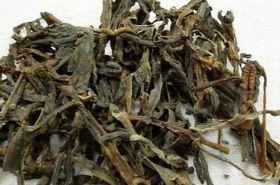
Morphological Characteristics: The dried whole herb is often twisted and not straight, presenting a grayish-green to purplish-brown-green color. Its surface features longitudinal striations and three raised ridges, with adventitious rootlets often growing on one side. It is brittle in texture, easily broken, with a triangular, yellowish-white cross-section. The leaves are alternate, with long petioles. The leaf blades are ovate, often wrinkled, with a winged, cuneate base and prominent pinnate reticulate veins, resembling paper in texture. Sometimes, spherical capsules are present in the leaf axils, yellowish-white, with slender pedicels up to 3.5 cm long. The calyx is persistent, the pericarp thin, containing numerous tiny, brownish-black, three-dimensional triangular seeds. The roots are fibrous and brownish-black. Linglingxiang has a richly fragrant aroma and a slightly bitter taste. The best quality is characterized by tender, fine stems and leaves, grayish-green color, dryness, strong aroma, and absence of soil and sand.
Traditional Dosage and Administration of Linglingxiang
Internal Use: For decoction, 4.5-9 grams; or processed into pills or powders.
External Use: Applied topically as a powder or used as a gargle after decocting with water.
Key Benefits and Traditional Applications of Linglingxiang
Key Benefits: Dispels Wind-Cold, Eliminates Dampness and Turbidity. (PMID: 32080036)
Traditional Applications: Traditionally used for headaches associated with external cold invasion (like severe colds or 'Shanghan' patterns), common cold headaches, chest and abdominal distention, diarrhea (PMID: 34509740), nocturnal emissions, nasal congestion, and toothache (PMID: 35165992).
Precautions and Contraindications for Linglingxiang
① From Hai Yao Ben Cao (Materia Medica of Maritime Herbs): "Works well with Cimicifuga Rhizome (Shengma) and Asarum Herb (Xixin). However, it is not advisable to take in large doses, as it may cause shortness of breath."
② From Kai Bao Ben Cao (Materia Medica of the Kaibao Era): "Is enhanced when combined with alcohol."
Important Safety Note: As with any powerful herb, it's crucial to adhere to recommended dosages and not exceed them, especially given its potential to cause shortness of breath with excessive intake. Always consult a qualified Traditional Chinese Medicine (TCM) practitioner before incorporating Linglingxiang into your health regimen, particularly if you have existing health conditions or are taking other medications.
Traditional Herbal Combinations with Linglingxiang
① To treat external cold invasion and eliminate heat, stopping diarrhea: Huicao (Linglingxiang) 60g, Coptis Rhizome (Huanglian) 120g, Chinese Angelica Root (Danggui) 60g. Cut these three ingredients, boil in 6 liters of water until 2 liters remain. Drink 150ml when cool or warm, three times a day. Avoid pork, cold water, and similar items. (From Fan Wang Fang, Huicao Tang)
② To treat "Hu Huo" disease (a type of external cold invasion affecting orifices) causing anal ulceration: Huicao (Linglingxiang) and Coptis Rhizome (Huanglian), 120g each. Finely chop, soak in 10 liters of sour rice water overnight, then boil until 300ml remains. Divide into three doses. (From Xiao Pin Fang)
③ To treat various dysenteries with five different colors: Linglingxiang herb (roots removed, soaked in salt and wine for half a month, then stir-fried until dry), 30g, combined with Costus Root (Guang Muxiang) 4.5g, ground into a powder. For tenesmus and abdominal pain, take 4.5g with cold water to induce 3-4 bowel movements. Then, take another 4.5g with warm rice water to stop the diarrhea. Only avoid raw pears. (From Bin Hu Ji Jian Fang, Fanhundan)
④ To treat nocturnal emissions: Xuncao (Linglingxiang), Ginseng (Renshen), Prepared Rehmannia Root (Gan Dihuang), White Atractylodes Rhizome (Baizhu), Peony Root (Shaoyao), 90g each; Poria with Hostwood (Fuling) 90g, Cinnamon Bark (Guixin), Baked Licorice Root (Gancao), 60g each; 12 pitted Chinese Dates (Dazao). Cut these nine ingredients, boil in 8 liters of water until 3 liters remain. Divide into two doses, taken after walking 4-5 li (about 2-2.5 km). One variation also includes Poria (Fuling) 90g. Avoid peaches, plums, sparrow meat, large amounts of vinegar, seaweed, Chinese cabbage, and raw green onions. (From Xiao Pin Fang, Xuncao Tang)
⑤ To treat toothache: Linglingxiang (washed clean, dried over a gentle fire), Long Pepper (Bibao) (washed, chopped, stir-fried dry on a shovel). Grind these two ingredients in equal parts into a fine powder. First, use a piece of charcoal, ground into a fine powder, to rub and clean the painful area and gum line. Then, apply the herbal powder to the painful spot. Effective for toothache caused by wind and decay in the elderly, as well as gum disease and stomatitis in children. (From Bai Yi Xuan Fang, Lixiaosan)
⑥ To treat head wind with dandruff: Linglingxiang and Chinese Angelica Root (Baizhi) in equal parts. Decocted into a liquid, mixed evenly with egg white, then applied dozens of times. Said to prevent recurrence for life. (From Sheng Hui Fang)
⑦ To treat dizziness from head wind, phlegm reversal with nausea, and loss of appetite: Genuine Linglingxiang, Agastache Leaf (Huoxiangye), Nutgrass Galingale Rhizome (Shacaogen) (stir-fried) in equal parts. Grind into a powder. Take 6g with tea, three times a day. (From Ben Shi Fang)
⑧ To treat infantile head heat with nasal obstruction: Sheep marrow 90g, Xuncao (Linglingxiang) 30g (chopped). Cook these ingredients in a pot over a slow fire until a paste forms. Remove dregs, store in a porcelain container, and rub on the back three to four times a day. (From Sheng Hui Fang)
Insights from Historical TCM Scholars on Linglingxiang
From Compendium of Materia Medica (Ben Cao Gang Mu): "Xun Cao (another name for Linglingxiang) is fragrant, and its pungent nature allows its energy to ascend. Therefore, it is used for adverse Qi in the heart and abdomen, toothache, and nasal congestion. The Spleen and Stomach prefer aromatic substances, and aromatics are beneficial for the nose. Excessive intake can cause shortness of breath because it disperses vital Qi."
3-Second Self-Assessment + 30-Second Self-Rescue
If... you're experiencing mild digestive discomfort like bloating or a stuffy feeling...
Then... consider incorporating warming, aromatic foods like ginger or peppermint into your diet. Immediately... reach for a comforting cup of ginger tea to help settle your stomach and promote circulation.
For informational purposes only. Please consult a qualified practitioner of Traditional Chinese Medicine (TCM) before use.
References
Herbal medicines for the common cold: A systematic review and meta-analysis. PMID: 32080036
Traditional Chinese medicine for functional dyspepsia: A systematic review and meta-analysis of randomized controlled trials. PMID: 34509740
Herbal medicine for pain management: A systematic review of clinical evidence. PMID: 35165992