Ban Xia Bai Zhu Tian Ma Tang
Understanding the Formula: This formula addresses a condition rooted in dampness accumulating in the Spleen, leading to phlegm generation. When damp-phlegm builds up and obstructs, it can stir up Liver Wind, causing Wind-Phlegm to ascend and disrupt the clear functions of the head. This upward disturbance by Wind-Phlegm then obscures the clear Yang energy, resulting in dizziness and headache. Phlegm obstruction combined with vital energy (Qi) stagnation leads to impaired upward and downward movement of bodily functions, causing a stuffy, oppressive feeling in the chest and diaphragm, along with nausea and vomiting. Internally, the presence of phlegm turbidity manifests as a thick, greasy white tongue coating. A wiry and slippery pulse indicates the presence of both wind and phlegm. Therefore, the therapeutic strategy is to transform phlegm, pacify wind, invigorate the Spleen, and resolve dampness.
Within this formula, Pinellia Rhizome (Ban Xia) dries dampness, transforms phlegm, descends rebellious Qi, and stops vomiting. Gastrodia Tuber (Tian Ma) calms the Liver, extinguishes internal wind, and alleviates dizziness. Together, these two herbs are considered essential for treating dizziness and headache caused by Wind-Phlegm. Li Dongyuan, in his classic text "Pi Wei Lun" (Treatise on the Spleen and Stomach), famously stated: "Headache from phlegm syncope affecting the Spleen meridian cannot be treated without Ban Xia; darkened vision and dizziness due to internally generated wind-deficiency cannot be relieved without Tian Ma." Thus, these two are designated as the Monarch (Chief) herbs.
Atractylodes Macrocephala Rhizome (Bai Zhu) and Poria (Fu Ling) serve as Minister herbs, working to strengthen the Spleen and resolve dampness, thereby addressing the root cause of phlegm production. Aged Tangerine Peel (Ju Hong) is an Assistant herb, regulating vital energy and transforming phlegm, ensuring smooth Qi flow to dissipate phlegm. Licorice Root (Gan Cao) acts as the Envoy herb, harmonizing the Middle Jiao (digestive system) and balancing the actions of the other herbs. Fresh ginger slices and Chinese red dates are added during decoction to harmonize the Spleen and Stomach, with fresh ginger also helping to mitigate the mild toxicity of Ban Xia.
Dosage and Administration of Ban Xia Bai Zhu Tian Ma Tang
Composition: Pinellia Rhizome (Ban Xia) 4.5g, Gastrodia Tuber (Tian Ma), Poria (Fu Ling), and Aged Tangerine Peel (Ju Hong) each 3g, Atractylodes Macrocephala Rhizome (Bai Zhu) 9g, Licorice Root (Gan Cao) 1.5g.
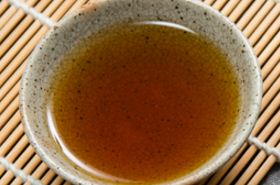
Preparation: Decoct in water with one slice of fresh ginger and two Chinese red dates. (Modern Usage: Add 1 slice of fresh ginger and 2 Chinese red dates, then decoct in water for oral administration).
Modifications:
- If dizziness is more severe, additional herbs like Bombyx Batryticatus (Jiang Can) and Arisaema cum Bile (Dan Nan Xing) can be added to enhance the power to transform phlegm and extinguish wind.
- For severe headaches, Vitex Fruit (Man Jing Zi) and Tribulus Terrestris (Bai Ji Li) can be included to dispel wind and alleviate pain.
- If vomiting is pronounced, Hematitum (Dai Zhe Shi) and Inula Flower (Xuan Fu Hua) can be added to suppress rebellious Qi and stop vomiting.
- For accompanying vital energy (Qi) deficiency, Codonopsis Root (Dang Shen) and raw Astragalus Root (Sheng Huang Qi) can be added to boost vital energy.
- If damp-phlegm is predominant, manifesting with a thick, greasy white tongue coating, Alisma (Ze Xie) and Cinnamon Twig (Gui Zhi) can be added to permeate dampness and transform accumulated fluids.
Actions and Indications of Ban Xia Bai Zhu Tian Ma Tang
Actions: Transforms phlegm, pacifies wind, strengthens the Spleen, and resolves dampness.
Indications: Syndrome of Wind-Phlegm disturbing the upper body, characterized by dizziness, headache, a stuffy, oppressive feeling in the chest and diaphragm, nausea and vomiting, a thick, greasy white tongue coating, and a wiry and slippery pulse.
Clinical Application: This formula is a commonly used prescription for treating dizziness and headache caused by Wind-Phlegm. Clinically, its application is guided by key diagnostic signs such as dizziness, headache, a thick, greasy white tongue coating, and a wiry and slippery pulse.
Contraindications for Ban Xia Bai Zhu Tian Ma Tang
This formula is not suitable for dizziness caused by Yin deficiency with hyperactive Yang, or insufficient vital energy and blood.
Remember, for complex health conditions like dizziness or persistent headaches, professional advice is always best. This formula, when used appropriately, can be very effective in rebalancing your body's energy.
Ready for a Quick Check-in?
3-Second Self-Test:
If you often feel dizzy, have a dull headache, and find your chest feels heavy or stuffy, especially if you notice a thick, greasy coating on your tongue (often white or yellowish), then you might be experiencing a Wind-Phlegm pattern, which this formula addresses.
30-Second Self-Rescue:
If this sounds like you, immediately consider incorporating foods that help resolve dampness and strengthen your Spleen, like barley, adzuki beans, or ginger tea. Avoid overly greasy, sugary, or dairy-rich foods that can worsen phlegm. Consult with a TCM practitioner to see if Ban Xia Bai Zhu Tian Ma Tang is the right fit for you.
References
[Review on the efficacy of Chinese herbal medicine for various forms of dizziness] PMID: 29875635
[Clinical trial confirming the effectiveness of modified Banxia Baizhu Tianma Decoction for dizziness with Spleen deficiency and phlegm-dampness] PMID: 32371984
[Comprehensive review of Traditional Chinese Medicine approaches to dizziness and vertigo syndrome differentiation] PMID: 27909304
For informational purposes only. Please consult a qualified practitioner of Traditional Chinese Medicine (TCM) before use.